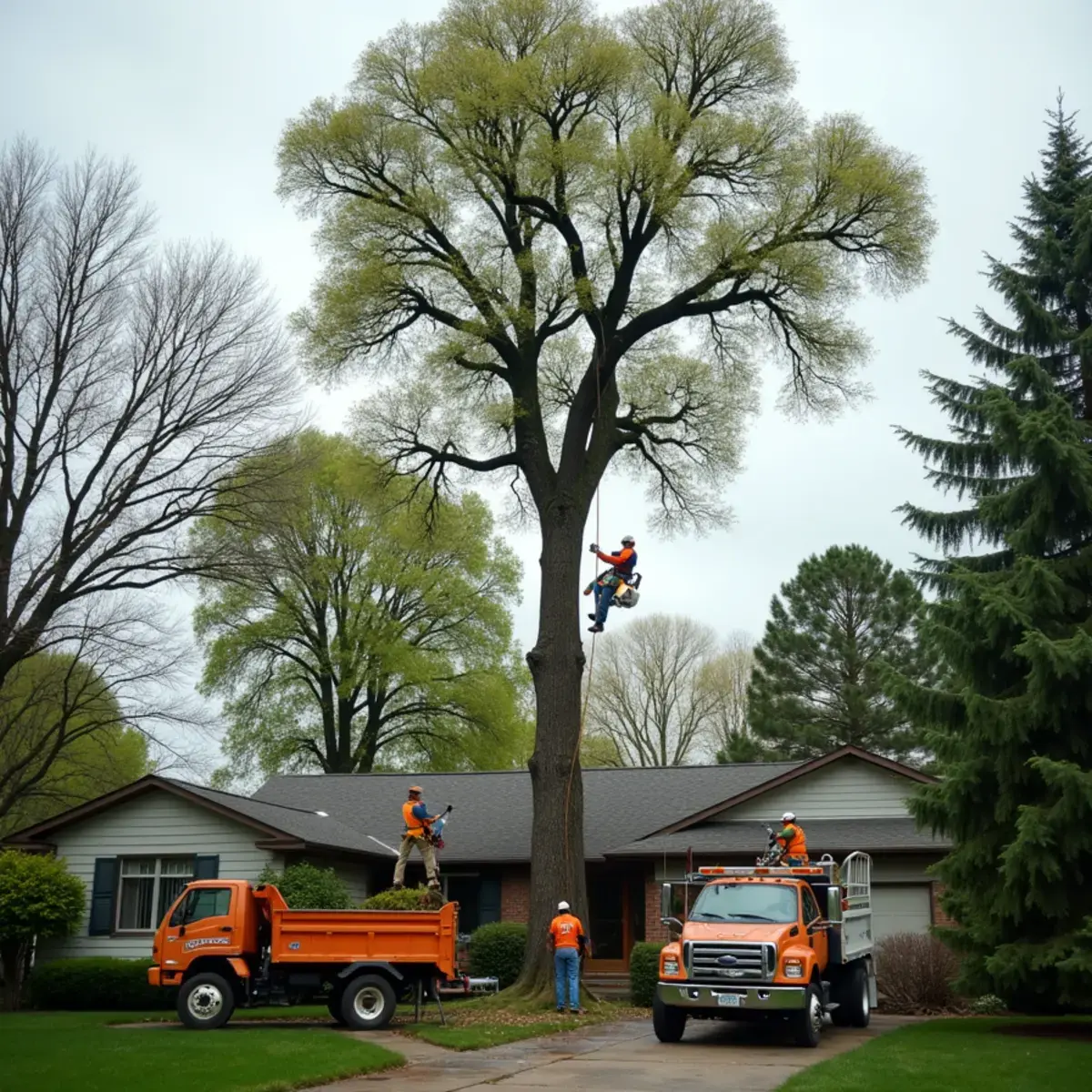
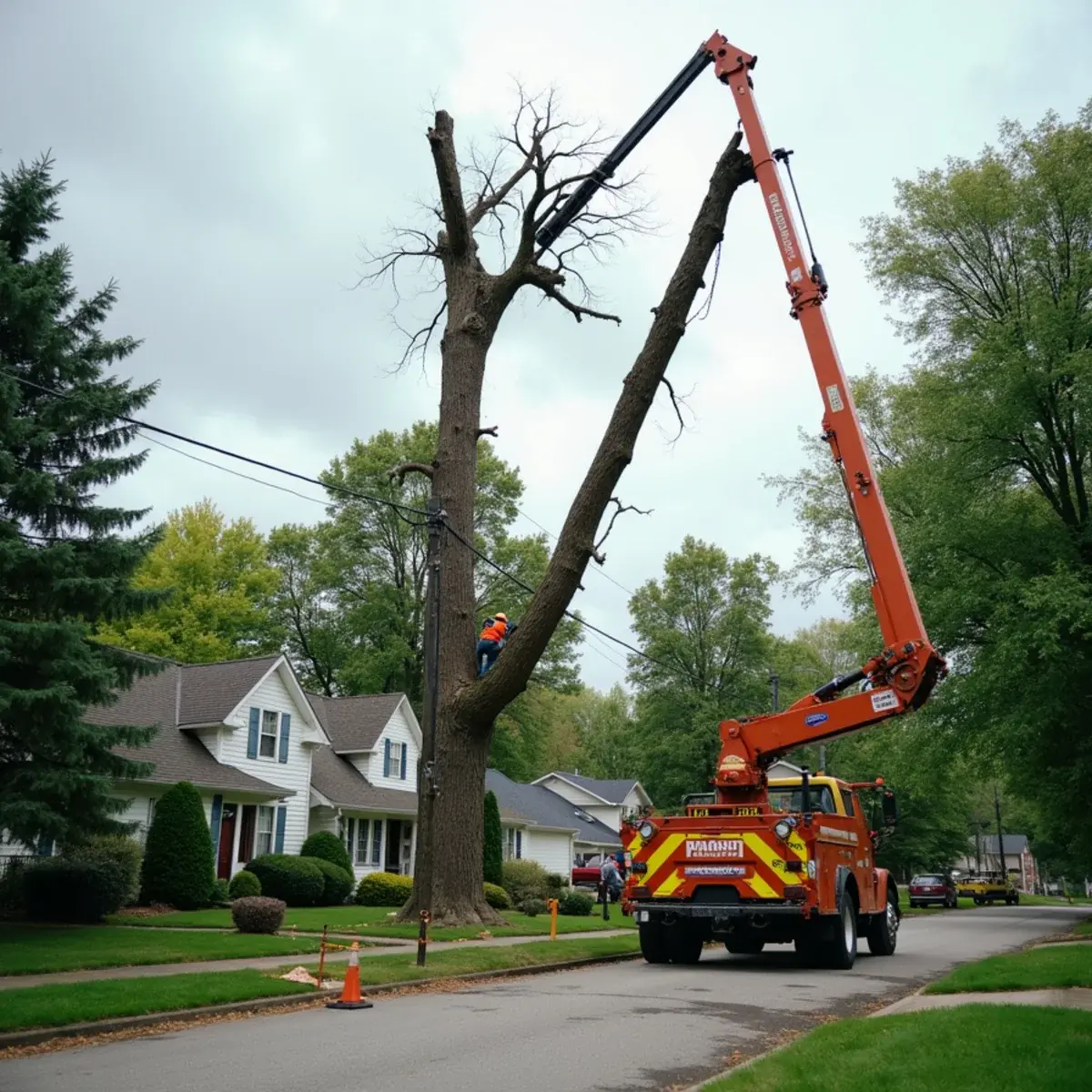
There is a category of tree where climbing is the wrong answer. The wood is too decayed to trust a tie-in point. There is no landing zone anywhere on the property. A service drop runs through the middle of the canopy. Or the tree is simply enormous — the hundred-foot-plus cottonwoods we regularly take out along the Detroit River are a different animal from a backyard maple.
For those, we bring a crane. Sections are cut, held by the crane, and flown clear of the property to a landing area rather than lowered through everything below them. Nothing swings, nothing drops, and the yard underneath stays intact.
Customers notice the equipment. One wrote about being amazed at the lift we walked into a small yard. Another described watching us take down 125-foot dead cottonwoods, one of them leaning out over a river, and being happy with the work, the gear and the crew. That equipment is the difference between "we can do that" and "sorry, we cannot help you."
When a crane is the right call
Crane work costs more per hour and less per job. These are the situations where it is genuinely the better option.
The tree is dead or hollow
A climber needs sound wood to tie into. Dead ash, hollow silver maple and decayed cottonwood do not provide it. The crane takes the person out of the tree entirely.
There is nowhere to drop anything
Pool, patio, sunroom, greenhouse, koi pond, expensive landscaping. If everything under the tree is fragile, flying the pieces out is the only clean method.
Wires run through the canopy
Rigging around energized conductors is slow and risky. A crane lifts sections vertically clear of them.
The tree is very large
Above roughly 80 feet with a heavy canopy, sectional lowering becomes an all-day operation. A crane can cut that to a fraction of the time.
It has already partially failed
A tree resting on a roof cannot be dismantled from the top down in the normal way. The crane takes the load off the structure before anything is cut.
Ground conditions will not take traffic
Setting up once on the street and reaching over the house beats driving loaded equipment across a saturated lawn.
How we handle it, start to finish
- 1
Site survey and lift plan
We measure reach, calculate piece weights against the crane's load chart at that radius, confirm setup ground will take the outrigger loads, and identify overhead conflicts before scheduling.
- 2
Set up and secure the zone
Outriggers and pads go down, the swing path and drop area are cleared, and street work gets cones and spotters. Nobody stands under a load.
- 3
Pick, cut, fly
The climber or bucket operator sets the choker, the crane takes the tension, the cut is made, and the section is flown out to the landing zone. Repeat, top down.
- 4
Process at the landing zone
Wood is bucked and brush chipped away from the house, which keeps noise, traffic and mess out of your yard entirely.
- 5
Break down and clean up
Crane comes off the outriggers, the site is raked and blown, and stump grinding follows if you have added it.
Why crane removal protects your property
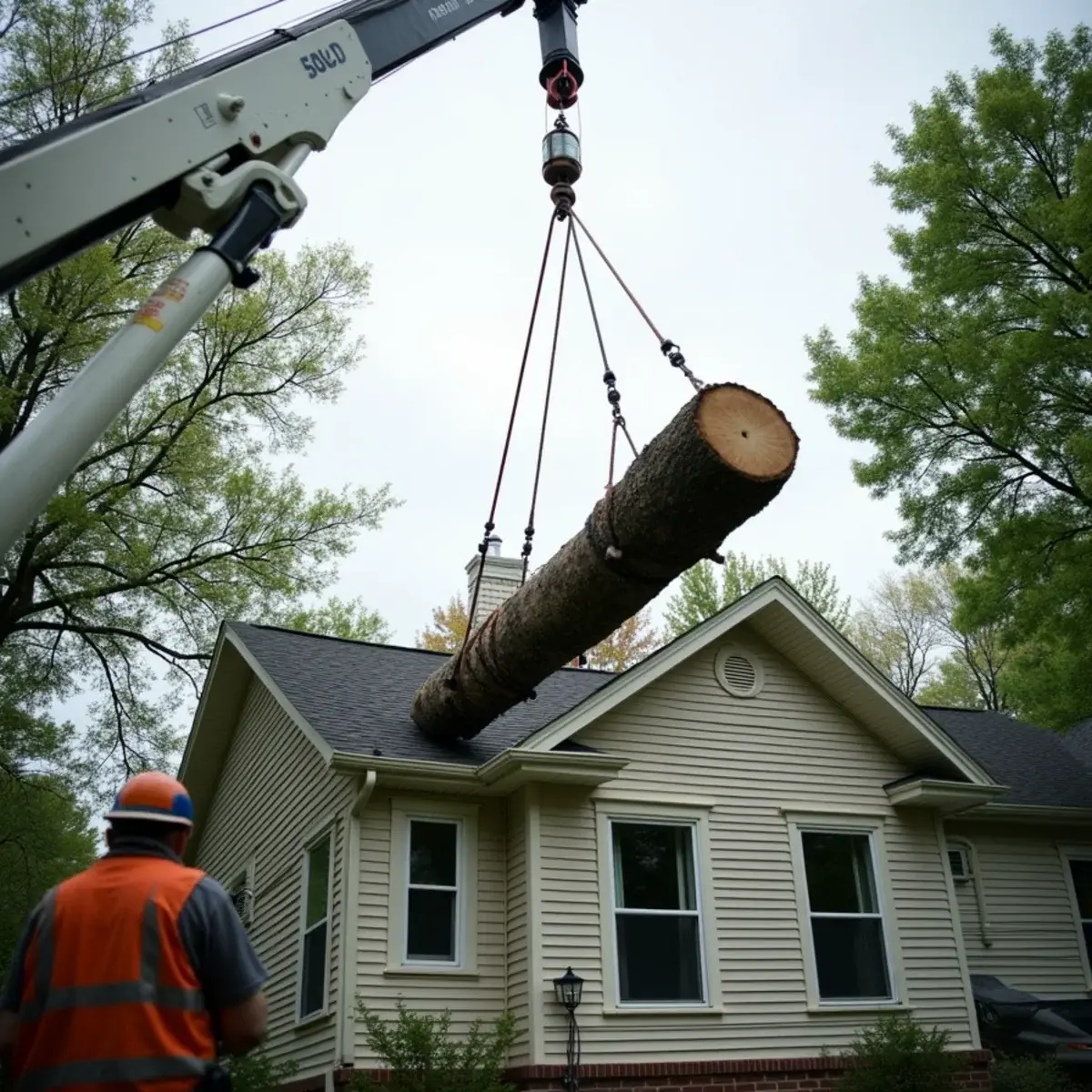
Conventional removal means every piece of that tree travels down through the airspace above your yard, controlled by ropes and friction. Done well it is safe and precise. But the whole operation happens over your lawn, your beds and your patio, and the ground crew is working directly beneath suspended wood all day.
With a crane, the load is captured before the cut is finished. The piece never free-falls, never swings into anything, and never touches the ground until it is over the landing zone. On a tight lot with a pool, a sunroom and a neighbor's fence eight feet away, that difference is the entire job.
What we need from you before crane day
- Cars out of the driveway and off the street in front of the setup area.
- Gates unlocked, and dogs inside for the day.
- A heads-up to your immediate neighbors — we may need to swing over a property line, and a five-minute conversation prevents an awkward morning.
- Anything breakable or movable cleared from the landing and swing zones: planters, furniture, grills, garden art.
- Confirmation of septic fields or shallow utilities so we place outriggers away from them.
What to expect, from estimate to cleanup
A lift plan before a date is offered
We measure reach, calculate piece weights against the crane’s load chart at that radius, confirm the setup ground will take outrigger loads and identify overhead conflicts. The written scope names the setup location and whether a street permit is needed.
Half a day to a full day for most single trees
Setup and teardown are a meaningful share of it. Very large trees, tight overhead clearance forcing smaller picks, or several trees on one property will run longer. Batching a neighbour’s tree into the same mobilisation saves everyone real money.
Your lawn is generally better off
The crane usually sets up on the street or driveway and reaches over, so no heavy equipment crosses the turf and no wood lands on it. Wood gets processed at the landing zone, which keeps the noise, traffic and mess out of your yard entirely.
What this costs — and what changes the price
A crane adds machine and operator cost per day, but it often reduces total labor hours and nearly eliminates property damage risk. On the right tree, it is the cheaper option overall.
Crane size required
Reach and weight determine the machine. A tree 90 feet from where the crane can set up needs a much bigger unit than the same tree 30 feet away.
Setup location and permits
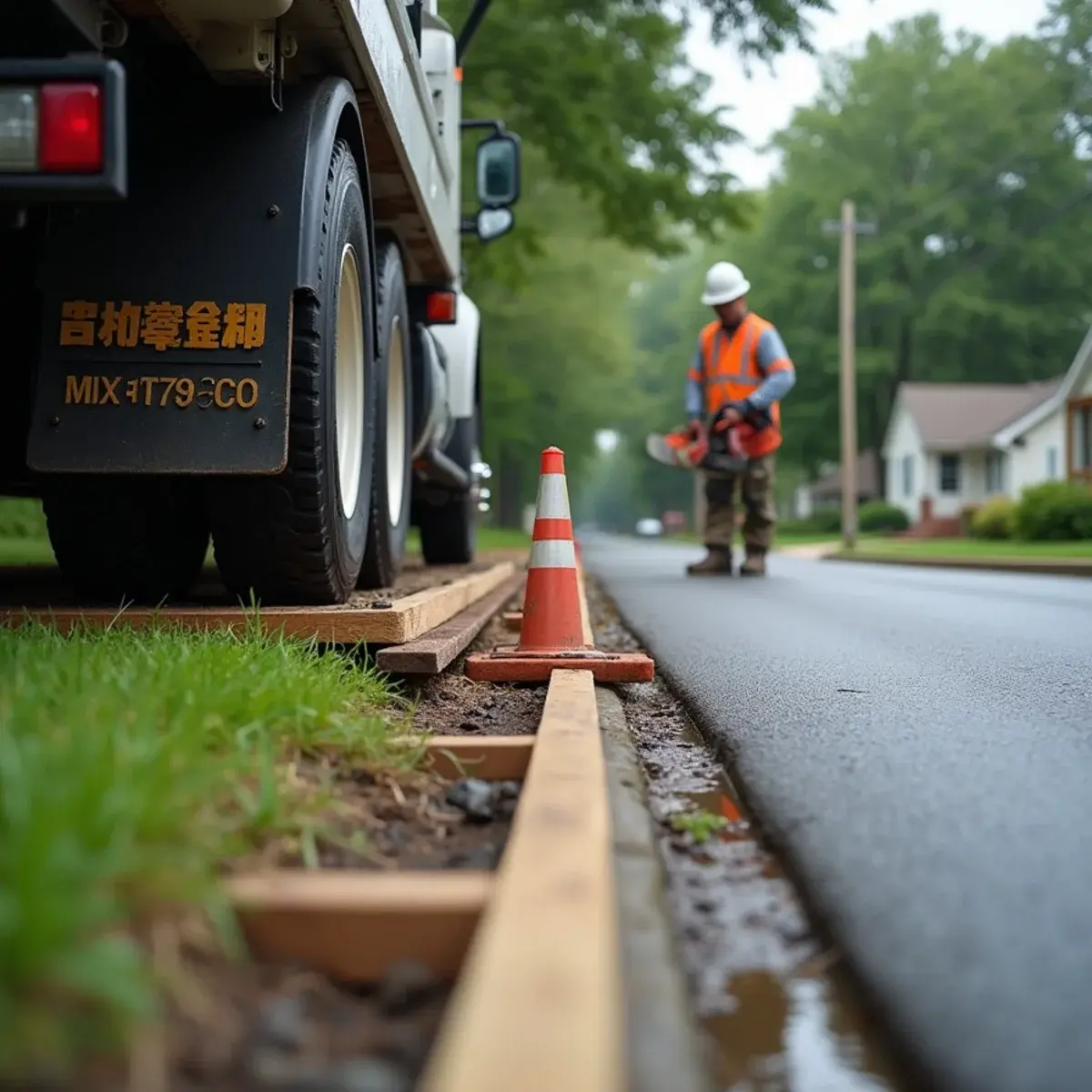
Setting up on your driveway is simple. Setting up in the street may require a permit or a short road closure, depending on the municipality.
Number of picks
Fewer, larger picks are faster. Tight overhead clearance forces smaller pieces and more cycles.
Whether we can batch the day
If your neighbor has a tree too, mobilizing the crane once for both properties saves everyone real money. It happens more often than you would think on the streets where we work.
At the estimate we will tell you honestly whether your tree needs a crane or whether a climbing crew handles it for less. We are not going to sell you machine time you do not need.
What customers say about our crane-assisted tree removal
Every quote below is from a published Google review left by someone who had this specific work done. We do not borrow proof from other services.
“Eddie and his crew came out last week and were amazing. They removed a large cottonwood and ground out the stump. I trusted them with my home and family. They have a lift that went into my small yard and I was amazed at the job they did. I would recommend them for any large hazardous tree to be removed. He gave me a copy of his insurance before he started the job.”
“Guys are great, hardworking, and quite frankly fearless. They removed two very large trees and several small ones that drowned during the years of high water on Grosse Ile. A cottonwood tree was well over 100 foot tall. Their equipment is state-of-the-art. Work took 3 days and they quoted the day I called. They cleaned up as well as can be expected and exceeded my previous two companies.”
“I knew they could do the job from watching them take down huge cottonwood trees at a neighbor's. When Eddie gave me his quote I said yes on the spot. I had three 125-foot dead cottonwoods, one of them leaning out over the river, so it was a complicated process. I worried about those trees for three years but no more. I'm happy with their work, their equipment and their team.”