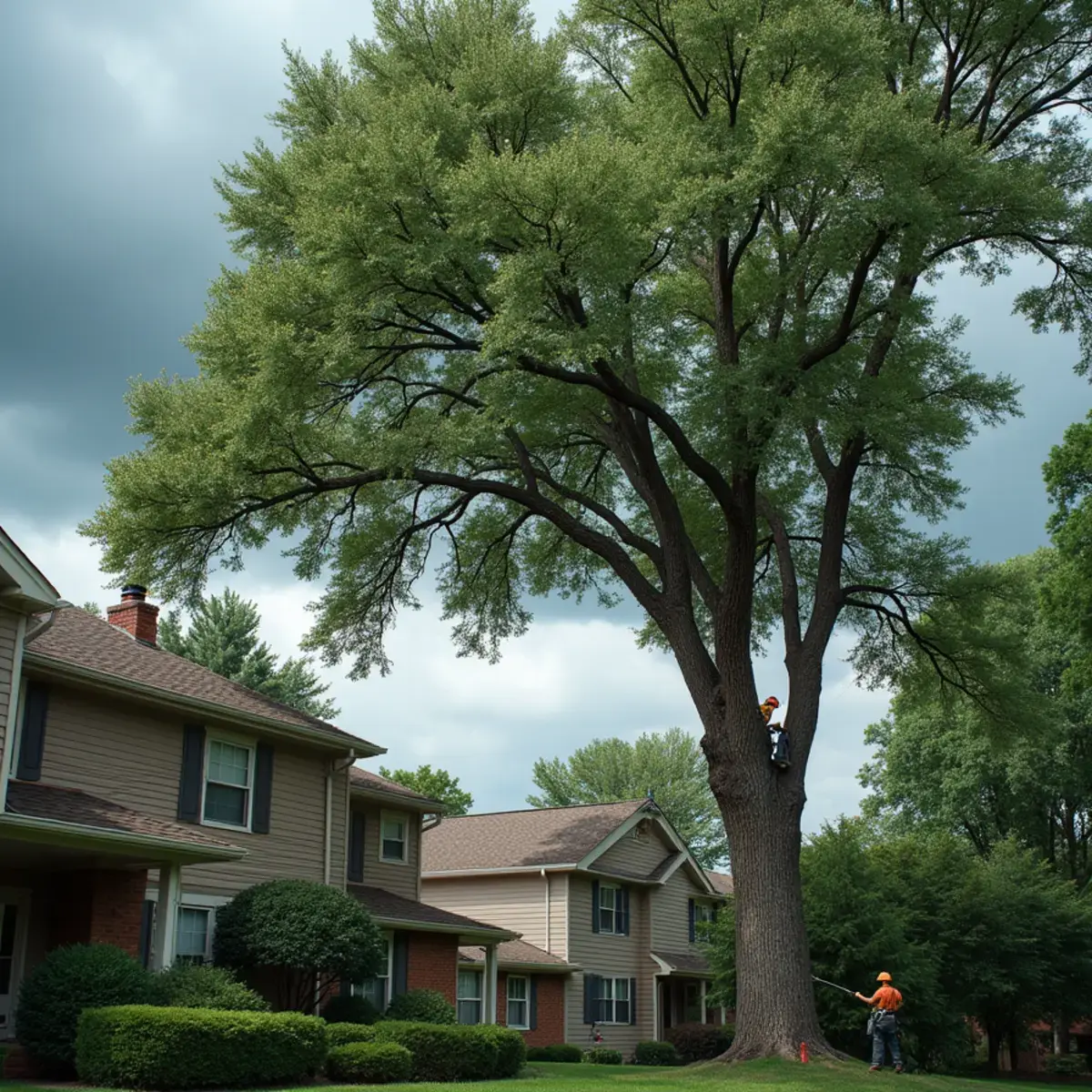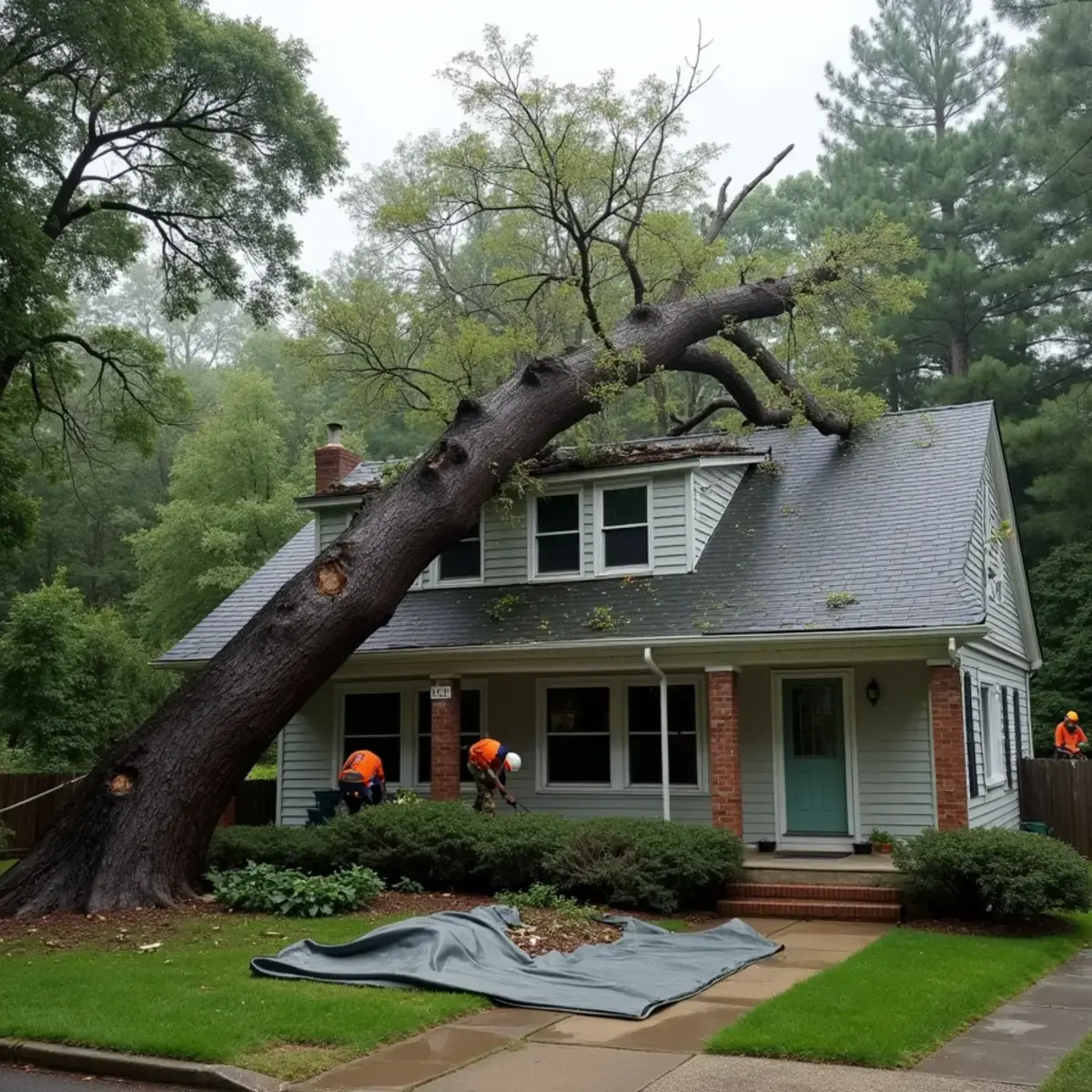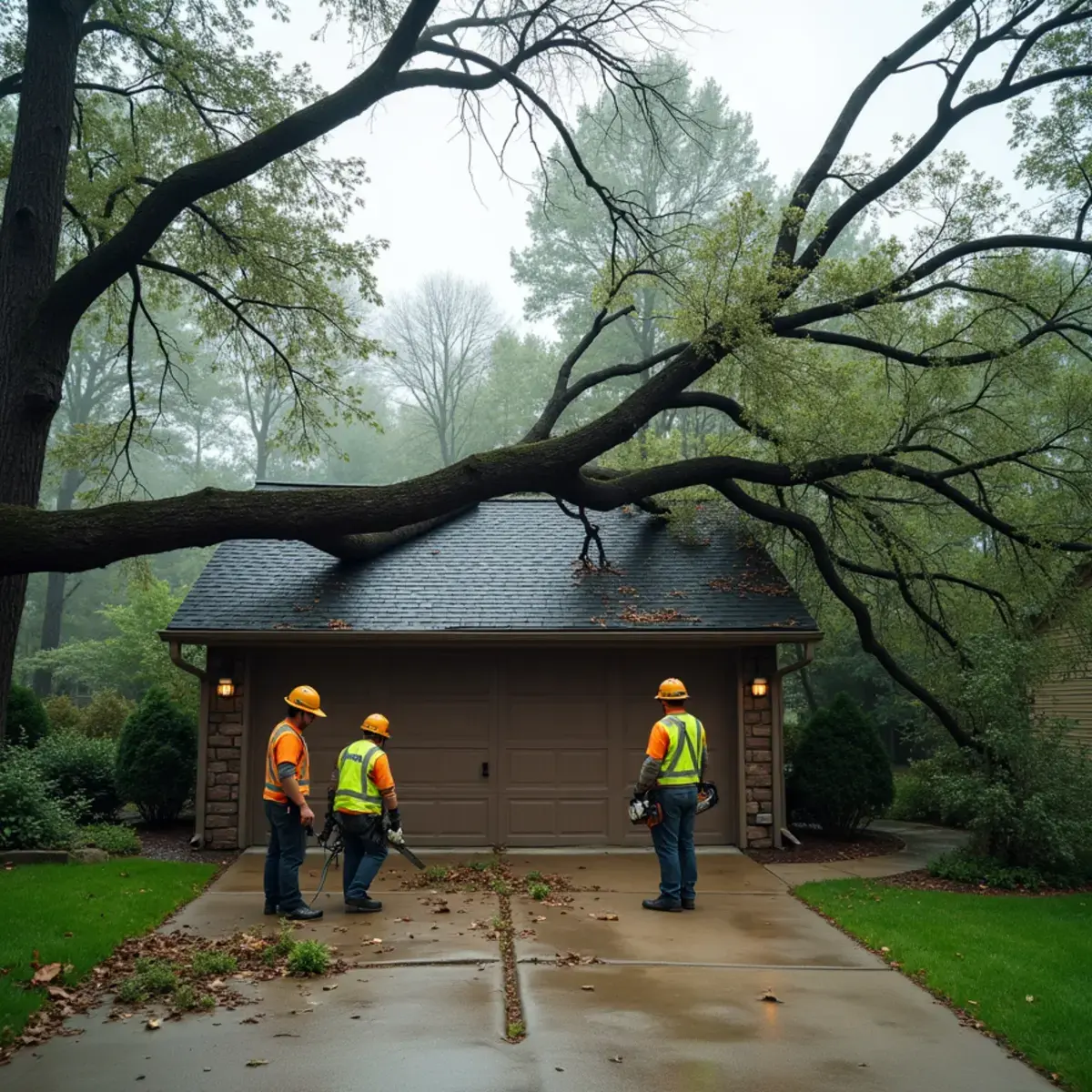
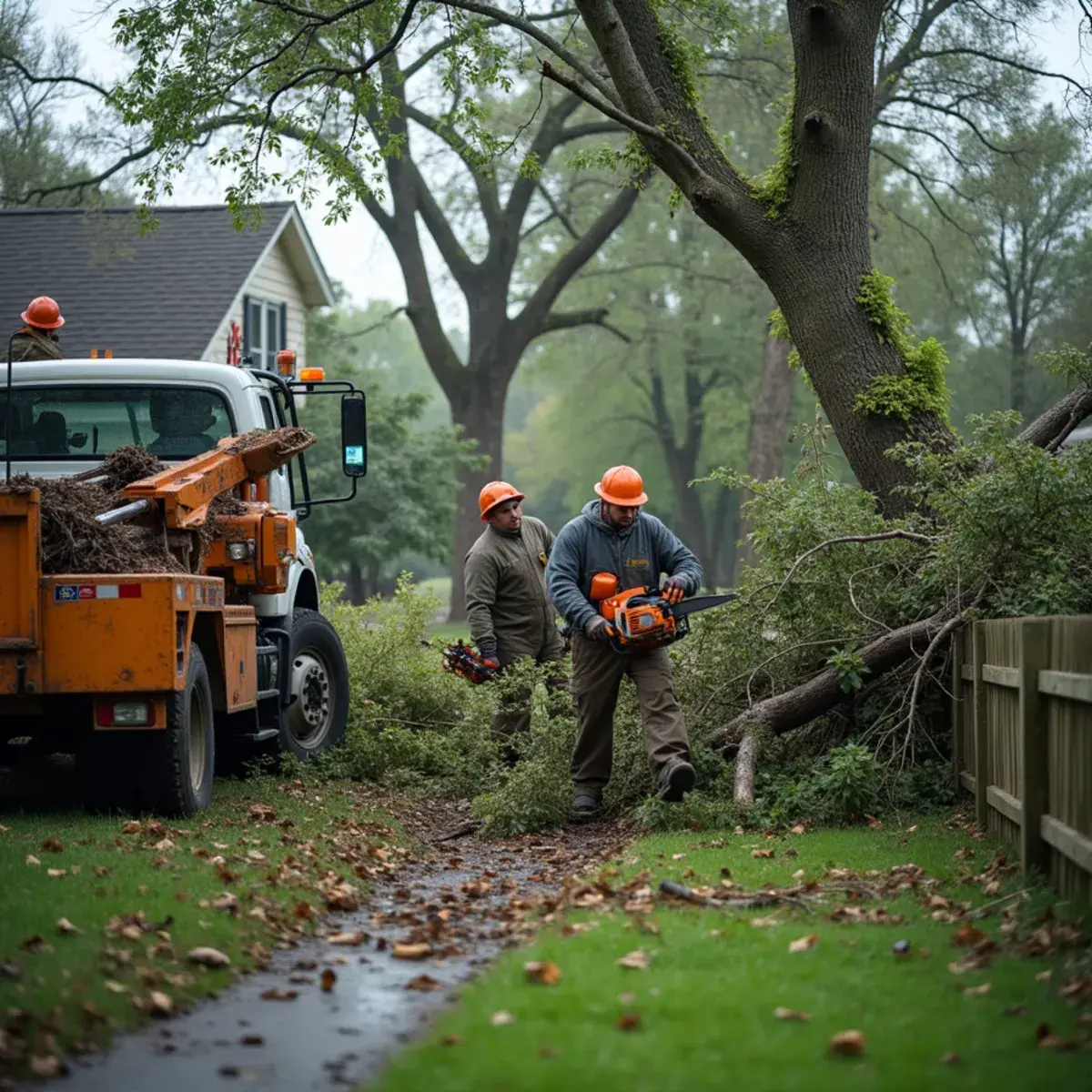
Storm cleanup is different from emergency response. The emergency is the tree on the house at midnight. Cleanup is the next three days: the shattered canopy across the back lawn, the limbs hung up thirty feet over the patio, the two trees that survived but lost half their crowns and now need to be assessed.
After a tornado went through and knocked large limbs out of two enormous maples, one homeowner had already been quoted thirty thousand dollars to deal with it. We removed both maples, ground the stumps and cleaned up the rest of the storm debris in the yard for a fraction of that. That review is still up on our profile.
We clear the whole mess — not just the headline tree — and we document it properly so your claim goes through.
What we handle after a storm
Wind, ice and lightning leave different signatures. All of them leave work.
Whole trees down across the yard
Uprooted or snapped at the trunk. We buck, chip, haul and deal with the root plate and remaining stump.
Hung-up limbs in the canopy
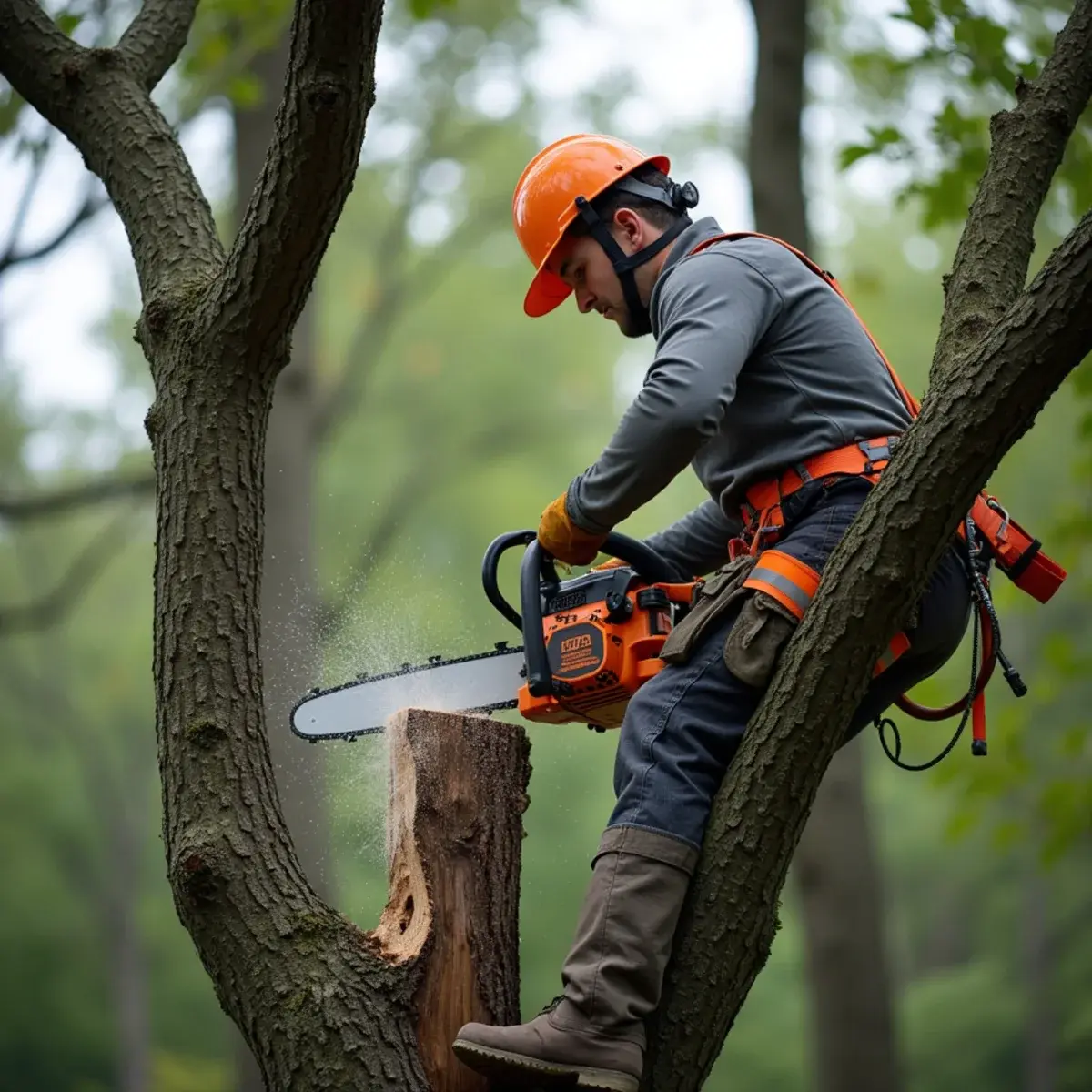
The most under-appreciated post-storm hazard. Broken branches lodged high in the tree will come down eventually, usually with no warning.
Torn and hanging limbs still attached
A limb hinged by a strip of bark has to be cut properly at the collar. Leaving a ripped stub invites decay straight into the trunk.
Split trunks and torn unions
Sometimes savable with cabling and reduction pruning, often not. We give you the honest assessment either way.
Debris fields
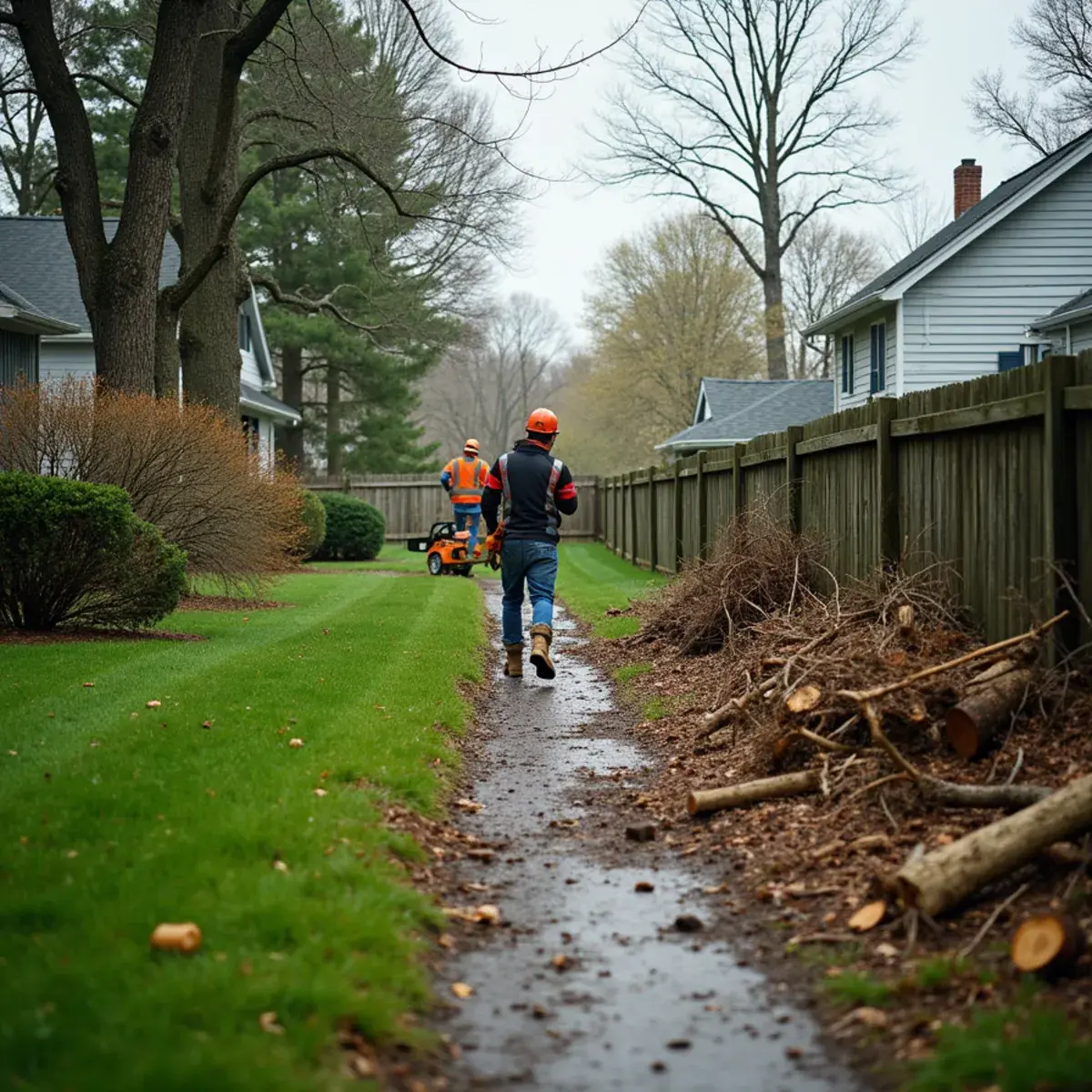
Fence lines, gutters, roofs and beds full of small wood. This is the part that takes the longest and the part cheap crews skip.
Trees that "look fine"
Root damage from a windstorm often shows no obvious signs for a season or two. Post-storm inspection catches the ones that will fail next year.
How we handle it, start to finish
- 1
Walk the whole property
We look at every tree, not just the one that fell. Hangers and root-plate movement are what cause the second round of damage weeks later.
- 2
Prioritize by risk
Access first, then anything over a structure or a walkway, then open-yard debris. If access to your driveway is blocked, that gets cleared before anything cosmetic.
- 3
Clear the hazards
Hung-up limbs come down under control, torn limbs are cut back to proper collar cuts, and compromised trees are removed or stabilized.
- 4
Haul the debris
Everything chipped and trucked out. Michigan municipalities vary enormously in what they will pick up curbside after a storm and how long you will wait for it — we do not leave you to find out.
- 5
Document and hand off
Photos and an itemized invoice for your adjuster, plus a short written note on any trees we recommend watching over the next year.
Post-storm inspection: the part everyone skips
The tree that falls during the storm is obvious. The one that quietly tore half its anchoring roots and will go over in a moderate wind next October is not, and it is the one that damages something expensive.
After a significant wind event we look for soil cracking or mounding on the side opposite the lean, fresh gaps at the root flare, new lean compared to a fixed reference like a fence line, and limbs that are freshly cracked but still attached. If we find any of it, you get a straight answer about whether the tree can be saved, monitored or needs to come out.
Working with your insurance company
- Photograph everything before a single branch moves — wide shots and close-ups, from multiple angles.
- Open the claim the same day. You do not need a final estimate to start it.
- Ask your carrier specifically what the tree removal and debris removal limits are. They are often separate from the structural damage limit and frequently capped per tree.
- Keep every receipt, including tarps and emergency mitigation. Reasonable steps to prevent further damage are usually reimbursable.
- Get the scope in writing from us before work starts so the invoice matches what the adjuster approved.
What to expect, from estimate to cleanup
The whole property gets scoped, not just the headline tree
We walk everything and price it as one job: the tree that came down, the limbs hung up in the canopy, the torn limbs still attached, and the debris field. Piecemeal callbacks cost more than doing it once.
Access and hazards first, cosmetics last
Blocked driveways and anything over a structure get cleared before open-yard debris. On saturated Michigan clay we sometimes mat the route or wait a day rather than wreck your lawn getting a truck in.
A written note on what to watch next
Alongside the invoice you get a short, plain-English list of any trees we think are worth monitoring. Root-plate damage from a windstorm often shows no obvious sign for a season or two, and it is the second wave that damages something expensive.
What this costs — and what changes the price
Storm cleanup is priced on volume and hazard, and both are hard to judge from a phone call. We come look.
Total debris volume
Chipper time and truckloads to the disposal site are the base cost of any cleanup.
How much is aerial work
Ground debris is fast. Every hanger that has to be climbed to and rigged out adds meaningful time.
Ground conditions
Saturated Michigan clay after a big storm limits where equipment can drive without wrecking the lawn. Sometimes we mat the route; sometimes we wait a day.
Number of trees affected
Doing the whole property in one mobilization is far more economical than piecemeal callbacks.
Whether structures are involved
Anything resting on a roof, fence or vehicle needs rigging rather than cutting, which changes the job entirely.
Get the claim opened before we start if you can, and take photos before anything moves. Adjusters are far more agreeable when the before-and-after is documented.
What customers say about our storm damage cleanup
Every quote below is from a published Google review left by someone who had this specific work done. We do not borrow proof from other services.
“After receiving a $30,000 quote to remove 2 very large maples from our backyard after a tornado knocked several large limbs from the trees, we received an amazing quote from One of a Kind to not only remove the maple trees and tree stumps, they also cleaned up the rest of the storm damage in our yard. I highly recommend One of a Kind. The tree crew were professional and respectful. Their work ethic is incredible.”
“Monday I had multiple large limbs from my neighbor's tree fall on my house, porch and yard. Called One of a Kind Tuesday, received my estimate, insurance approved the estimate and Eddie's team arrived Tuesday evening and had the job done within hours. Awesome team, very polite and did a great job cleaning up. I can't even tell my house and yard were buried in tree limbs.”