Does Homeowners Insurance Cover Tree Removal in Michigan?
The short version: it usually depends on what the tree hit, not on how much damage the tree itself sustained.
What this guide covers8 sections
This comes up on nearly every storm job and the answers are more consistent than people expect. Policies differ, so read yours — but the general logic across standard Michigan homeowners policies works like this.
The governing question: what did it hit?
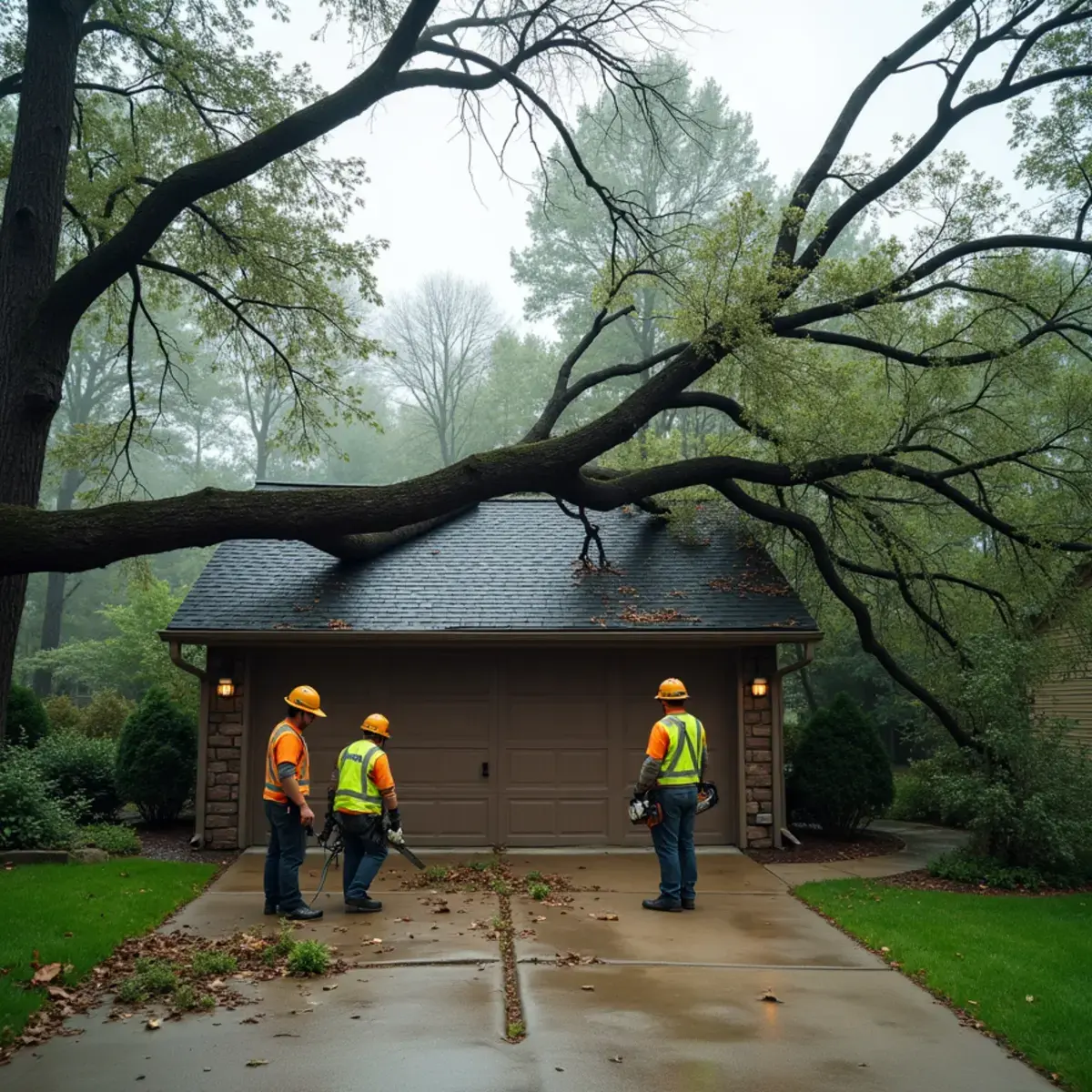
Coverage usually turns on whether the tree damaged a covered structure. If it hit your house, attached garage, detached garage, shed or fence, removal is generally covered as part of the loss. If it fell in the open yard and hit nothing, it usually is not covered at all — even if it was a magnificent tree and even if the cleanup costs thousands.
That feels backwards to most homeowners. The value of the tree is not the point; the damage to insured property is.
Watch the per-tree cap
Most policies include a specific debris and tree removal limit — frequently in the range of a few hundred to a thousand dollars per tree, sometimes with an overall cap per event. That limit is separate from the structural damage coverage.
So a large removal can be genuinely covered and still leave you paying a share. Find that number in your declarations page before you need it, not after.
What is typically covered
- A tree that struck your house, garage, shed or fence — removal from the structure plus repair of the damage.
- A tree blocking your driveway or a handicap access ramp, which many policies address specifically.
- Reasonable emergency mitigation — tarping a roof, boarding an opening, removing an actively dangerous limb to prevent further loss.
- Damage to a vehicle, though that comes from your auto policy's comprehensive coverage rather than homeowners.
- A neighbor's tree that fell onto your covered structure — filed on your own policy in most cases.
What is typically not covered
- A tree that fell in the open yard and damaged nothing insured.
- Removing a dead or hazardous tree before it falls. This is maintenance, and no policy covers maintenance.
- Damage from disease, insects, rot or general neglect rather than a sudden covered peril.
- A tree that failed because it was obviously dead and you left it standing — carriers do deny on this basis.
- Stump grinding, in most cases. Usually treated as landscaping restoration rather than debris removal.
- The replacement value of the tree itself, beyond a small landscaping sub-limit if your policy has one.
Flood is a different policy
Standard homeowners policies exclude flood. If a tree came down because rising water undermined it, that may fall outside your homeowners coverage entirely. This matters on the riverfront and lakefront properties we work in Trenton, Grosse Ile and Gibraltar.
How to document a claim so it gets approved
- 1Photograph everything before a single branch moves. Wide shots, close-ups, interior damage, the base of the tree, affected personal property. Date-stamped, from multiple angles. You get one chance at this.
- 2Call the carrier the same day. You do not need a repair estimate to open a claim, and early filing gets an adjuster assigned sooner.
- 3Ask specifically about the tree removal limit, the debris removal limit and whether emergency mitigation is reimbursable.
- 4Get a written scope from your tree company before work starts, so the invoice matches what was approved.
- 5Keep every receipt, including tarps and emergency work. Reasonable mitigation is generally reimbursable.
- 6Request an itemized invoice. "Tree work — $4,200" is a claim delay. A line-by-line breakdown is not.
One of our customers had multiple large limbs from a neighbor's tree come down on their house, porch and yard. They got the estimate, the insurance approved it, and our team was on site that evening and finished within hours. Clean documentation is what makes that timeline possible.
The neighbor question
If a neighbor's tree fell on your covered structure, you generally file with your own carrier. Your insurer may then pursue their insurer if there is a negligence argument — but that is between the carriers and it does not delay your repair.
The negligence argument only exists if the tree was visibly hazardous and the owner had been notified. Which is why written notice matters. Our guide to tree liability for Michigan property owners covers this in detail.
The uncomfortable truth about prevention
Insurance does not pay to remove a dangerous tree. It pays after that tree destroys something. Which means the economically rational move — dealing with a hazard before it fails — is the one you fund yourself.
It is still the cheaper option. A planned removal costs a fraction of a roof, a claim, a deductible and a rate increase. Our free assessments will tell you whether you have something worth acting on, and our emergency crew is there for when it is already too late.