Whose Tree Is It? Liability, Neighbors and Property Lines in Michigan
The tree fell from their yard into yours. In Michigan, that is usually your problem — with one important exception.
What this guide covers8 sections
Trees do not respect property lines and neither do the arguments about them. Here is how these situations generally work in Michigan, in plain English. This is general information rather than legal advice — for a real dispute, talk to an attorney.
The tree fell from their yard into mine
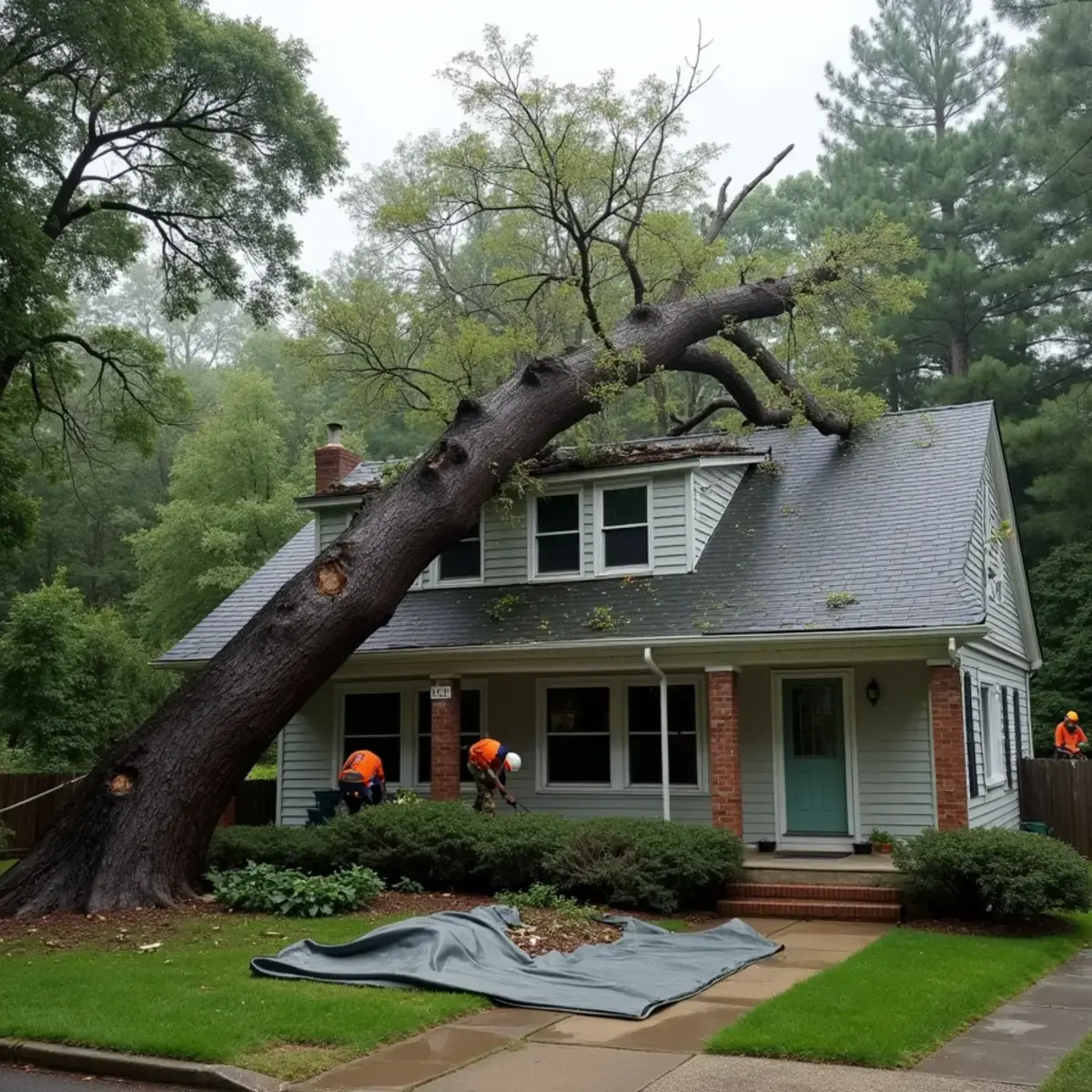
The general rule surprises people: once the tree is on your property, it is usually your responsibility to remove and your claim to file. Michigan, like most states, treats a healthy tree falling in a storm as an act of nature rather than anyone's fault.
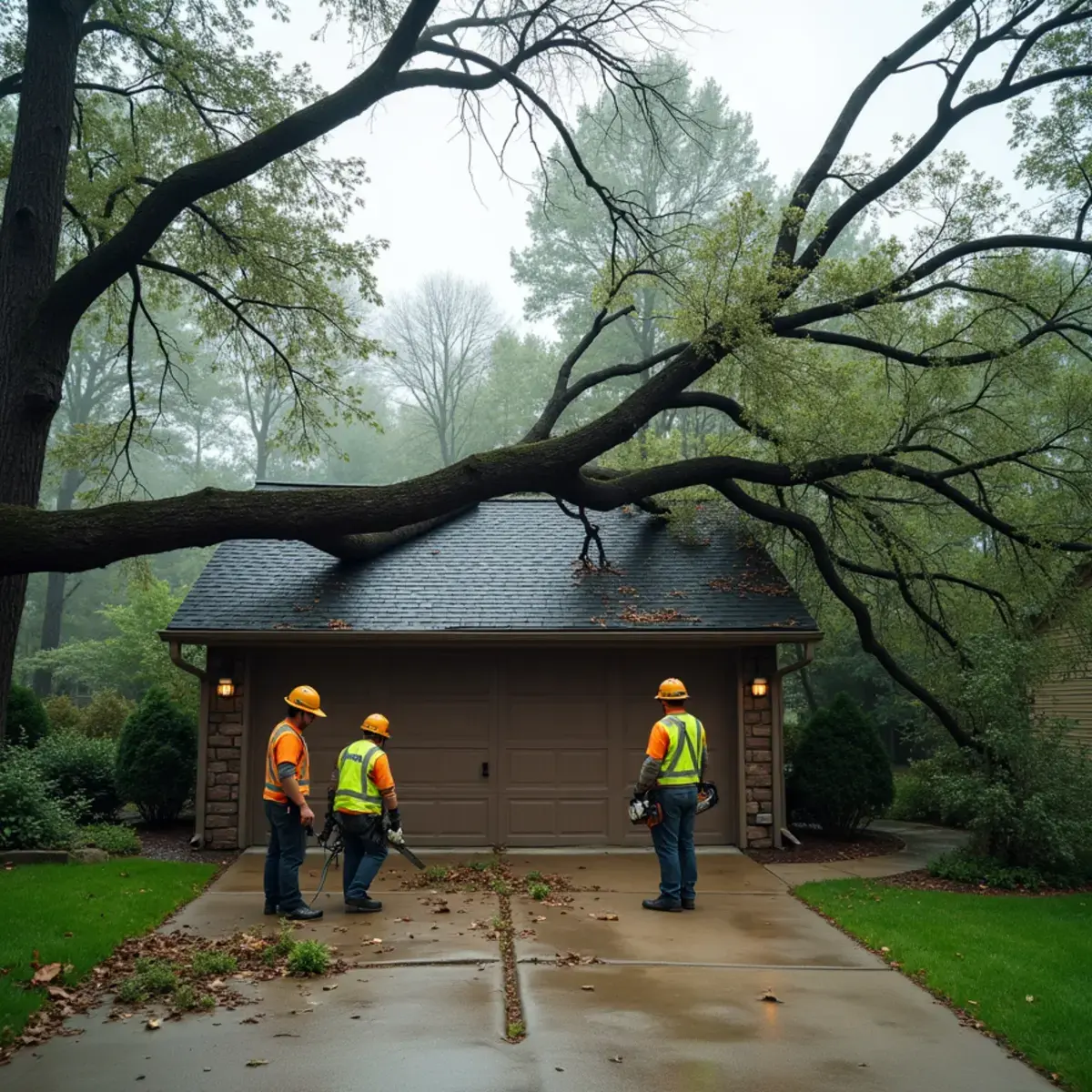
Your homeowners policy typically covers removal when the tree strikes a covered structure — house, garage, fence — often with a per-tree cap. A tree that lands in the open yard and hits nothing is frequently not covered at all.
The exception: negligence
The picture changes if the tree was visibly hazardous and the owner knew or reasonably should have known. A tree that was obviously dead, decayed, or leaning badly — and that the owner was told about — shifts the analysis toward negligence, and their liability coverage may come into play.
The operative words are "knew or should have known." That is why documentation matters so much.
Branches hanging over my property
Michigan generally follows the traditional self-help rule: you may prune branches and roots that cross onto your property, back to the property line, at your own expense. You do not need permission.
There are real limits, though.
- You may only cut to the property line. Reaching across to cut something on their side exposes you to liability.
- You cannot kill or seriously damage the tree in the process. Pruning so aggressively that the tree declines or dies can make you liable for its value — and mature tree values run into thousands of dollars.
- You are responsible for the debris you create.
- You cannot enter their property to do it without permission.
Practically speaking: talk to your neighbor first. Most of these situations resolve in a five-minute conversation, and a proper pruning job that keeps the tree healthy is a far better outcome than a flat vertical chop at the property line that looks awful and stresses the tree.
The trunk straddles the property line
A tree whose trunk sits on the boundary is generally treated as jointly owned by both property owners. Neither can remove it or do major work without the other's agreement. Damaging or removing a boundary tree unilaterally can expose you to significant liability.
We will not touch a boundary tree without both parties on board, and we say so at the estimate. It saves everyone a much worse conversation later.
Fruit and nuts hanging over the line
Generally the fruit belongs to the tree's owner regardless of which side of the line it hangs over. Fruit that has fallen onto your ground is a murkier question and rarely worth arguing about.
Roots damaging my driveway or sewer line
You may cut roots on your side of the line, subject to the same limits as branches — you cannot kill the tree doing it. Practically, cutting large anchoring roots is risky in a different way: it destabilizes the tree, and if it later falls on your house, you may have contributed to your own problem.
Sewer lateral intrusion is extremely common in older neighborhoods across Lincoln Park, Wyandotte and Detroit, where clay laterals and silver maples were installed at the same time. Roots find joints in clay pipe. Getting the roots out of the line is a plumbing job; keeping them out long-term usually means either lining the pipe or removing the tree.
City trees and the terrace strip
The strip between the sidewalk and the curb is typically public right-of-way, and the tree in it belongs to the municipality even though you mow around it. Removing or significantly pruning it requires city approval, and doing it without approval can bring a fine.
Rules vary considerably by community. We check what applies to your specific address before scheduling anything near the right-of-way.
If you are the property owner with the questionable tree
Take a written concern seriously. Have the tree assessed by someone competent and keep the documentation. If it needs work, do it. If it does not, you have a professional opinion on record saying so — which is a genuinely useful thing to have if it later comes up.
Our tree health and risk assessments are free, and we will give you the honest version either way. For commercial and rental property, documented inspection history matters even more — that is covered on our commercial tree service page.