A Tree Fell on Your House. Here Is Exactly What to Do, In Order.
The first hour matters. Here is the order of operations that keeps people safe and keeps your insurance claim clean.
What this guide covers11 sections
It is loud, it is disorienting, and everything about the situation pushes you to do something immediately. The most useful thing you can do in the first ten minutes is slow down and go in the right order.
1. Get everyone out of the affected rooms
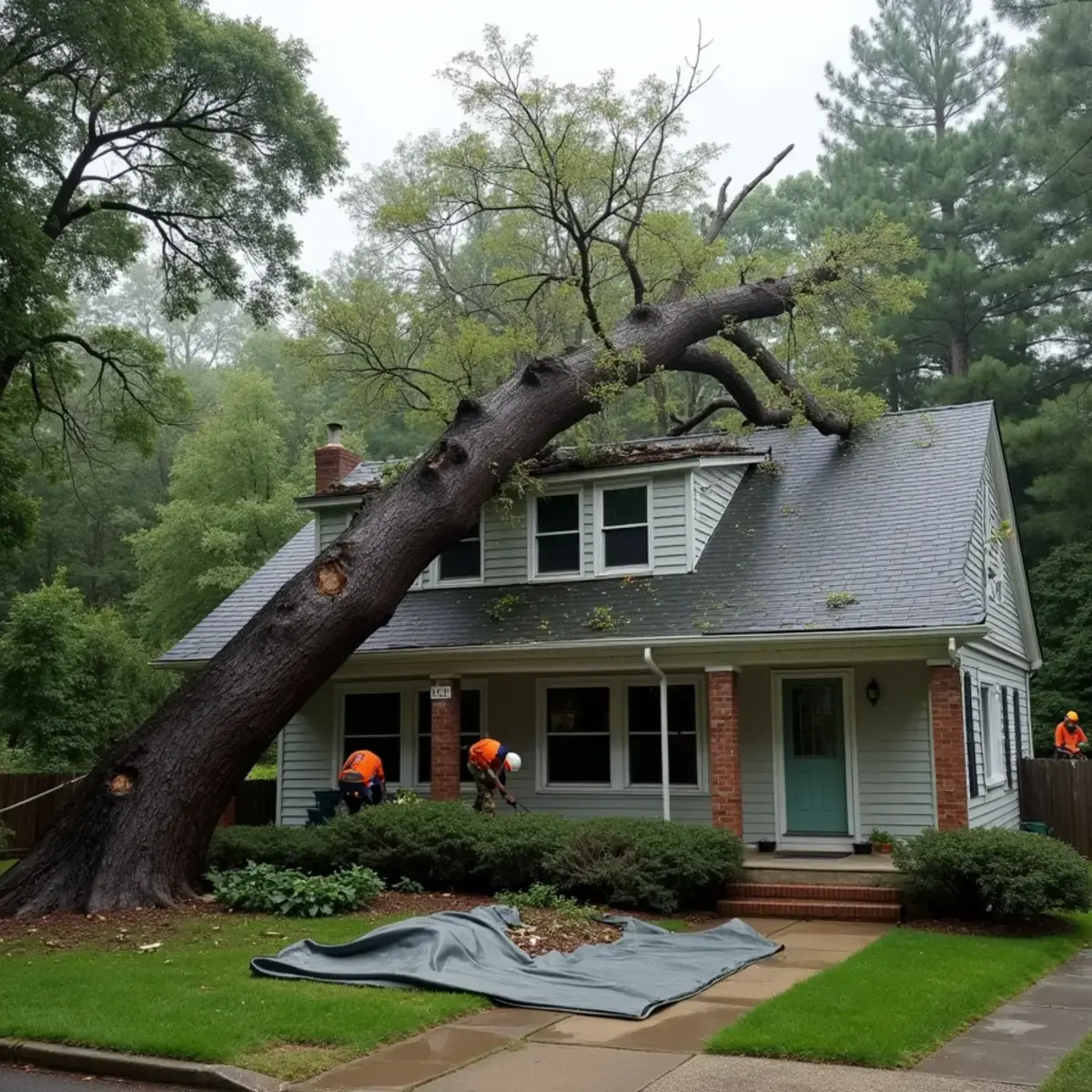
A tree resting on a roof is not stable. It is held by whatever it landed on and by whatever is still attached at the base, and both can shift. Move everyone out of any room the tree is over or against, and out of the rooms directly below. Do not go up to look at it from inside.
Structural damage is not always visible. Ceilings that look fine can be carrying load they were never designed for.
2. Get out of the house if the damage is significant
If the tree has come through the roof, damaged a load-bearing wall, or you can hear cracking or settling, leave. Take phones, medication, keys and pets. You can assess from outside once everyone is clear.
3. Check for utility involvement
Look — from a distance — for downed wires and for any branch touching a line. Treat every wire as energized. If there is any utility involvement, call DTE or your provider before anything else and keep everyone well away.
If you smell gas, get everyone out immediately, do not switch anything on or off, and call the gas emergency line from outside. Falling trees regularly damage gas meters on the side of the house.
4. Call for emergency tree service
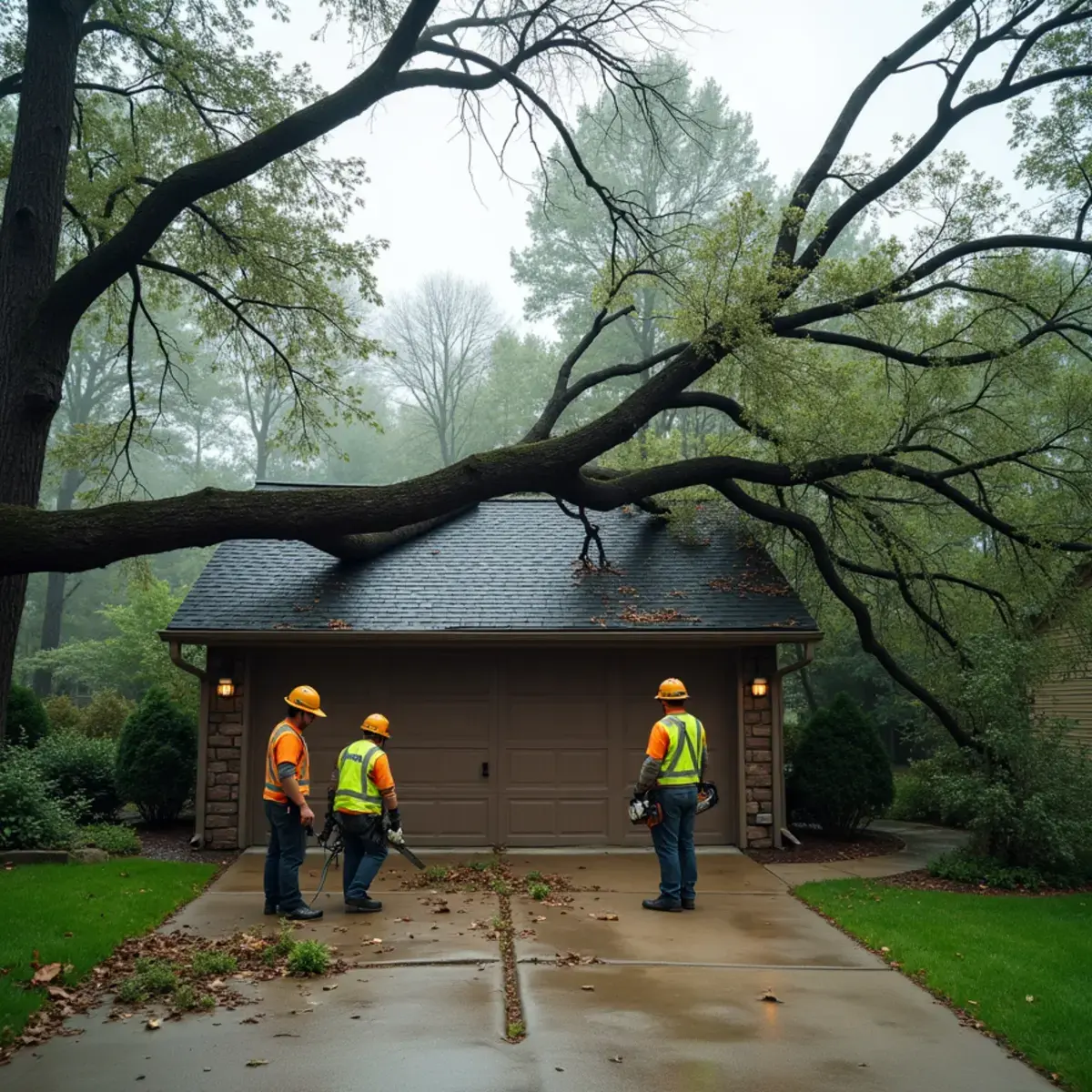
Once people are safe, call a company that does actual emergency tree work. Describe what fell, what it landed on, whether wires are involved and whether anyone is hurt. Text photos to the office if you can — that lets a crew send the right equipment the first time instead of arriving and discovering they need a crane.
One of our customers had a tree split and fall on their home, taking down the utility wires with it. They called early in the morning, got a live answer, and had a crew on site in under an hour. That is what the call is for.
5. Photograph everything before anything moves
This is your insurance evidence and you get exactly one opportunity at it. Wide shots showing the whole scene, close-ups of the damage, the base of the tree, the interior damage, and any personal property affected. Get the date stamp. More photos than you think you need.
6. Open the insurance claim
Call your carrier the same day. You do not need a final repair estimate to start a claim, and starting early gets an adjuster assigned sooner. Ask specifically about tree removal limits and debris removal limits — they are often separate from the structural damage coverage and frequently capped per tree.
Also ask what emergency mitigation is reimbursable. Reasonable steps to prevent further damage — tarping, boarding, emergency removal of an actively dangerous limb — are generally covered. Keep every receipt.
7. Take reasonable steps to prevent more damage
Most policies require you to mitigate further loss. That means tarping an opening once it is safe to do so, moving furniture and belongings out of a room taking water, and shutting off water to a damaged line.
It does not mean climbing onto a damaged roof in the dark or in wind. That is how a bad night becomes a much worse one. Let the professionals handle anything above ground level.
8. Get the removal scope in writing
Before the crew starts, get a written scope of what the removal includes: taking the tree off the structure, debris haul-off, whether stump grinding is included, and cleanup. Your adjuster will want an itemized invoice that matches what was approved. A vague receipt slows the claim.
What order the work actually happens in
- 1Utility makes any lines safe. Nothing else proceeds until this is done.
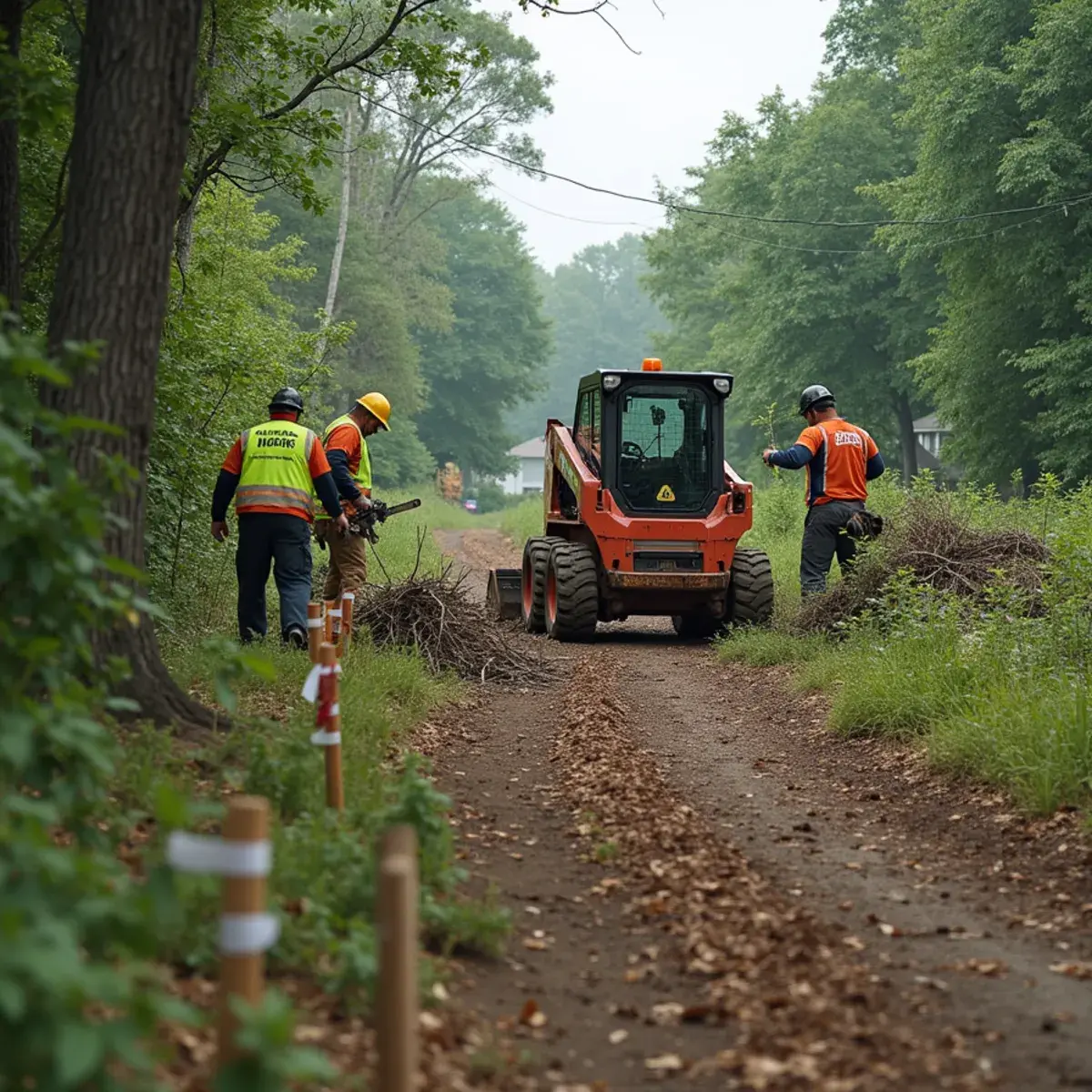
- 2Tree crew stabilizes the situation — securing loaded limbs, roping off the area, stopping it getting worse.
- 3The tree comes off the structure. This is the delicate part: the load has to come off in the right sequence or the tree drives further into the roof. On a house strike this frequently means a crane.
- 4Emergency tarping or boarding to keep weather out.
- 5Debris removal and site cleanup.
- 6Structural assessment and repair by a builder or restoration contractor.
- 7Stump grinding and any remaining tree work, on a normal schedule.
Whose insurance pays if it was the neighbor's tree?
In Michigan, once a tree is on your property it is generally your responsibility to remove and your claim to file, even if it grew next door. That feels unfair and it is how it works in most cases.
The exception is negligence: if the tree was visibly hazardous — dead, decayed, obviously failing — and your neighbor was notified in writing and did nothing, their liability coverage may come into play. Which is why documented notice matters. There is more on this in our guide to tree liability for Michigan property owners.
The best version of this is prevention
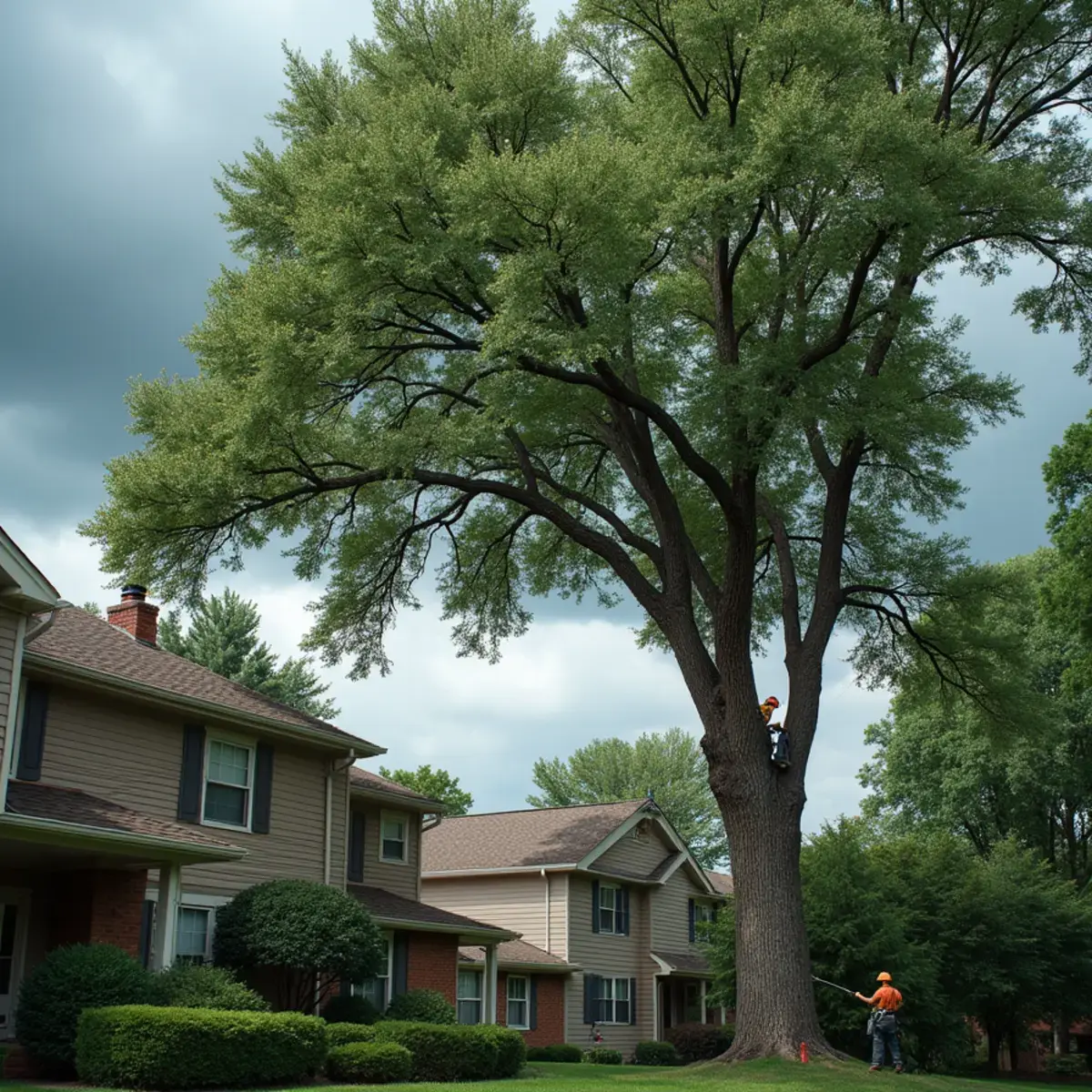
Nearly every tree we take off a house was showing warning signs beforehand — a dead crown, a decayed base, a new lean. Our free assessments exist precisely so that call happens on a calm Tuesday instead of at midnight in a thunderstorm.