Most of the trees we take down in Michigan are not surprises. They are the maple that has been dropping deadwood on the driveway for three summers, the ash that lost its canopy to emerald ash borer years ago, or the cottonwood that grew forty feet closer to the house than anyone planned. Homeowners live with them until the day a limb lands somewhere it should not have, and then the call gets made.
We remove trees of every size across Michigan, from a twelve-foot ornamental in a side yard to a hundred-foot cottonwood leaning over a river bank. What does not change is the method: the tree comes down in controlled pieces, the landing zone is protected before the first cut, and the property looks better when we leave than it did when we showed up.
And the estimate is free. We come out, walk the tree with you, tell you honestly whether it needs to go or whether pruning will buy it another ten good years, and put the number in writing before anyone starts an engine.
When a tree actually needs to come down
Not every ugly tree is a hazardous one. These are the conditions where removal is usually the right call rather than a wait-and-see.
It leans more than about 15 degrees and the lean is new
A tree that grew crooked is often fine. A tree that changed its angle after a windstorm has almost certainly torn roots on the upwind side, and the soil around the base will look heaved or cracked. That is a failure in progress, not a lean.
More than a third of the canopy is dead
Bare limbs at the top with green only on the lower half is a classic decline pattern. Once a hardwood loses the upper crown it rarely recovers, and the dead wood above your roof gets more brittle every winter.
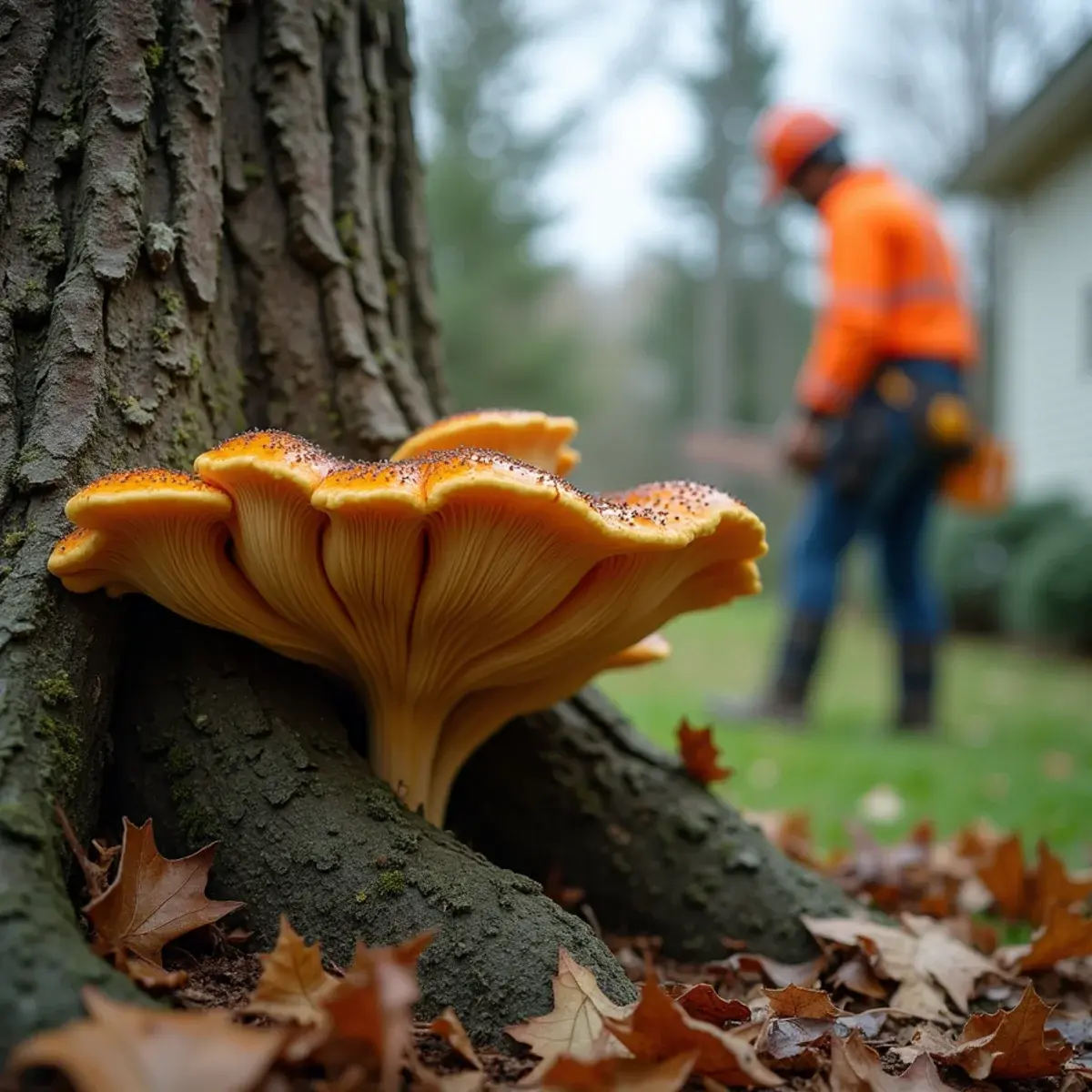
Mushrooms or conks are growing on the trunk or root flare
Shelf fungi are the fruiting body of decay that is already well inside the wood. By the time you can see them from the driveway, a meaningful share of the structural cross-section is usually gone.
The ash tree has D-shaped exit holes and blonde bark
Emerald ash borer has moved through southeast Michigan for two decades. Once woodpeckers have stripped the bark to yellow patches and the canopy is thinning, an ash is on a short clock and gets dangerously brittle to climb.
A crack runs vertically through the trunk or a major union
Co-dominant stems with included bark split under snow load and summer storms. A visible seam means the two halves are already separating.
The roots are lifting your driveway, foundation or sewer line
Silver maples and cottonwoods planted close to the house in the 1950s and 60s are the usual culprits Downriver. Sometimes root pruning helps. Often the tree simply outgrew its spot.
How we handle it, start to finish
- 1
Free on-site look
We walk the property with you, check the trunk, root flare and canopy, confirm what is coming out and what is staying, and write down the scope so there is no argument later about who was taking the brush.
- 2
Access and protection plan
We decide where equipment sets up, lay plywood or mats over soft turf and sprinkler heads, and flag anything we need to work around — a septic field, a hot tub, a downspout extension, a sapling that matters to you.
- 3
Rigging and sectional takedown
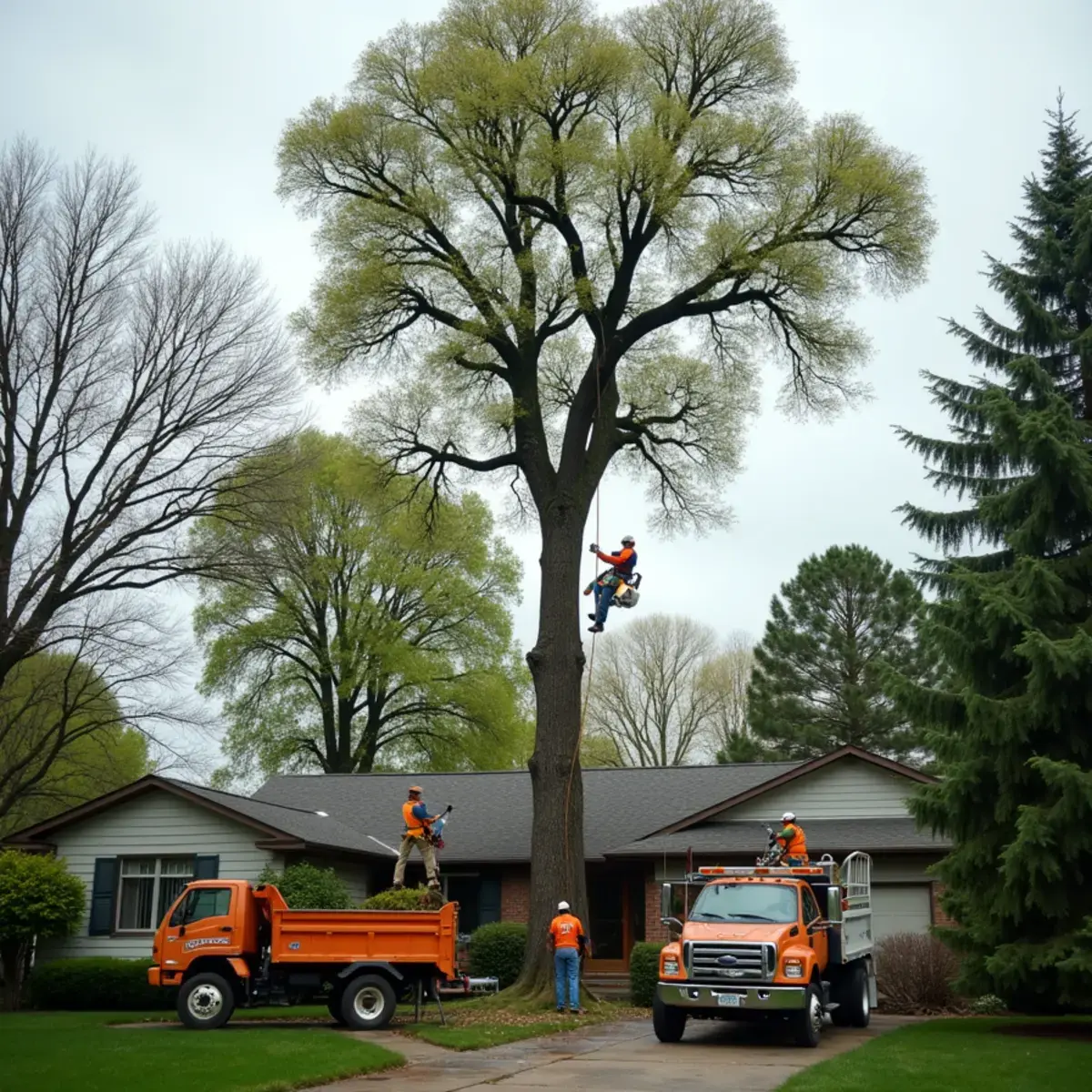
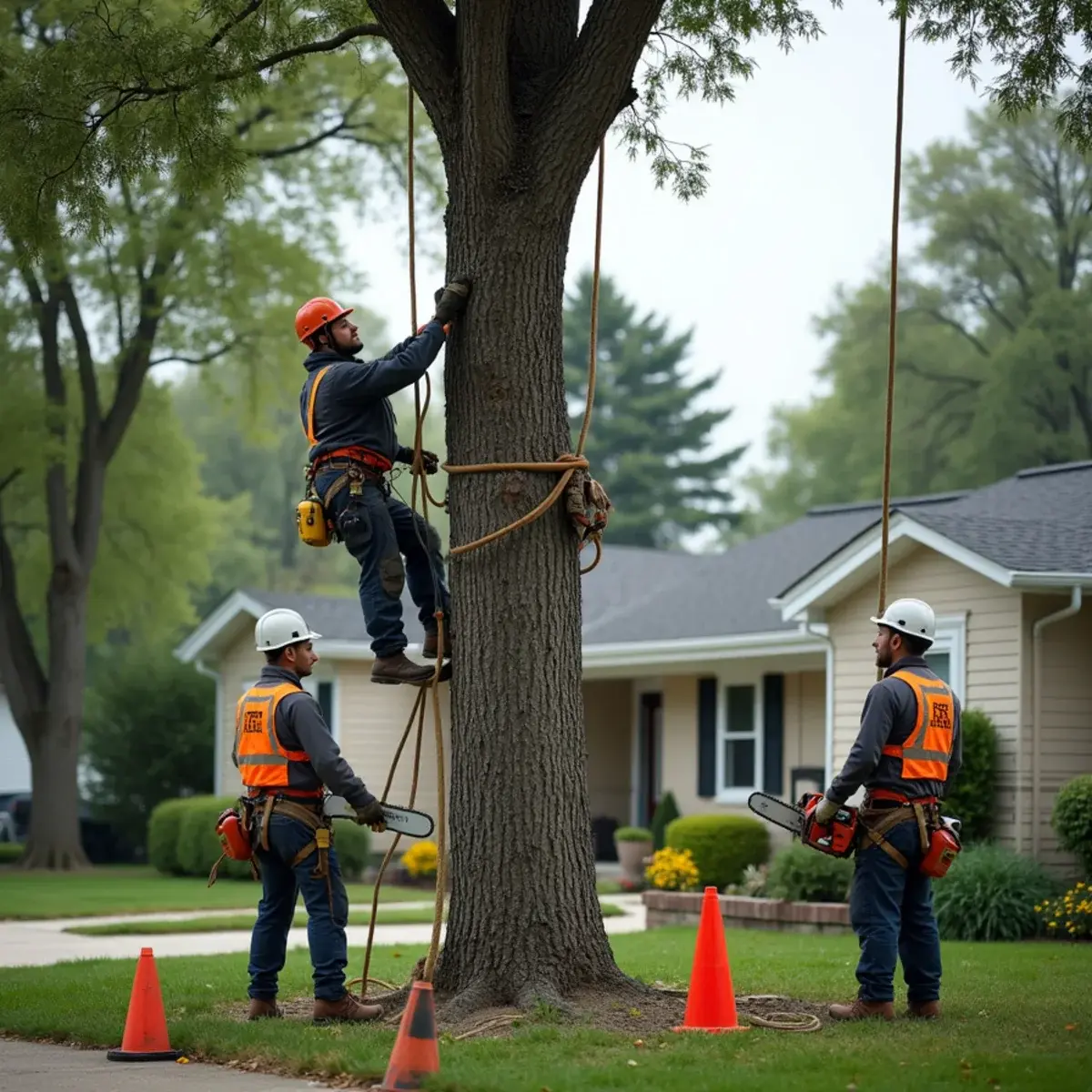
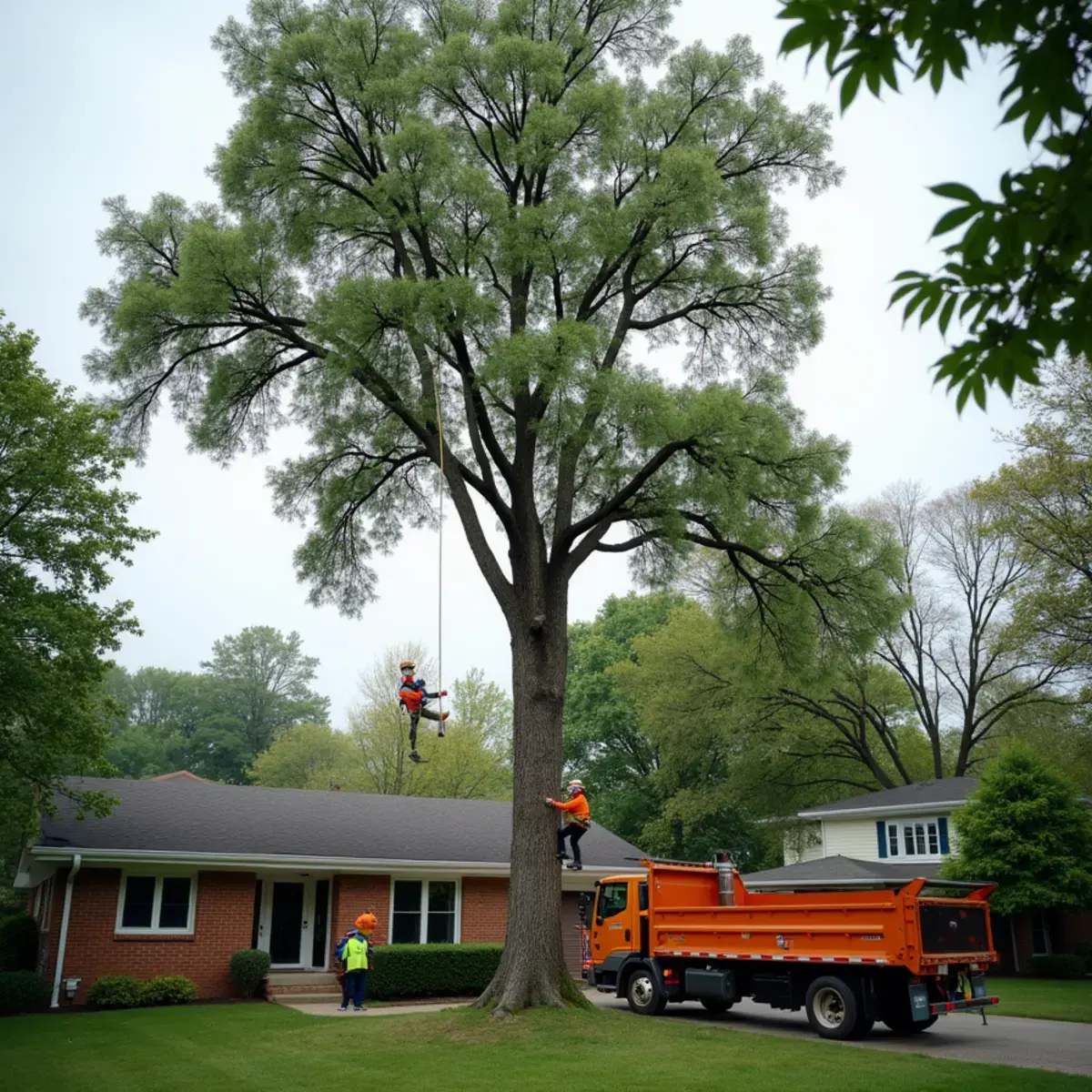
A climber or bucket operator removes the tree in pieces, roping each limb down to a controlled landing zone rather than dropping it. On tight lots this is the whole job — the cutting is the easy part.
- 4
Wood and brush handling
Brush goes through the chipper, logs get bucked and loaded. If you burn, tell us and we will cut rounds to your length and stack them where you want them instead of hauling them off.
- 5
Cleanup and walkthrough
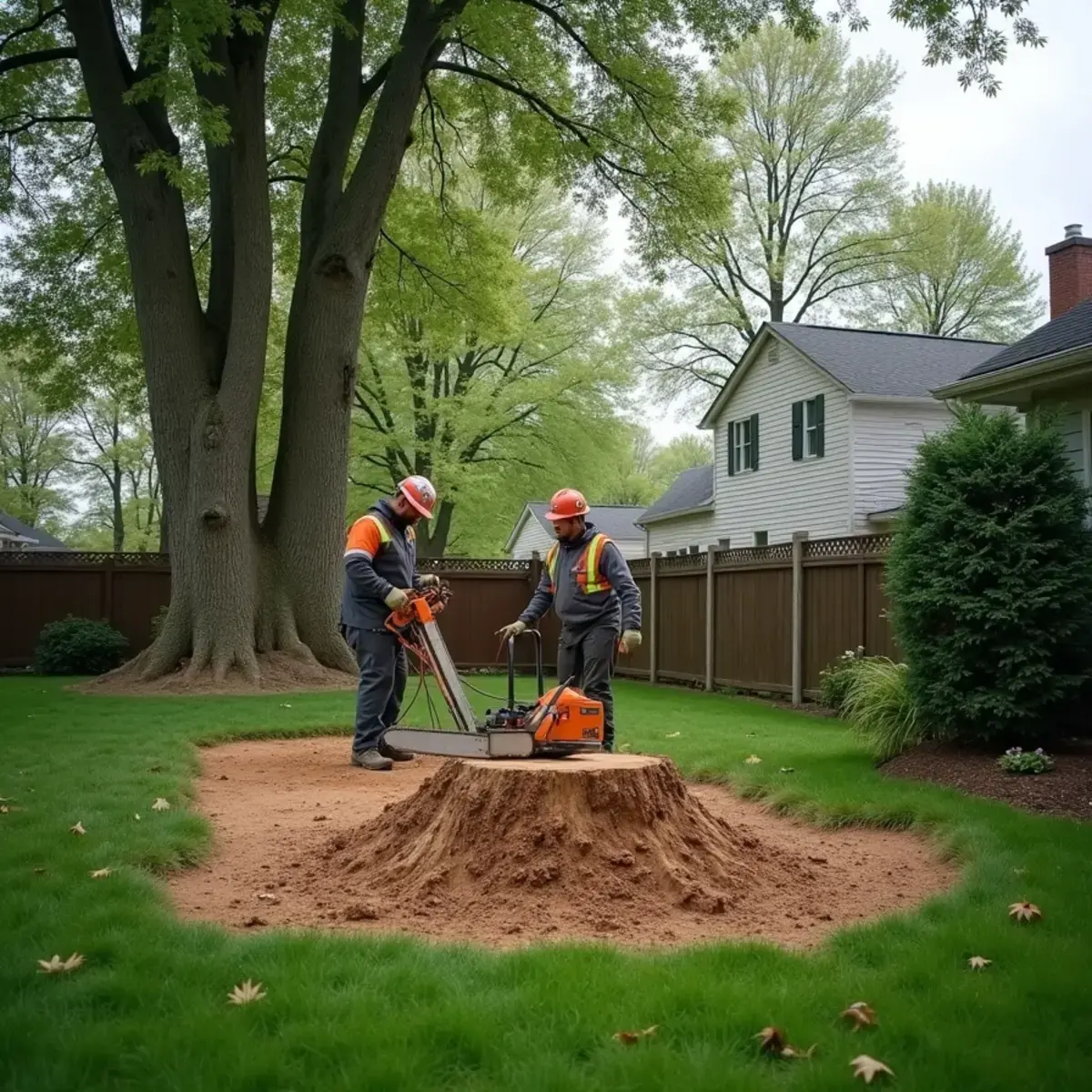
We rake the work area, blow the drive and walks, and walk it with you before the truck leaves. Stump grinding, if you want it, happens the same day or on a scheduled return.
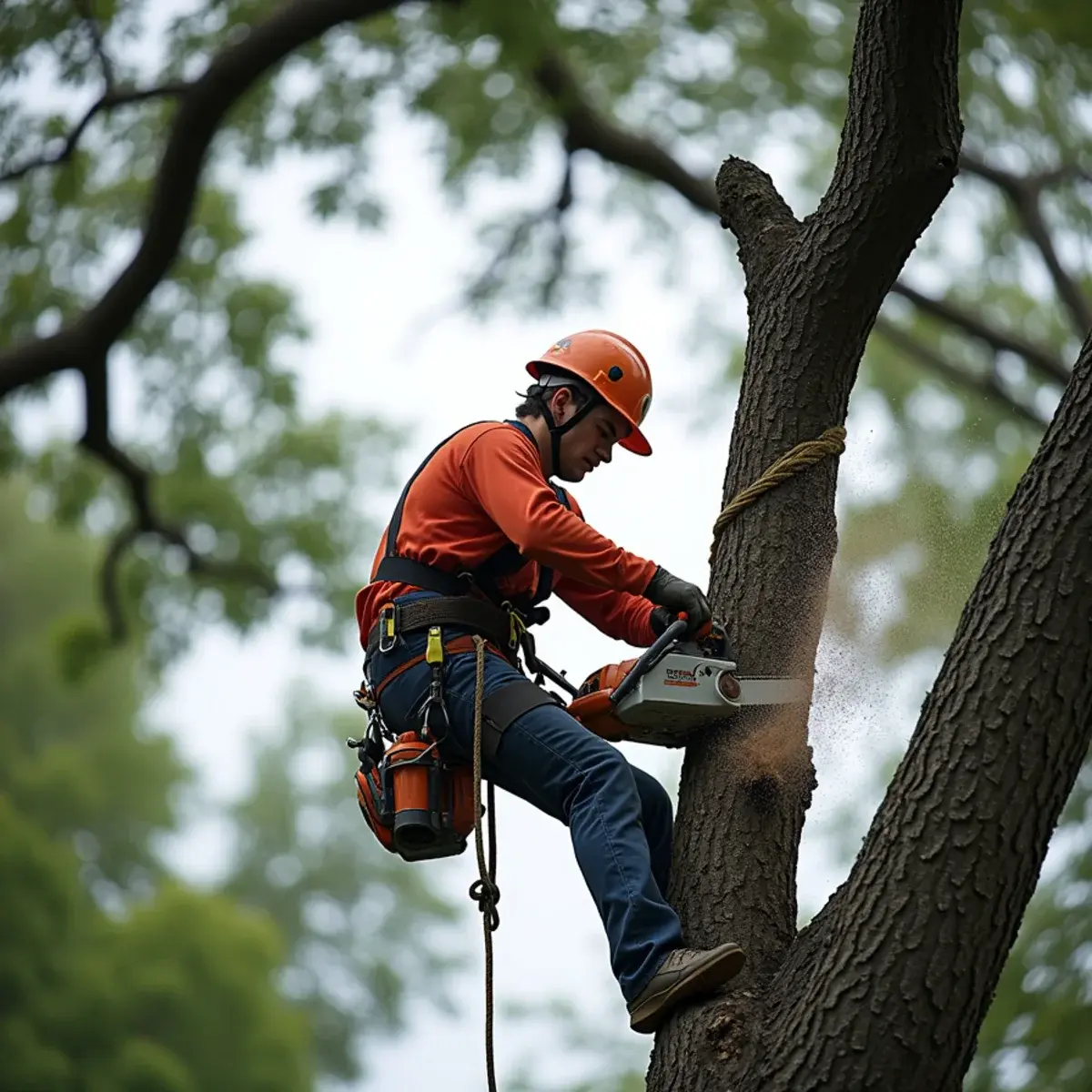
Tight lots, tall trees, and why sectional removal matters
Most of southeast Michigan was built out between 1920 and 1970 on lots that were never designed around eighty-year-old shade trees. Wyandotte, Lincoln Park, Melvindale and older parts of Detroit are full of 40-foot-wide lots with a mature silver maple in the back corner, a garage on one side, a neighbor's fence on the other, and a service drop running right through the canopy.
You cannot notch and fell a tree like that. It comes out in pieces, top down, with each piece controlled on a rope so it lands where the ground crew decides — not where gravity decides. That is why we invest in the rigging gear and the climbers to use it. It is also why an experienced crew finishes a "hard" tree in half the time a cheap crew takes, with none of the damage.
Permits, easements and the neighbor question
Several Michigan municipalities regulate removal of street trees or trees within the public right-of-way, and a few have ordinances covering large-diameter or landmark trees on private property. We check before we cut and tell you what applies to your address.
Property-line trees come up constantly. If a trunk straddles the line, both owners generally have a say — and we will not touch it without both parties on board. If the trunk is fully on your neighbor's side but the limbs hang over your roof, you usually have the right to prune back to the line, and we will do that cleanly rather than butchering it.
What to expect, from estimate to cleanup
A written scope before anyone starts an engine
What is coming out, what is staying, who takes the brush, whether the logs go or stay, and whether the stump is included. In writing, so there is nothing to argue about on the day. Outline that scope with every company you get a quote from — it is the single best protection against surprise charges.
Most residential removals are a one-day job
A standard back yard maple is a morning. A large tree over a roof, or anything needing a crane, is a full day. Multi-tree properties and river-bank cottonwoods can run to two or three days, and we will tell you which one you have at the estimate rather than after.
Aftercare once the tree is gone
We rake the work area, blow the drive and walks, and walk it with you before the truck leaves. If the stump is being ground the same day, expect some settling in the hole over the following months. We will also tell you honestly whether the spot suits a replacement tree and what would actually thrive there.
What this costs — and what changes the price
Nobody can price a tree over the phone honestly, and any company that gives you a firm number sight-unseen is guessing. Here is what actually moves the price up or down.
Height and trunk diameter
A 30-foot pine and a 90-foot cottonwood are different jobs entirely. Diameter matters more than height for wood volume — and wood volume is disposal cost.
What is underneath it
An open back lot where we can drop wood freely is the cheapest scenario. A tree over a roof, a fence, a pool or a neighbor's garage has to come down in small pieces on ropes, and that is hours of skilled labor.
Proximity to power and service lines
Anything near energized conductors slows everything down and sometimes requires coordinating a drop with DTE. We plan for it rather than improvise around it.
Truck and chipper access
If the chipper can back to the tree, brush handling is fast. If everything has to be carried 150 feet around a house through a 36-inch gate, the labor doubles.
Species and condition
Dead standing trees are more expensive than live ones, not less. Brittle wood cannot be climbed safely and often needs a lift or crane.
What you want left behind
Haul everything, leave the logs, grind the stump, take the chips, leave the chips for mulch — each choice changes the number. We price the version you actually want.
Our reputation Downriver is built on coming in fair. Customers routinely tell us we quoted well under the other bids they collected, and we would rather earn the next three jobs on your street than squeeze one.
What customers say about our tree removal
Every quote below is from a published Google review left by someone who had this specific work done. We do not borrow proof from other services.
“I just had One of a Kind Tree Service remove a large, dead evergreen in my backyard and I couldn't be happier with the results or service. The owner Eddie came the same day after I called him and gave me a price quote that was several hundred dollars less than I expected. They came out this morning, cut the tree down, removed it and ground out the stump. The crew, Paul and Steven, were great! They were careful not to damage anything as they worked. Awesome work!”
“Had a handful of different companies come out and quote removing a 40-ish foot maple tree next to my garage. One of a Kind came in with the lowest bid but had immediate availability compared to others being 3-4 weeks out. Crew did a great clean up, and were methodical in their removal process. Spent their time removing piece by piece.”
“Good work for a good price. They removed a tall tree in a tight space — I didn't have to jockey stuff around and they took care not to damage surrounding structures. Clean up was excellent as well. Would definitely recommend.”