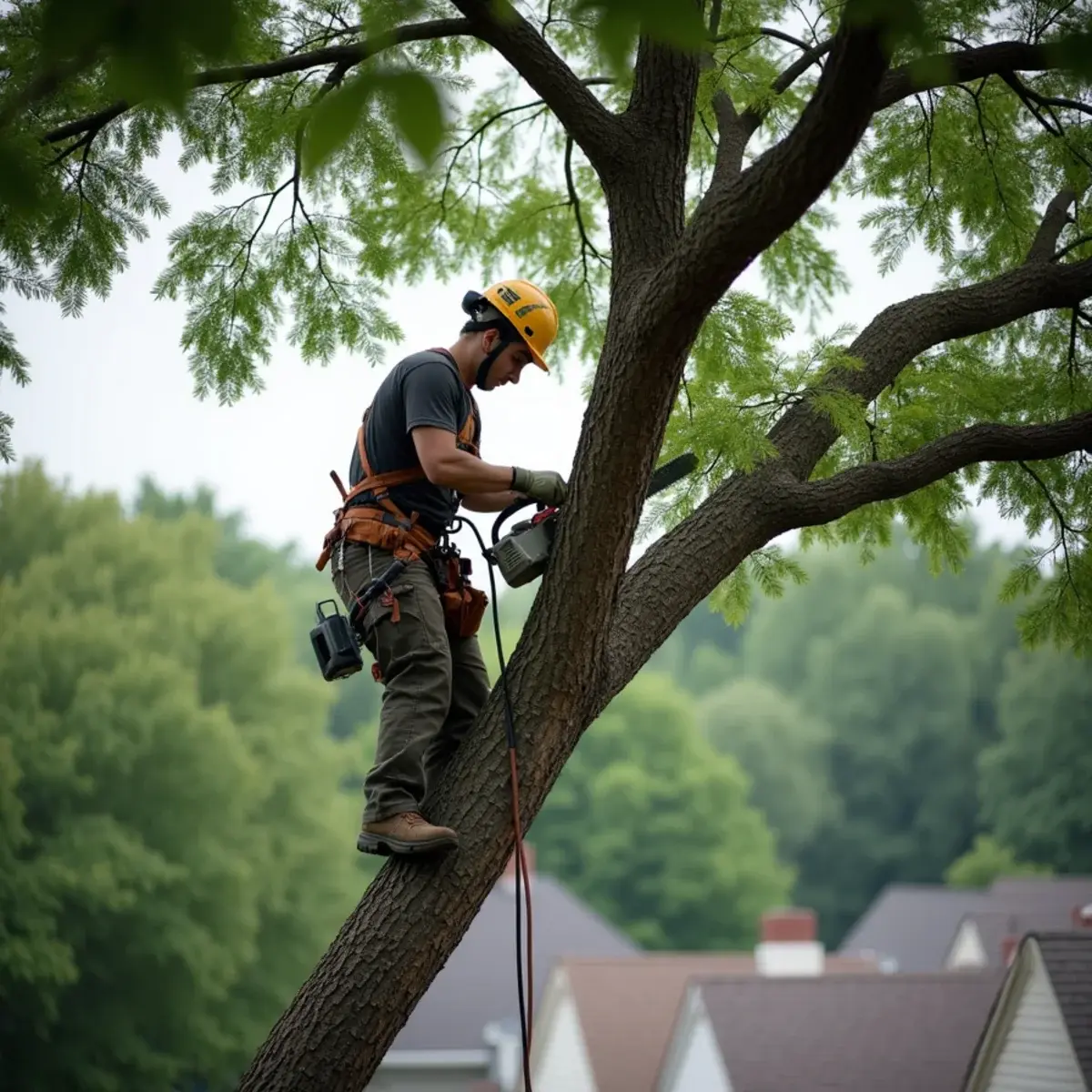
Pruning is the cheapest thing you will ever do for a tree, and the easiest thing to do badly. A good pruning job is nearly invisible from the street — the tree just looks like a healthier version of itself. A bad one leaves stubs that never seal, opens the canopy to sunscald, and triggers a burst of weak watersprout growth that makes the tree more hazardous five years later, not less.
We prune to keep trees structurally sound and out of harm's way: deadwood removed, weak unions addressed, limbs pulled back off roofs, gutters, driveways and service lines. Every cut is placed at the branch collar so the tree can compartmentalize the wound and close it.
And we do not top trees. Topping is the practice of cutting mature limbs back to stubs to reduce height, and it is the single most damaging thing a company can do to a healthy tree. If someone quoted you on "topping," get a second opinion.
Signs your trees are overdue for pruning
Trees rarely ask politely. These are the things homeowners notice right before a limb comes down.
Branches are touching or rubbing the roof
Limbs on shingles abrade the granule surface every time the wind blows and give squirrels and carpenter ants a bridge onto the house. Standard clearance is roughly eight to ten feet off the roof plane.
Dead limbs stay in the canopy through summer
A branch with no leaves in July is dead. It will fall — the only question is whether it falls on a calm Tuesday or during a storm when it has help.
The canopy is so dense nothing grows underneath
A thick crown catches wind like a sail and shades out the lawn. Selective thinning lets light and air through and cuts storm load considerably.
Two trunks meet in a tight V with bark pinched between them
That is included bark, and it is the most common failure point in Michigan maples and Bradford pears. Reducing the weight on one side, or cabling, can prevent a split.
Low limbs block the drive, sidewalk or line of sight
Crown raising fixes this in one visit and keeps you compliant with local sidewalk clearance rules.
Limbs are growing into the service drop to your house
The wire from the pole to your weatherhead is your responsibility, not the utility's. Chafing branches there are a real fire and outage risk.
How we handle it, start to finish
- 1
Assess the tree, not just the branch
We look at species, age, overall vigor and what the tree is up against before deciding how much to take. A stressed tree gets a light touch; a vigorous one can handle more.
- 2
Set the pruning objective with you
Clearance? Deadwood? Storm risk? Light for the lawn? Different goals mean different cuts, and being specific up front keeps the result matching what you pictured.
- 3
Climb or lift — never spikes on a live tree
Climbing spurs puncture the cambium and are for removals only. On a tree that is staying, we use rope-and-saddle or a bucket.
- 4
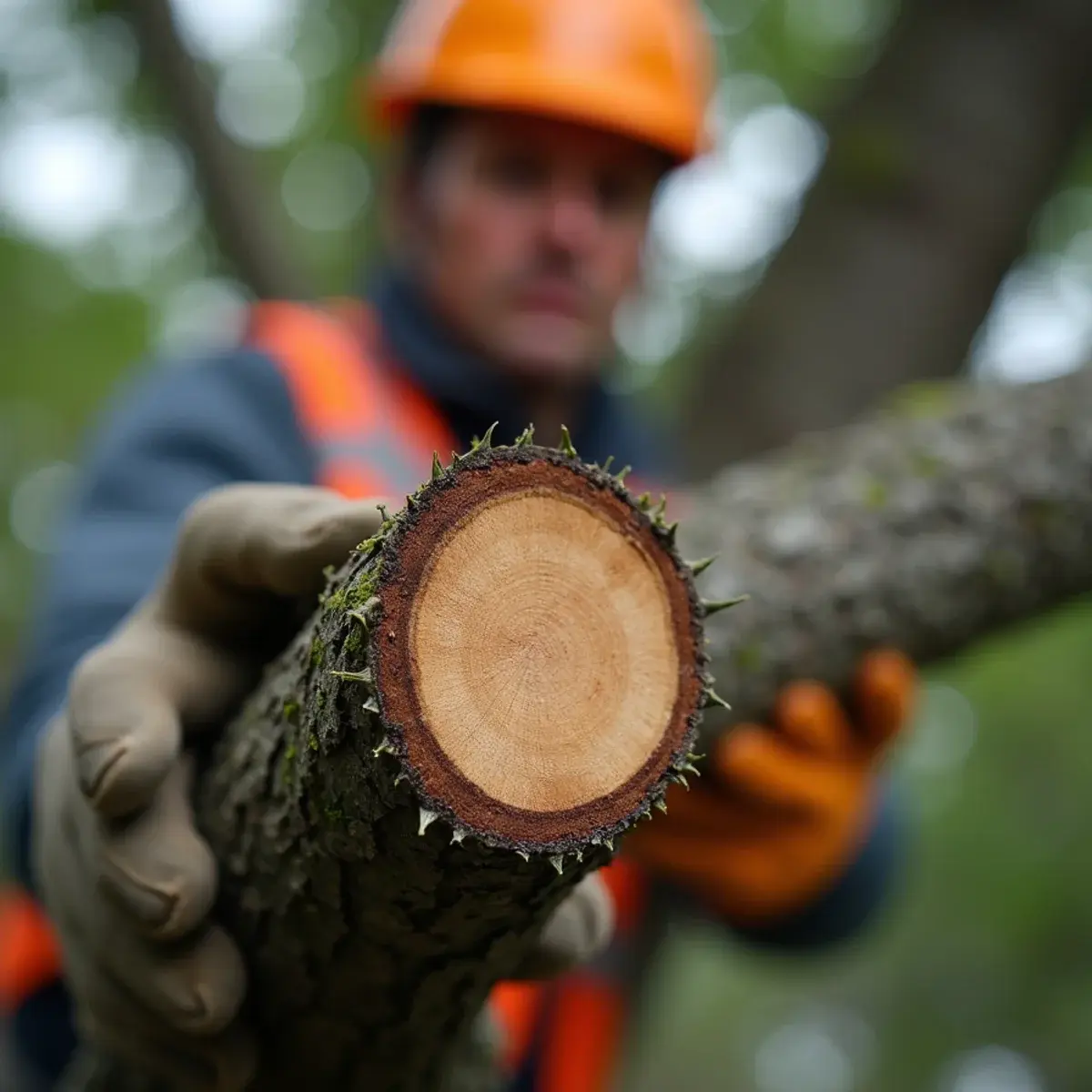
Cut at the collar, take no more than a quarter
Cuts land just outside the branch collar so the tree can seal them. We stay well under 25 percent live canopy removal in a single season on mature trees.
- 5
Clean up and haul
Brush is chipped, the beds and lawn are raked, hard surfaces get blown clean. You should not be able to tell we were there except by looking up.
The four pruning cuts we actually use
- Crown cleaning — removing dead, dying, diseased and broken branches. This is the highest-value pruning there is and what most homeowners actually need.
- Crown thinning — selectively removing interior branches to let wind and light through. Done right you cannot tell; done wrong it strips the interior and leaves "lion tails" that snap.
- Crown raising — taking off the lowest limbs for clearance over drives, walks and lawns.
- Crown reduction — shortening limbs back to a suitable lateral to reduce height or spread. This is the correct alternative to topping, and it is used sparingly.
Michigan timing: the oak wilt window is not optional
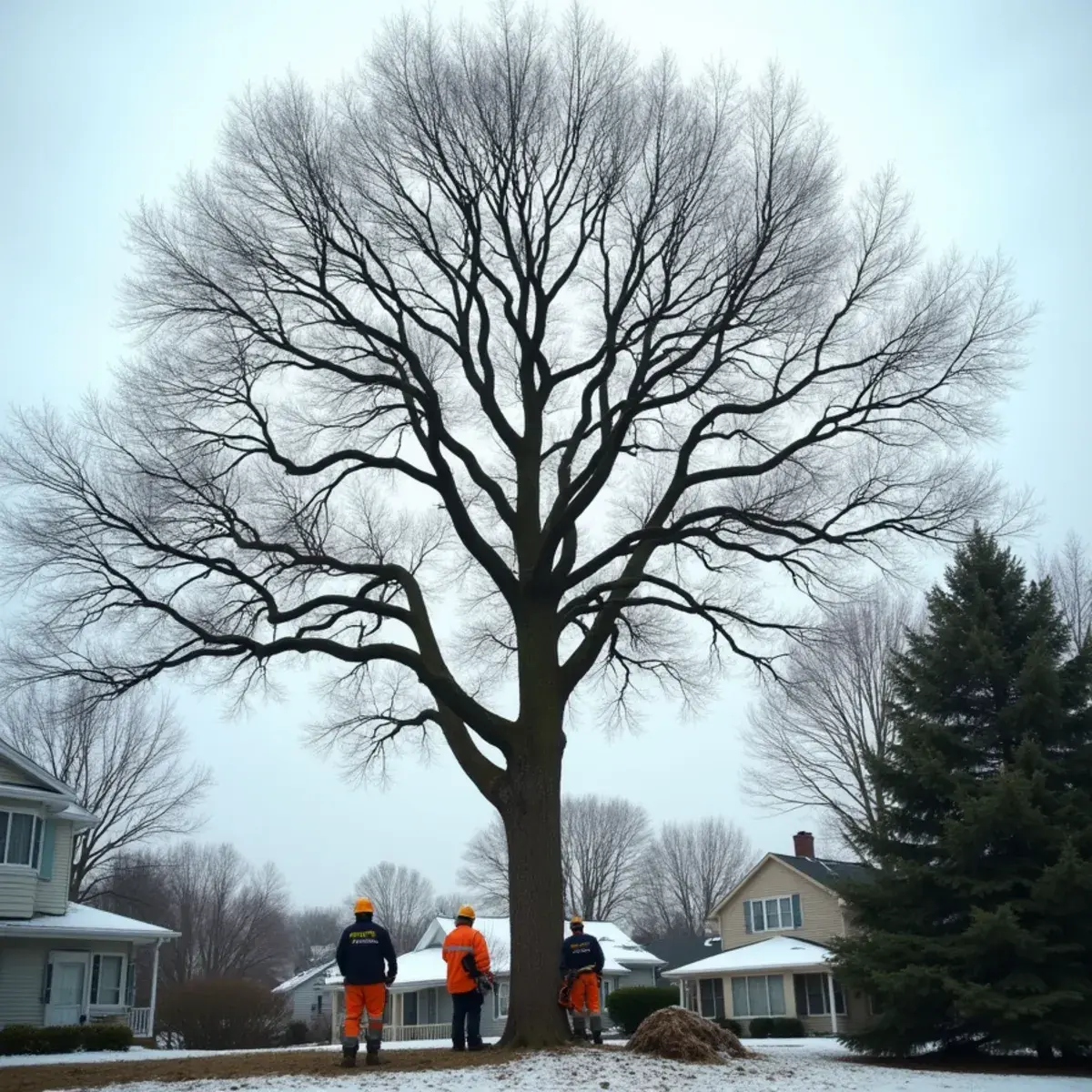
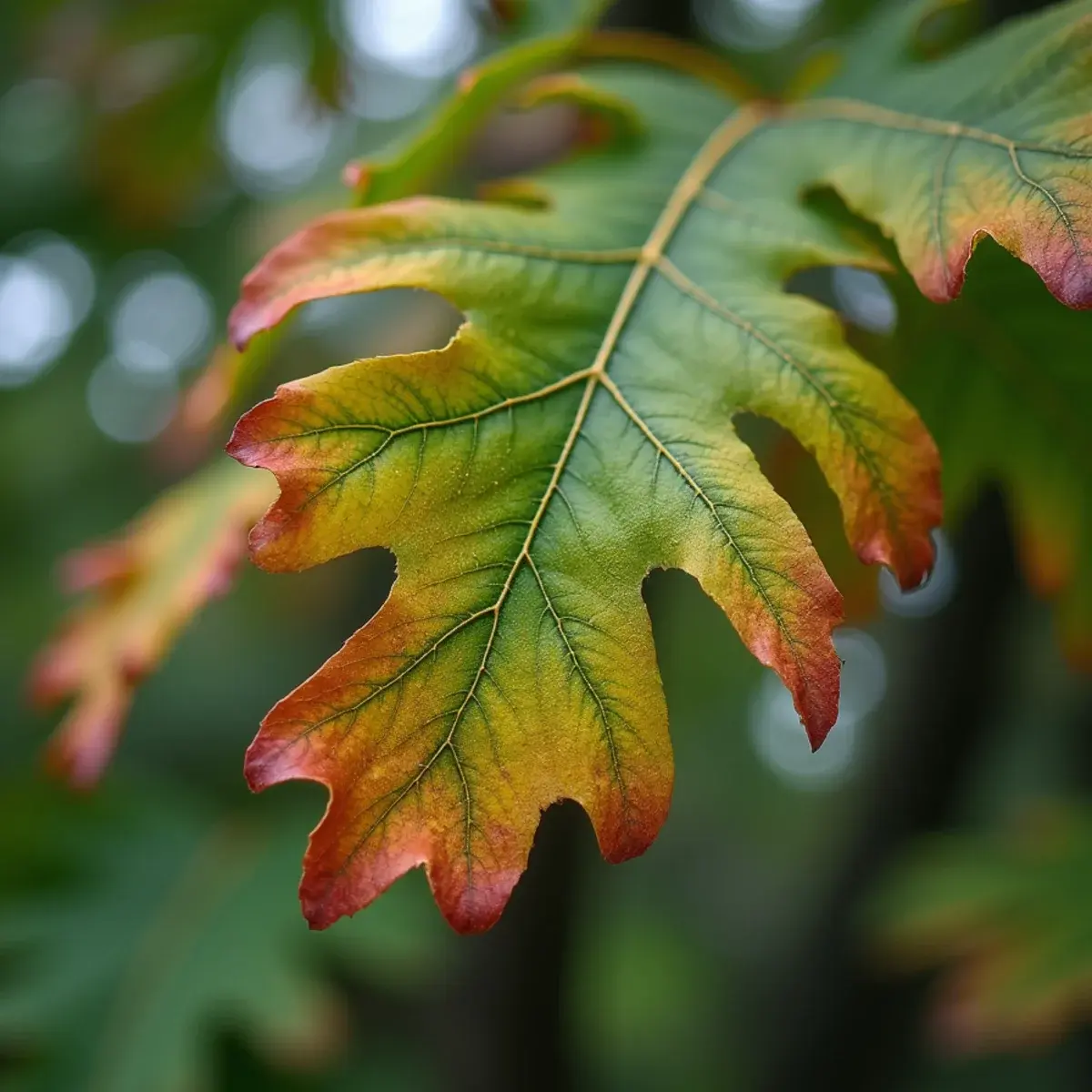
If you own oaks in Michigan, this is the single most important thing on this page. Oak wilt is a fungal disease spread by sap beetles that are drawn to fresh wounds. Those beetles are active roughly April through July. A pruning cut made during that window can introduce the fungus, and there is no cure once a red oak is infected — it can be dead inside a single season, and it can move to neighboring oaks through connected root systems.
So we prune oaks between about November and mid-March, when the beetles are dormant. The only exception is a genuine hazard: if an oak limb is hanging over a bedroom in June, safety wins, and we seal the wound immediately. Michigan DNR and MSU Extension both publish this guidance, and any tree company working in this state should be following it without being asked.
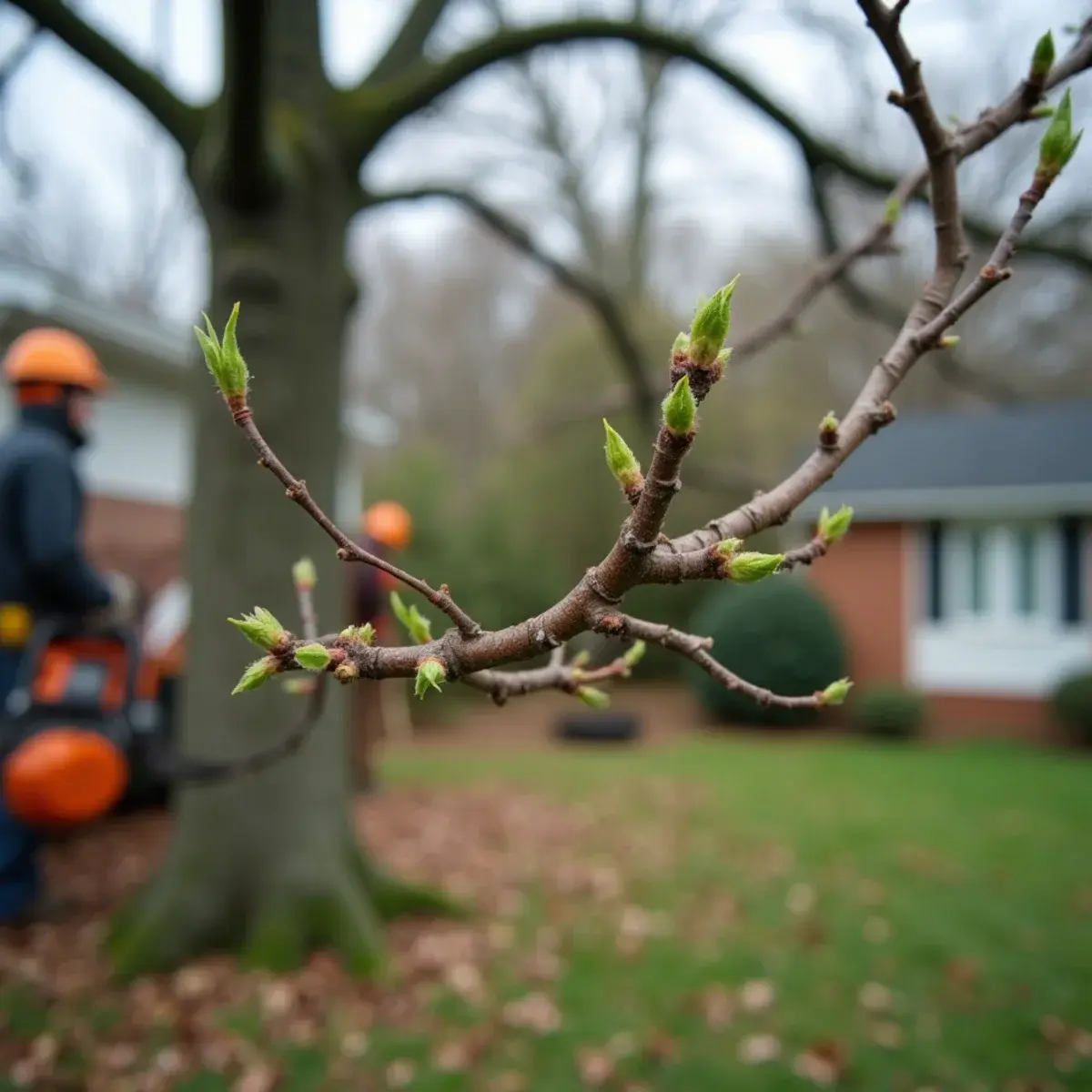
Other species are more forgiving. Late winter is the ideal window for most Michigan hardwoods — the structure is visible with the leaves off, decay organisms are inactive, and the tree pushes vigorous growth right into the wounds come spring. Elms have a similar disease-driven restriction; avoid pruning them in the growing season if you can.
What to expect, from estimate to cleanup
The pruning objective goes in writing too
Clearance off the roof, deadwood out, storm-risk reduction, or light for the lawn — different goals mean different cuts. Agreeing the objective in writing is what stops you looking up afterwards at a tree that was pruned correctly but not the way you pictured.
Most properties are a half day
Deadwooding a single mature oak is a few hours. A whole property of six or eight trees is a full day. A tree that has never been touched in forty years sometimes needs to be brought back over two or three seasons rather than all at once, and we will say so rather than shocking it.
What the tree does afterwards
Expect vigorous growth into the cuts next spring — that is the tree sealing the wounds and it is what you want. Maples and birches pruned in late winter will bleed sap heavily for a few weeks. It looks alarming and it harms nothing.
What this costs — and what changes the price
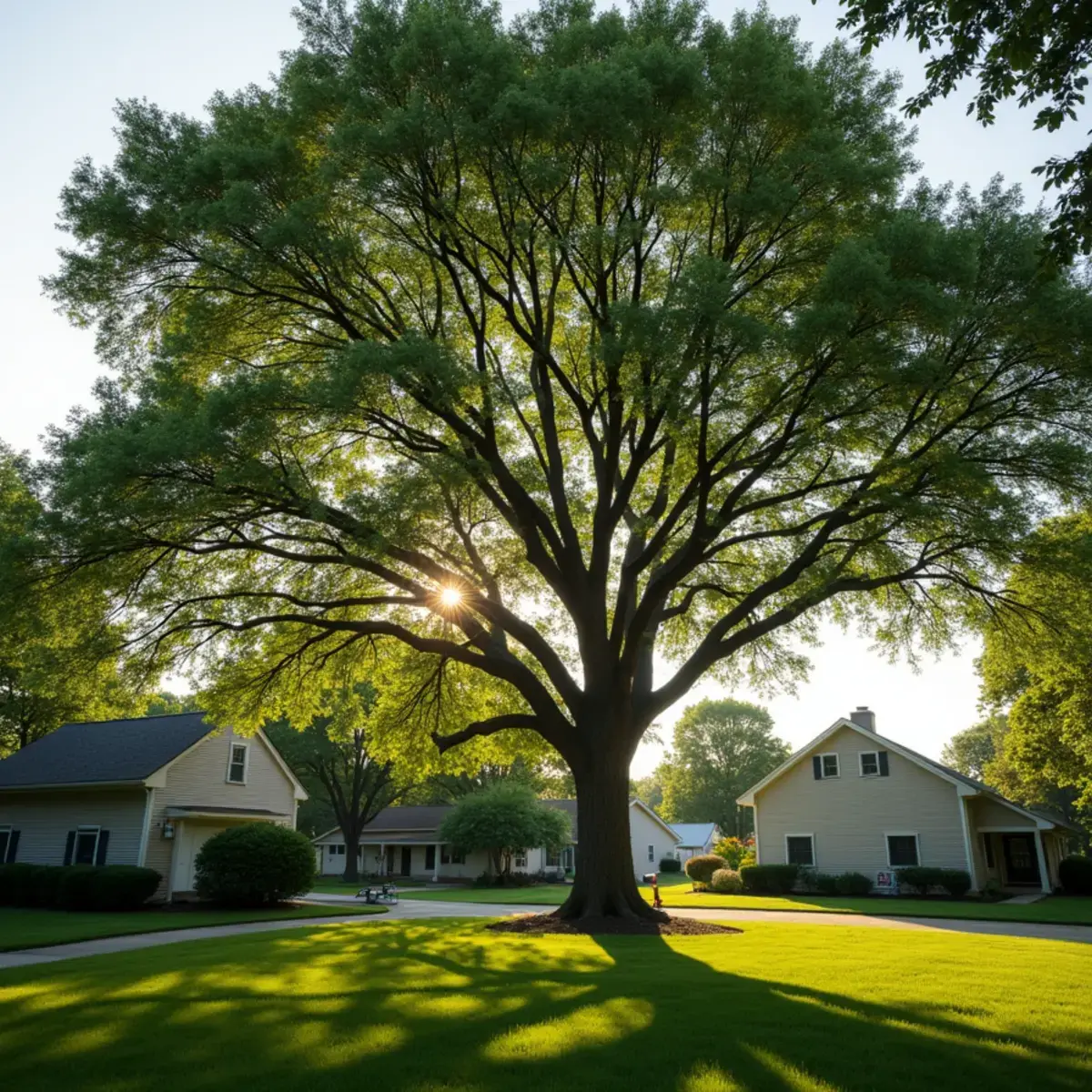
Pruning is priced on time and access, not on how many branches hit the ground.
Tree size and how much of it we have to reach
Deadwooding an 80-foot oak means the climber covers the entire crown. A clearance trim on one side is a fraction of that.
Climbing versus bucket access
If we can set a bucket truck on the drive, the job is faster and cheaper. Backyard trees behind a fence get climbed, which takes longer.
How overgrown it is
A tree pruned five years ago is a touch-up. A tree never pruned in forty years is a project, and sometimes should be staged across two seasons so we do not shock it.
Number of trees
Doing the whole property at once is meaningfully cheaper per tree than calling us back three times — setup and travel get spread across the work.
Debris volume
Fine brush chips fast. Large-diameter deadwood is heavy, slow and adds disposal weight.
Regular pruning is genuinely cheaper than removal. A mature, well-maintained shade tree adds real value to a Michigan property — it is worth keeping the good ones alive.
What customers say about our tree trimming & pruning
Every quote below is from a published Google review left by someone who had this specific work done. We do not borrow proof from other services.
“We recently were in need of tree service and called One of a Kind. We cannot say enough about the job they did. The crew was great, they were professional, personable and left our yard clean, not a twig out of place. We have already passed the name One of a Kind on to a neighbor with the highest recommendation.”
“Called back right away and set up estimate. Very fair price. Large lot with many large trees. Eddie and crew trimmed all and removed 2 sixty foot trees, ground stumps and cleaned everything up. I will use them in the future and would recommend One of a Kind Tree Service as a good company to work with.”