The Best Time to Trim Trees in Michigan (Month by Month)
Late winter is right for most Michigan trees. For oaks it is not just better — pruning in the wrong months can kill them. Here is the full calendar.
What this guide covers6 sections
Most pruning advice you find online was written for somewhere else. Michigan has a specific set of constraints — a hard winter, a disease-driven restriction on oaks, and a growing season short enough that late-summer cuts do not harden off before frost.
Here is the calendar that actually applies here.
The short version
- Most deciduous trees: late winter, roughly November through mid-March. Best window of the year.
- Oaks: November through mid-March only. This one is not flexible.
- Elms: dormant season only, same disease logic.
- Spring-flowering shrubs: right after they bloom, not before.
- Evergreens: light shaping in early summer; nothing hard after mid-August.
- Dead, broken and hazardous limbs: any time, any month. Safety wins.
Why late winter is the best window
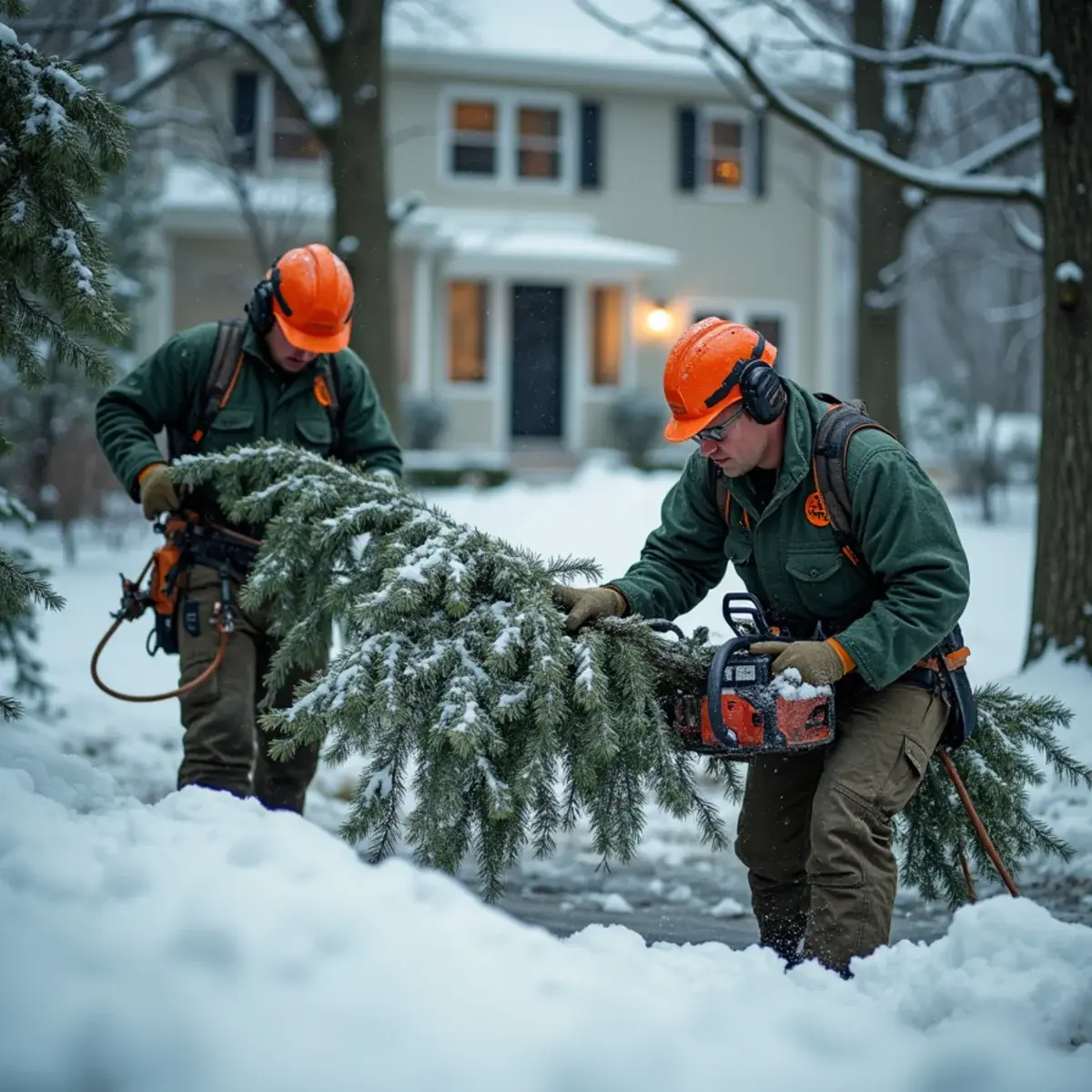
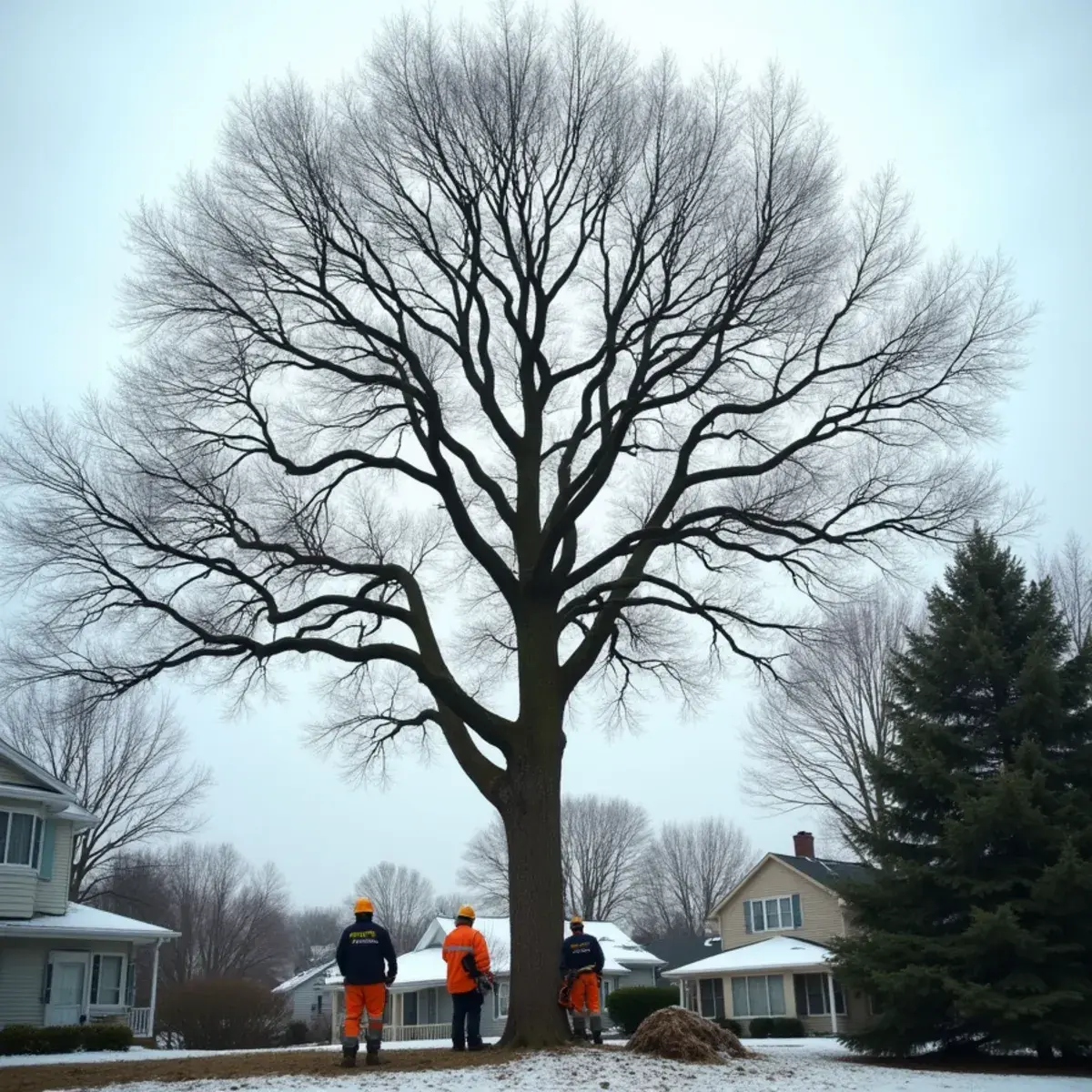
Four reasons, and they all compound. With leaves off, the structure of the tree is fully visible — you can see crossing limbs, bad unions and deadwood that a summer canopy hides. Decay fungi and most insects are dormant, so a fresh wound has time to begin sealing before anything can colonize it. The tree has stored energy ready to push into wound closure at bud break. And frozen ground carries equipment without rutting the lawn.
It is also the least busy time of year for tree companies, which usually means better scheduling. We do a large share of our pruning work from December through March for exactly that reason.
Month by month
November to March — the main window
Structural pruning, deadwooding, crown thinning, crown raising, clearance work, hard renovation of overgrown shrubs. This is when to do the significant work on maples, oaks, ash, locust, linden, birch and most other deciduous trees. Across Farmington Hills and Ann Arbor, where oaks are everywhere, this is effectively the only oak pruning window.
One species note: maples and birches bleed sap heavily if pruned in late winter as they wake up. It looks dramatic and it does not harm the tree. If it bothers you, prune them earlier in the dormant season or wait until full leaf-out.
April to July — hands off the oaks
Do not prune oaks or elms. For other species this is acceptable but not ideal — the tree is spending energy on growth rather than wound response. Spring-flowering shrubs like lilac, forsythia and viburnum should be pruned within a few weeks of finishing bloom, because they set next year's flower buds shortly afterward.
Late July to mid-August — light work only
Reasonable for light shaping, hedge trimming and clearance work. Growth has slowed and the wound response is decent. This is the standard second cut on formal hedges.
Late August to October — the worst window
Avoid significant pruning here. Cuts made now stimulate new growth that will not harden off before Michigan winter arrives, and it burns. Decay fungi are also releasing spores heavily in autumn, so fresh wounds are at their most vulnerable. Wait six weeks and do it properly in the dormant season.
How much to take at once
The working rule is no more than about 25 percent of the live canopy in a single season on a mature tree, and considerably less on a stressed or older one. Trees pay for their leaves with the energy those leaves produce — remove too many and you starve the tree into decline.
A tree that has not been touched in forty years sometimes needs to be brought back over two or three seasons rather than all at once. That is a longer conversation than most homeowners expect and it is the right approach.
What never has a good season
Topping. Cutting mature limbs back to stubs to reduce height causes decay at every cut, forces weak regrowth, and produces a more dangerous tree within a decade. If a company offers to top your tree in any month, get another quote. Proper crown reduction — cutting back to a suitable lateral branch — achieves the height reduction without the damage.
Book winter work in advance
The dormant window is when the good pruning happens and it is a limited number of weeks. If you have oaks that need work, or a tree that has been overdue for years, get on the calendar before the season fills. Our tree trimming and pruning service page has more on how we approach it, and we will walk your property for free.