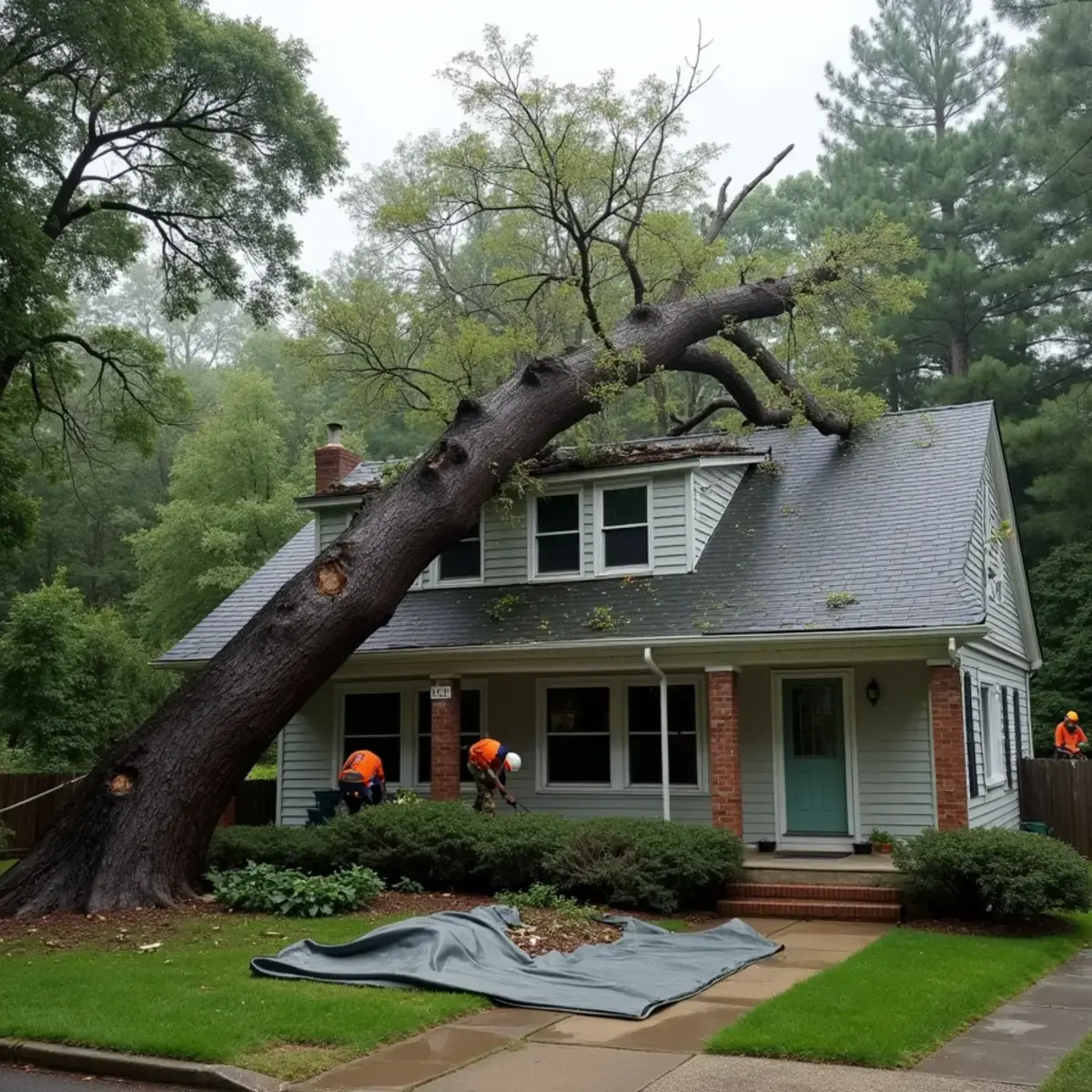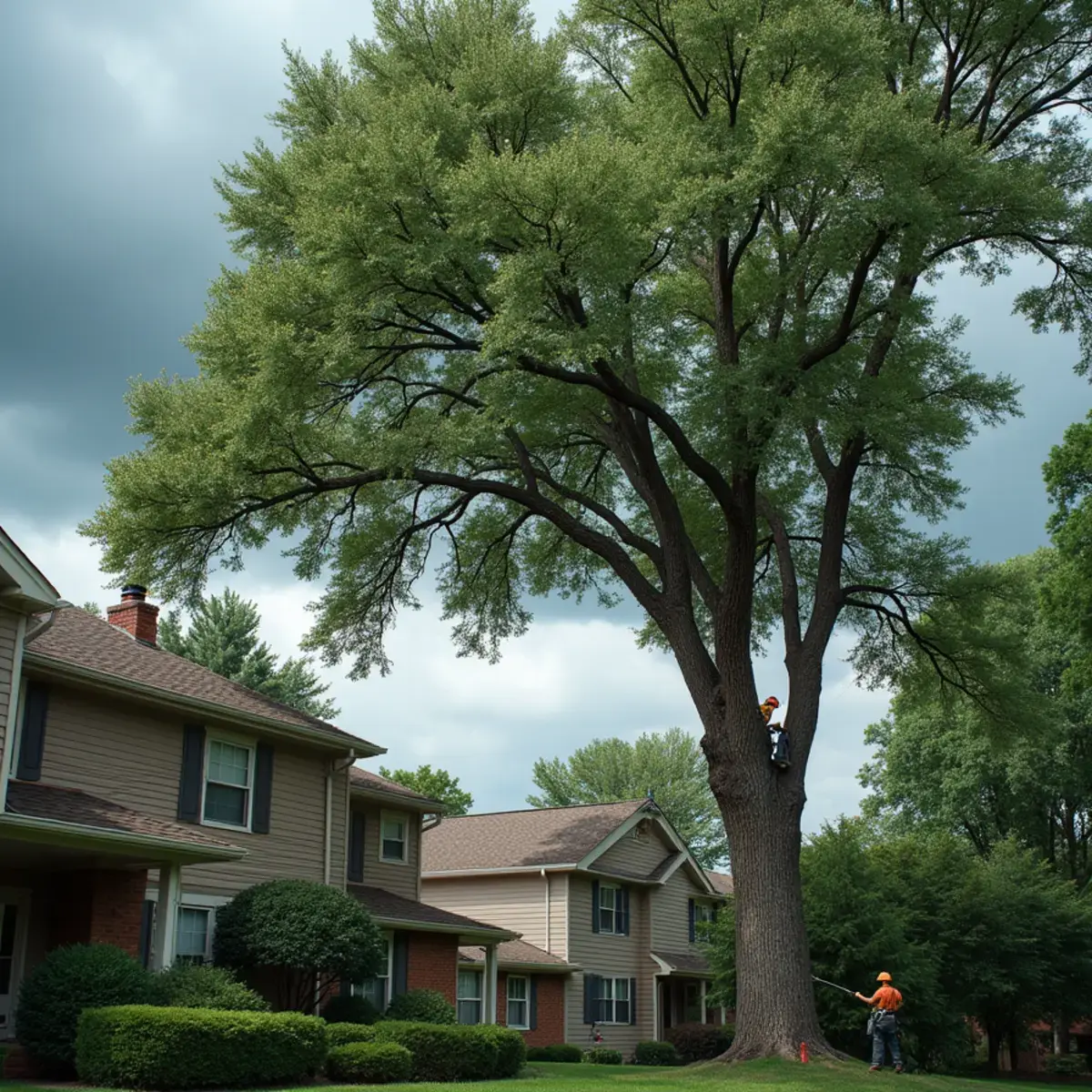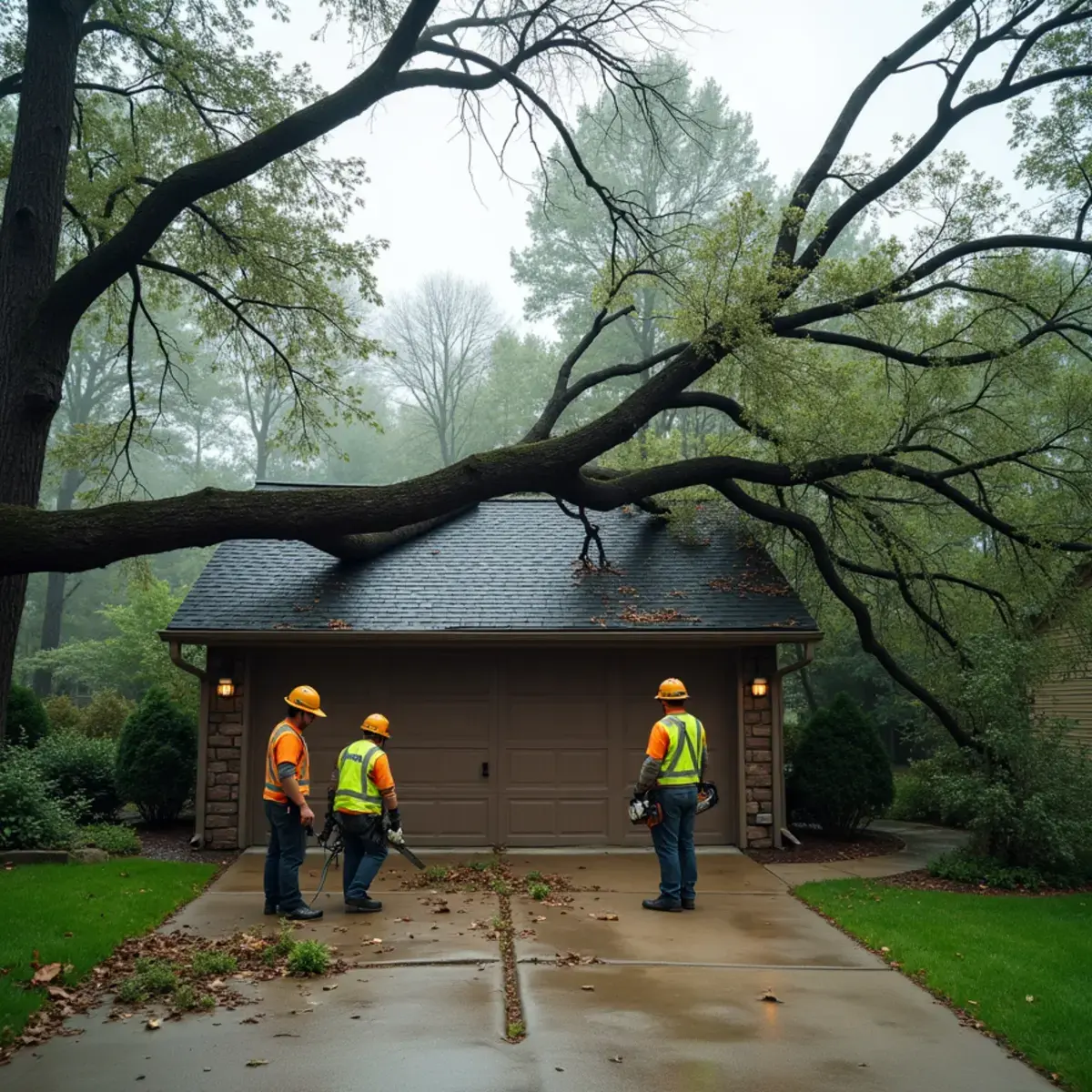
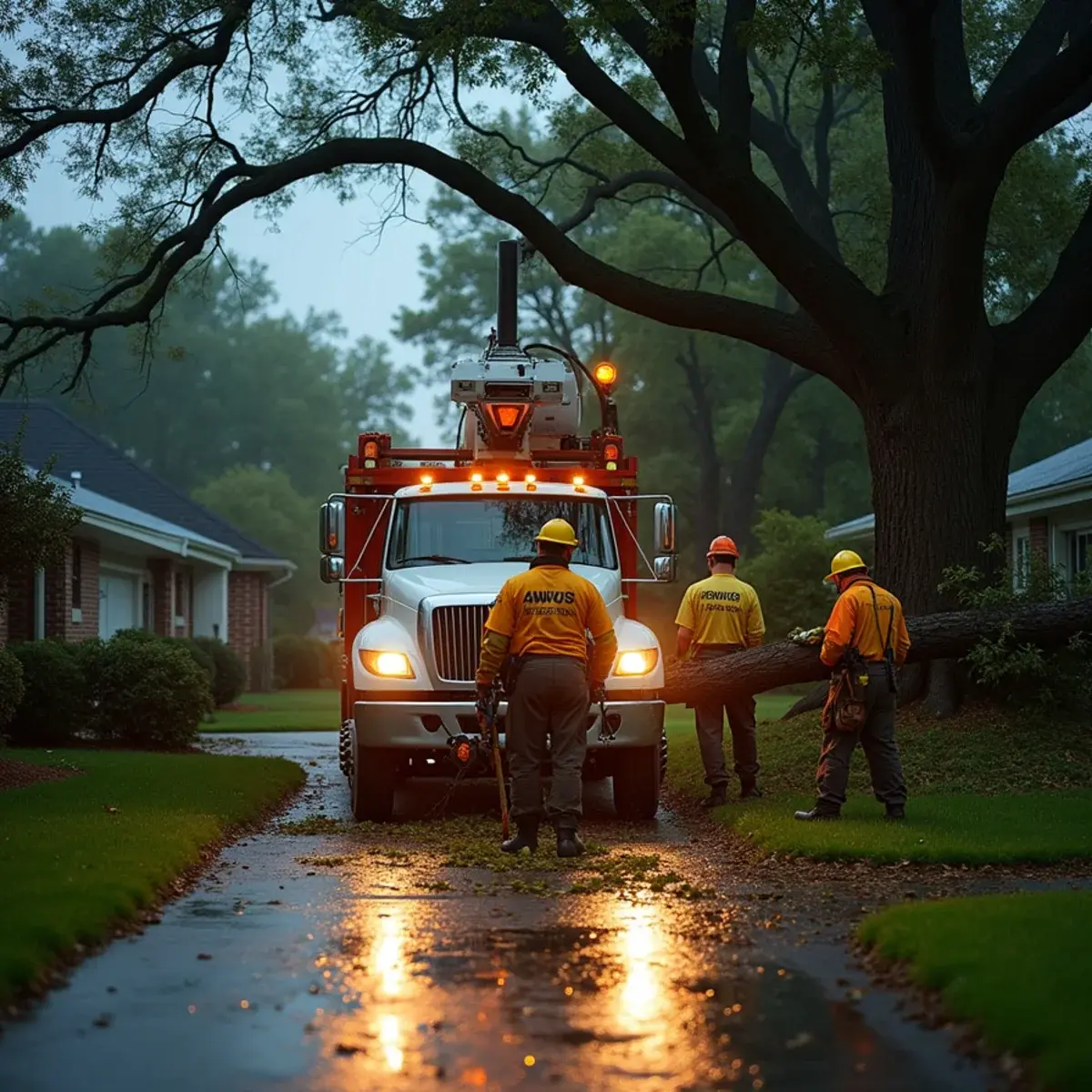
A storm rolls through Wayne County at nine at night and by nine-fifteen there is a maple across your driveway or a split trunk hanging over the bedroom. That is not a job that waits for a scheduling window.
Speed is the thing our customers write about most. One homeowner described calling us and having a crew on site in fifteen minutes. Another had lightning split a trunk down the middle over their house and had our crew working until dark that same evening to make it safe. When a hazard is live, the right answer is to make the property safe now and sort out the rest tomorrow.
Call the office line and describe what you are looking at. If it is a genuine emergency we will tell you straight whether we can get there tonight or first thing, and what to do in the meantime.
What counts as a real tree emergency
If any of these describe your situation, do not wait for morning — and keep people away from the area until a crew arrives.
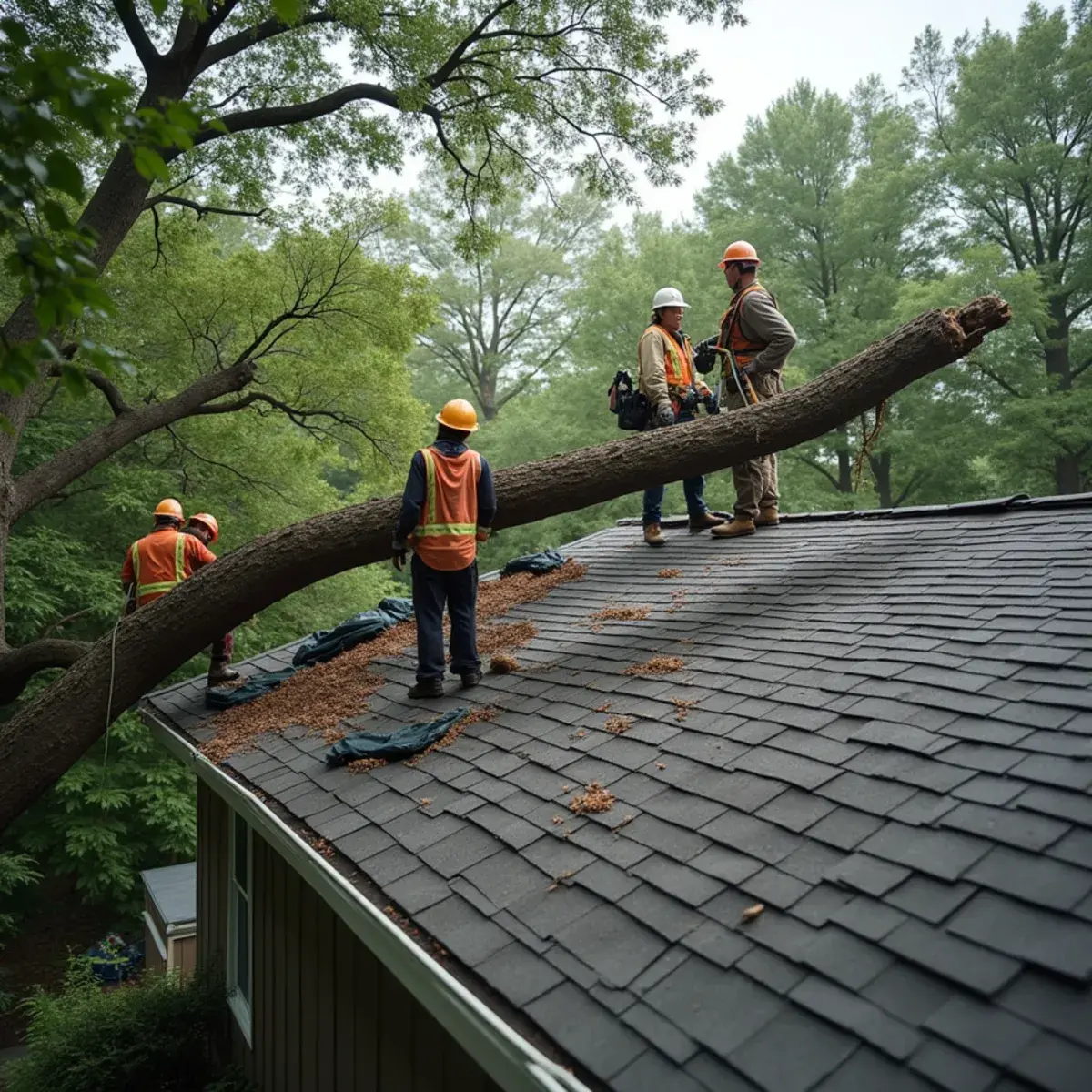
A tree or large limb is resting on a structure
Roof, garage, deck, fence or vehicle. Loaded wood is under tension and can shift without warning. Nobody should be under it, and nobody untrained should be cutting it.
A limb is hung up in the canopy
A "widowmaker" is a broken branch caught in the branches above. It is holding on by friction and it will come down. Rope off the area beneath it.
The tree is leaning and the soil is heaving
Cracked or mounded ground on the opposite side of the lean means the root plate is lifting. That tree is failing right now, just slowly.
A trunk has split vertically
Lightning strikes and storm loading both do this. A split trunk has lost its structural core and the next gust can finish it.
Anything is touching a power line
Call DTE or your utility first. Treat every downed wire as energized. We coordinate with the utility rather than working around live conductors.
A tree is blocking your only access
A trunk across the drive is not just an inconvenience — it blocks emergency vehicles. We clear access first, then deal with the rest.
How we handle it, start to finish
- 1
Call and describe the scene
Tell us what fell, what it landed on, whether wires are involved and whether anyone is hurt. Photos texted to the office help enormously and let us send the right equipment the first time.
- 2
Make the area safe
First move on arrival is stabilizing the hazard — securing loaded limbs, roping off the zone, and stopping the situation from getting worse before any cutting starts.
- 3
Relieve the load and remove the hazard
Storm wood is under compression and tension in ways standing timber is not. We cut it in a deliberate sequence so nothing springs, rolls or drops unexpectedly.
- 4
Document for your insurance
We photograph the damage and the removal and give you a clearly itemized invoice. Adjusters want to see cause, scope and cost, and a vague receipt slows your claim down.
- 5
Full cleanup, then the follow-up work
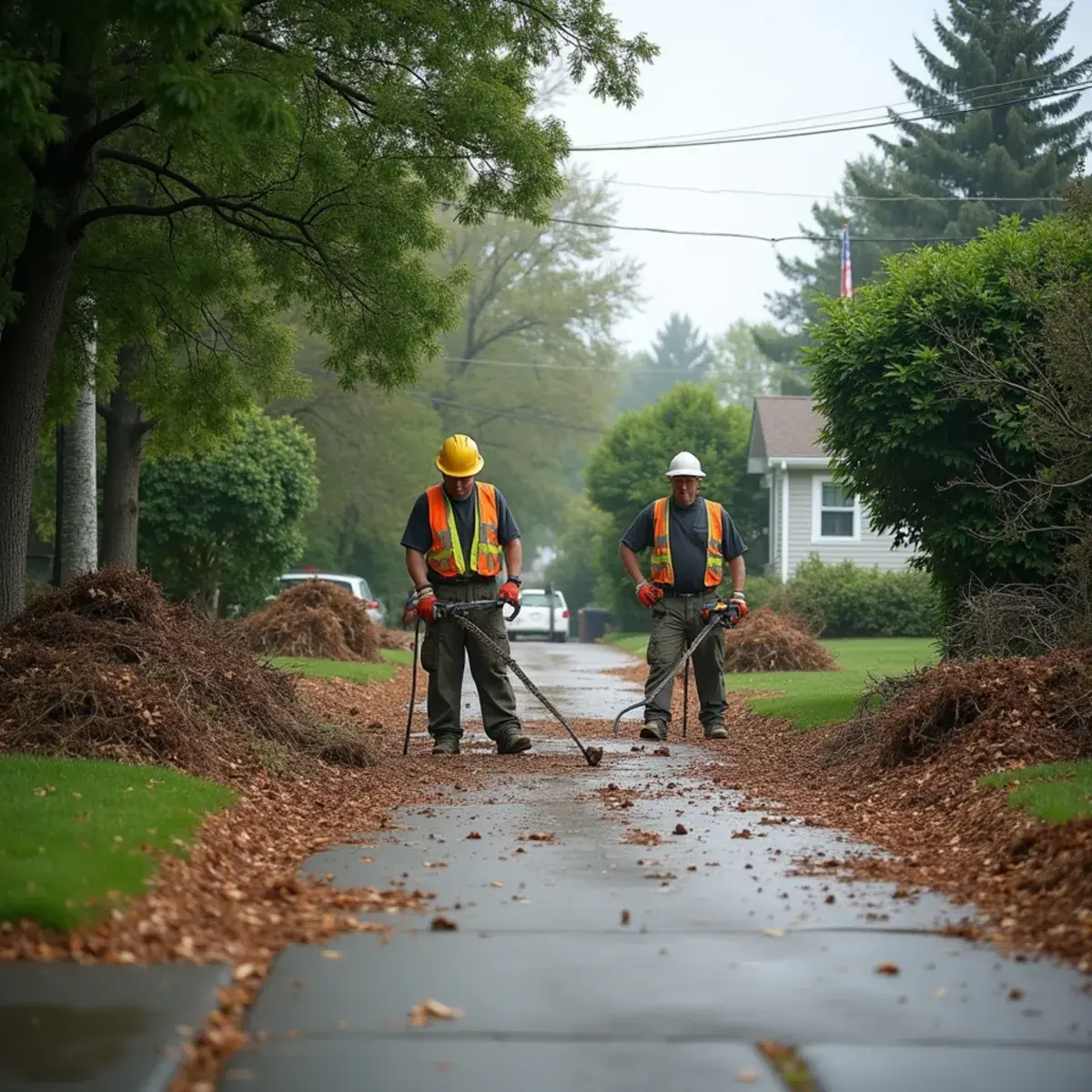
Once the hazard is gone we clear the debris. Stump grinding and any remaining damaged trees get scheduled on a normal timeline, at normal pricing.
What to do before we arrive
- Get everyone away from the tree and out of any room it is resting on. Stay out of the yard directly beneath hung-up limbs.
- If any wire is involved, call your utility first and assume the line is live. Never touch a branch that is touching a wire.
- Photograph everything from several angles before anything is moved. This is your insurance evidence and you only get one chance at it.
- Do not tarp a roof yourself in the dark or in wind. A wet roof at night is how people get seriously hurt.
- Call your insurance carrier and open the claim. You do not need a final number to start the process.
- Leave the chainsaw in the garage. Storm-loaded wood is the single most common way homeowners are injured after a storm.
Michigan storms and why we see the same failures every year
Southeast Michigan gets hit from three directions. Summer derechos and thunderstorm downbursts drive straight-line winds through fully leafed canopies, which is why July storms take out more trees than February ones. Ice storms load every twig with weight the tree never evolved to carry. And lake-effect wind off Erie and the Detroit River hits Downriver and Grosse Ile harder than the inland suburbs.
The trees that fail are predictable: over-mature silver maples with decayed centers, Bradford pears with narrow branch unions, dead ash trees left standing years after emerald ash borer finished them, and cottonwoods on saturated river-bottom soil. If you have any of those on your property, the cheap fix is dealing with them on a calm day rather than an emergency callout at midnight.
What to expect, from estimate to cleanup
An honest answer about timing, first
When you call we will tell you straight whether we can be there tonight or first thing — not a promise we cannot keep. After a regional storm every crew in the county is out, and we triage by hazard: trees on structures and blocked access before open-yard debris.
Making it safe comes before making it tidy
The first move on arrival is stabilising the hazard — securing loaded limbs, roping off the zone, stopping it getting worse. Full cleanup and stump grinding follow on a normal schedule once nothing is actively dangerous.
Documentation you can hand to an adjuster
Dated photos of the damage and the removal, plus an itemised invoice rather than a vague receipt. Adjusters approve claims faster when cause, scope and cost are all legible. Open your claim the same day — you do not need a final number to start it.
What this costs — and what changes the price
Emergency work costs more than scheduled work because it happens off-hours, at speed, in worse conditions. It should not cost outrageously more, and gouging storm victims is not how we operate.
Time of day and day of week
A Tuesday afternoon call is priced differently from a 2 a.m. Sunday callout with lights and generators.
What the tree is on
Removing a trunk from an open lawn is straightforward. Lifting one off a roof without driving it further through the sheathing takes rigging, patience and often a crane.
Utility involvement
If the utility has to de-energize or drop a line first, that dictates the schedule and adds coordination time.
Volume of debris
A single limb is an hour. A whole canopy sheared off across a yard is a day with multiple truckloads.
Many homeowners policies cover tree removal when a tree strikes a covered structure, and sometimes debris removal after a storm regardless of what it hit. Call your carrier early — we will provide the documentation they ask for.
What customers say about our emergency tree service
Every quote below is from a published Google review left by someone who had this specific work done. We do not borrow proof from other services.
“Had a medium tree split and fall on my home knocking down all my utility wires. One call to the owner very early in the morning and actually got an answer, they were here in less than an hour! Received a phenomenal quote and hired them on the spot. Within another hour they were cutting and removing with lightning speed. When they were done they cleaned the entire yard.”
“I was very impressed with their service! After the storm last night, the lightning struck a huge tree in back of my house and split it in the middle of the trunk straight down. I cannot thank them enough for coming to my home quickly to see the damage and give me an estimate. Paul had all his crew here quickly and stayed until dusk to make sure my home would be safe. Their price, professionalism and work ethic are worth every dollar spent.”
“Monday I had multiple large limbs from my neighbor's tree fall on my house, porch and yard. Called One of a Kind Tuesday, received my estimate, insurance approved the estimate and Eddie's team arrived Tuesday evening and had the job done within hours. Awesome team, very polite and did a great job cleaning up. I can't even tell my house and yard were buried in tree limbs.”