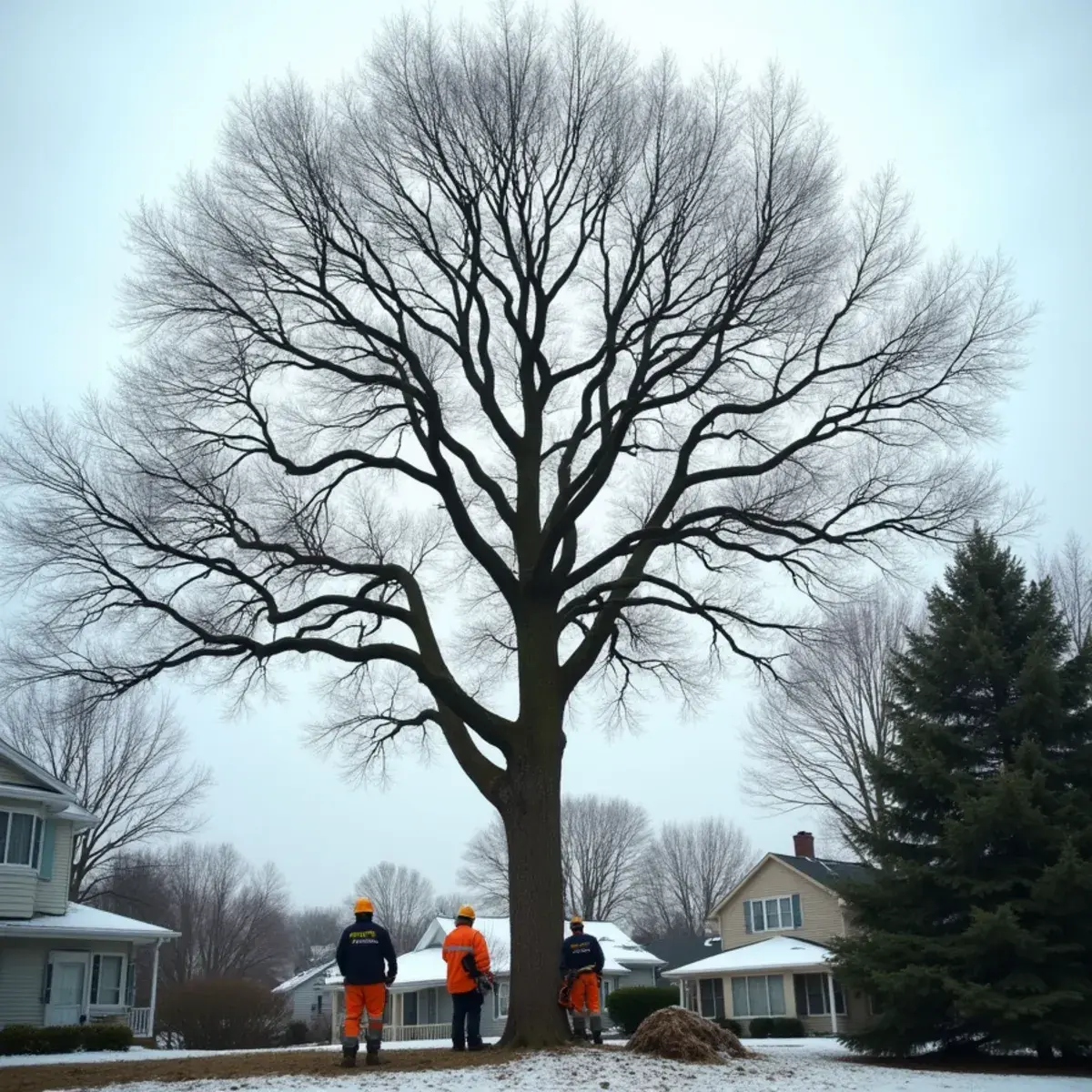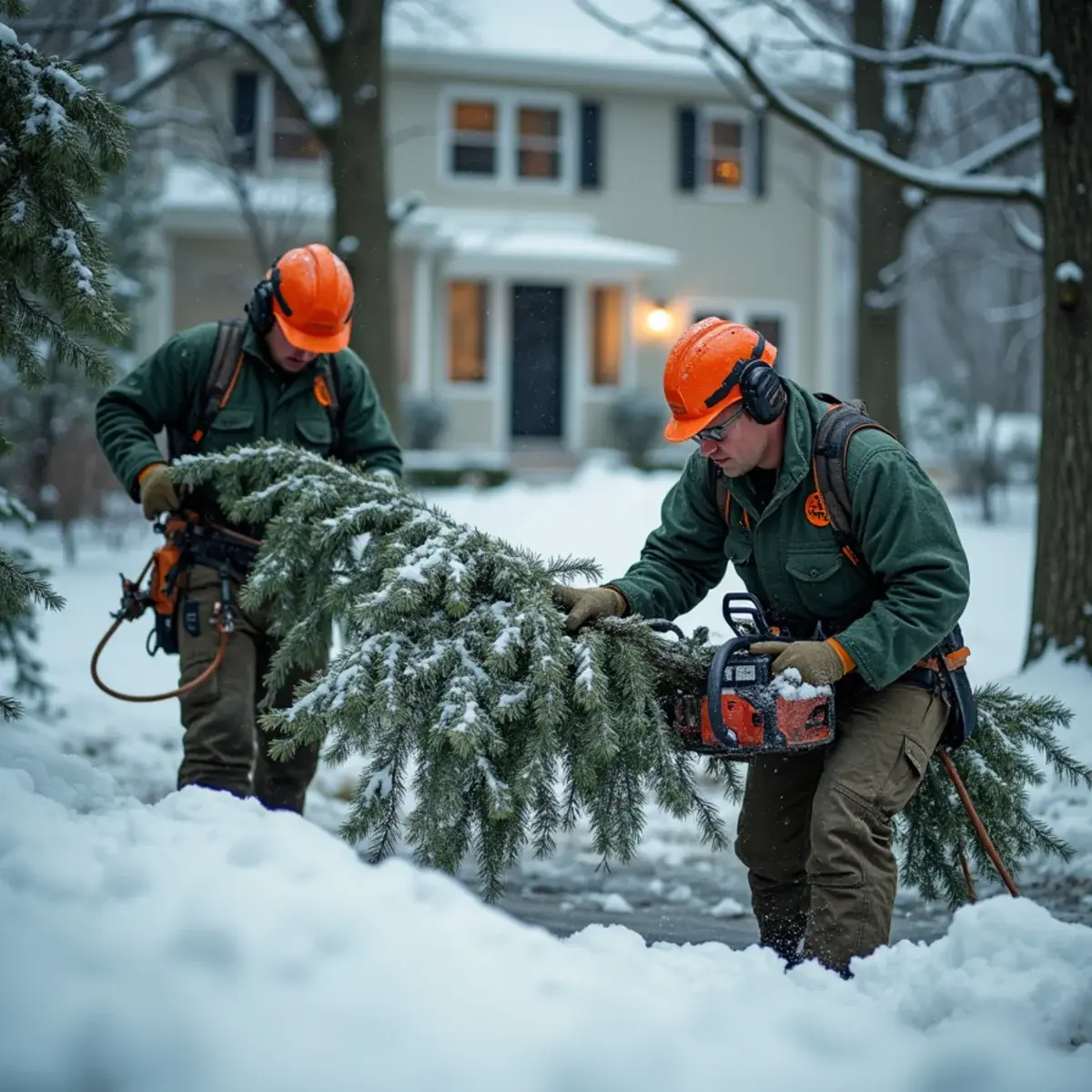
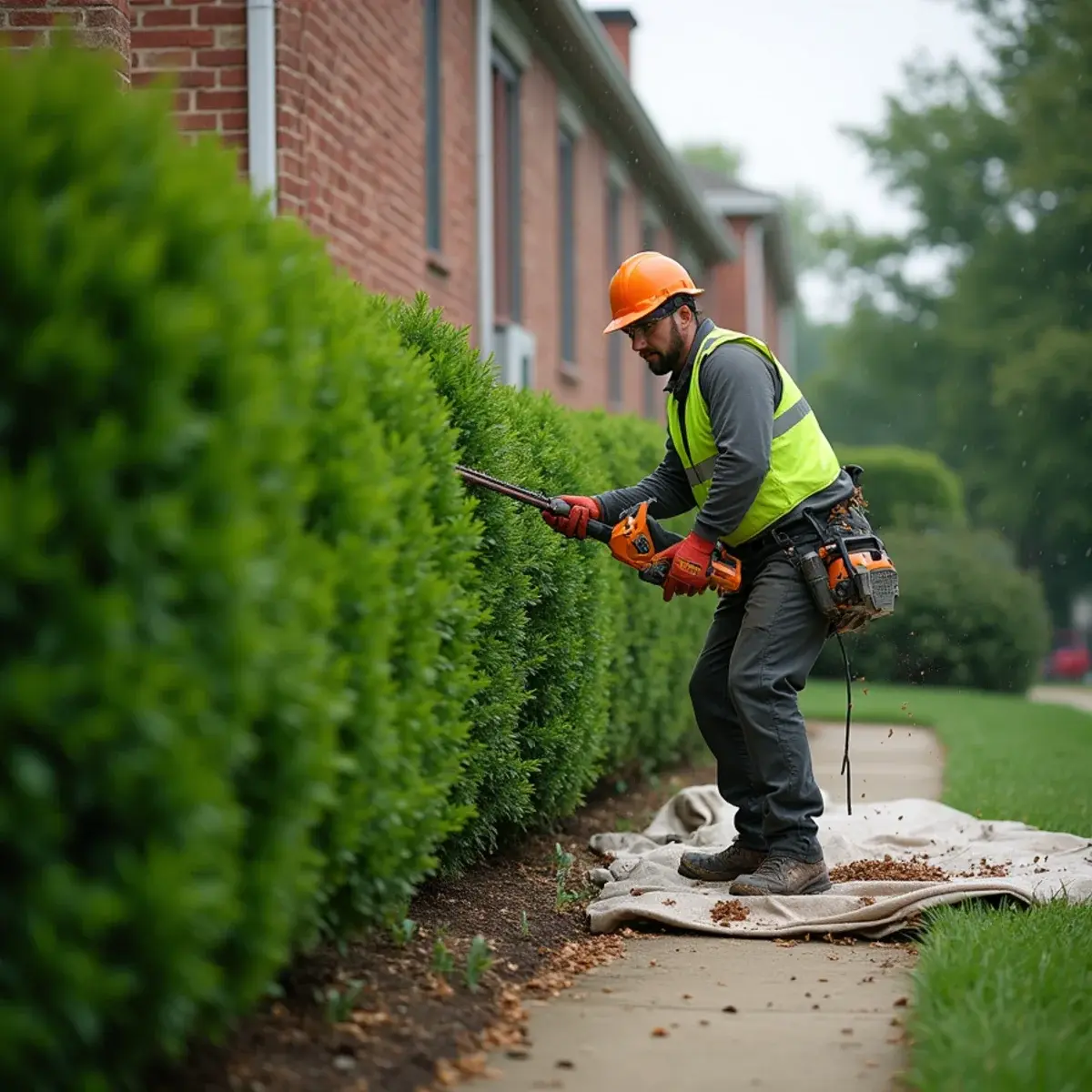
Shrubs are the part of the yard that gets away from people. A row of yews planted three feet from the house in 1968 is now six feet deep, pressed against the siding, blocking two windows and hiding the hose bib. Nobody plans that — it just happens two inches a year.
We handle shrub and hedge work as part of the same visit as your tree work, which is the efficient way to do it. Trucks are already on site, the chipper is running, and cleanup happens once instead of twice.
Whether it is a maintenance shear on a formal hedge, a hard renovation cut on overgrown foundation plants, or ripping out a dead juniper row entirely, we cut it, haul it and leave the beds clean.
Signs your shrubs need attention
Overgrown foundation plantings do more damage than most homeowners realize.
Branches are touching the siding
Shrubs against a wall hold moisture against it, encourage mildew and rot, and give ants and mice a direct path onto the structure.
Windows are half covered
Beyond the light you lose, overgrown shrubs under windows are a genuine security concern and every police department in Michigan will tell you the same.
The interior is bare and woody
Hedges sheared square year after year shade out their own middles. Renovation pruning over two or three seasons brings them back.
They have outgrown the bed line
Shrubs spilling over the walk or driveway are a tripping hazard and make the whole front look neglected.
Winter or salt damage killed sections
Arborvitae and boxwood near a salted drive routinely brown out on one side. Sometimes it prunes out, sometimes the plant is done.
You just want them gone
Removing a whole row of overgrown junipers and starting fresh is often the better call than fighting them for another decade.
How we handle it, start to finish
- 1
Identify what you have
Species matters. Yews and boxwood tolerate hard cutting; junipers and most conifers do not regrow from bare wood and can be permanently ruined by an aggressive shear.
- 2
Agree on the finished look
Formal and sheared, or natural and hand-pruned? How far back are we taking it? We settle this before the first cut so you get the result you pictured.
- 3
Cut to shape or renovate
Maintenance trimming keeps the existing form with a slightly wider base so light reaches the bottom. Renovation cuts hard into old wood to force new growth — staged over seasons on species that need it.
- 4
Removals and root work
For full removal we cut at grade and grind or pull the root ball, then rake the bed level so it is ready for replanting or fresh mulch.
- 5
Clean the beds
Clippings raked out from under and behind the plants, hard surfaces blown clean, everything hauled. That under-the-shrub raking is what separates a real job from a quick shear.
Timing shrub work in Michigan
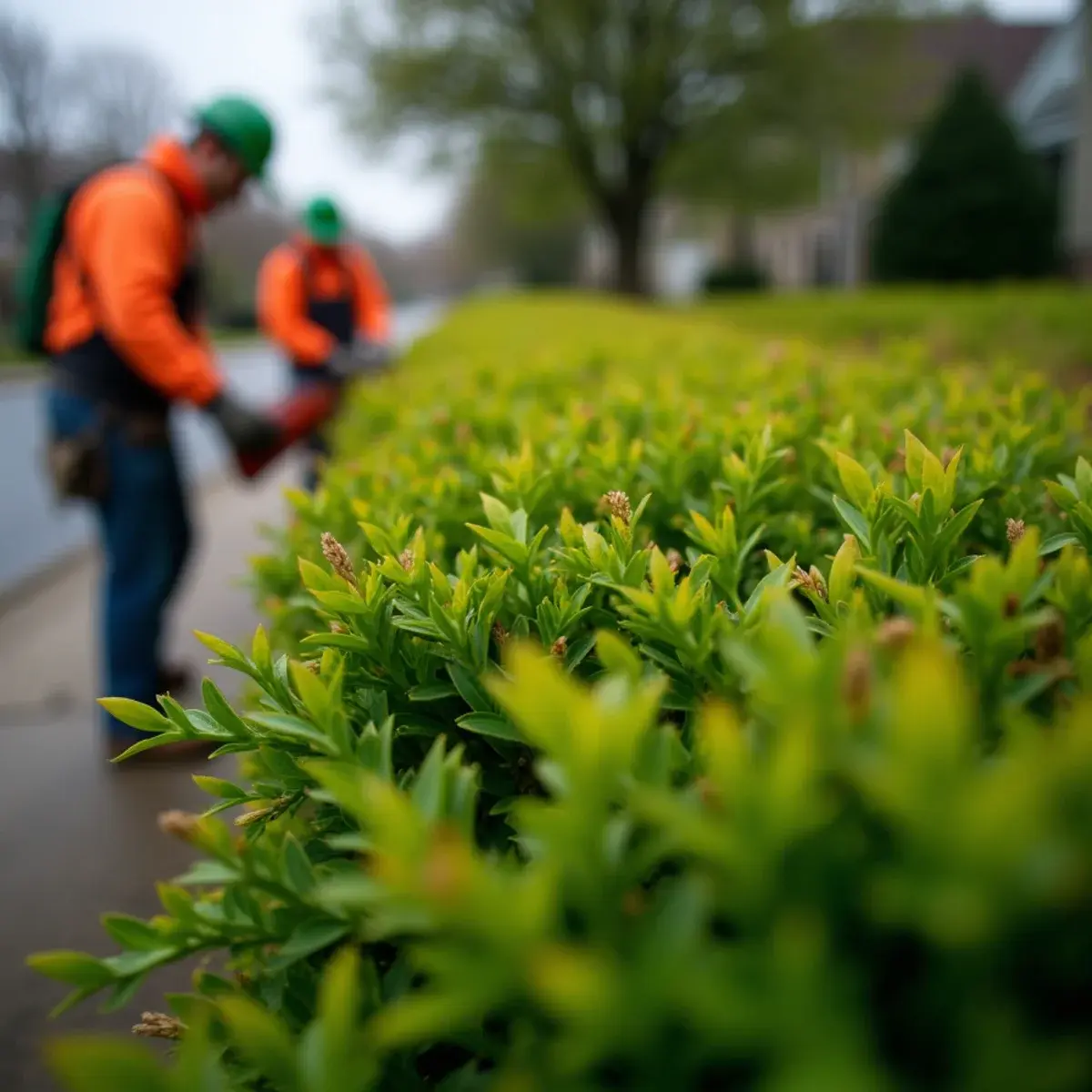
Late winter into very early spring, before bud break, is the best window for most deciduous shrubs and for hard renovation cuts. The plant is dormant, the structure is visible, and it pushes fresh growth into the cuts as soon as it wakes up.
Spring-flowering shrubs — lilac, forsythia, viburnum, rhododendron — are the exception. They set next year's flower buds shortly after this year's bloom, so prune them within a few weeks of flowering or you will cut off next spring's show.
Avoid a hard cut on evergreens after about mid-August. New growth pushed late in the season will not harden off before Michigan winter arrives and will burn. Light shaping is fine into early fall; major work should wait for dormancy.
Salt, winter burn and the plants we replace most
Every Michigan homeowner near a salted road or driveway sees the same pattern: brown, dead foliage on the road-facing side of arborvitae, yew and boxwood by March. Salt spray desiccates the foliage and salt in the soil damages roots.
You can reduce it by rinsing exposed plants during a February thaw, using calcium magnesium acetate or sand instead of rock salt near beds, and putting up burlap screens on the exposed side. When a plant is beyond saving, replace it with something tougher — a salt-tolerant juniper, ninebark or potentilla rather than another arborvitae in the same doomed spot.
What to expect, from estimate to cleanup
The finished look agreed before the first cut
Formal and sheared, or natural and hand-pruned? How far back are we taking it? Species matters too — yews and boxwood tolerate hard cutting, junipers and most conifers do not regrow from bare wood and can be ruined permanently by an aggressive shear.
Usually a half day, less if bundled
A row of foundation shrubs is a few hours. Ten years of neglect on a long hedge is a full day with a lot more debris. If our chipper is already in your driveway for tree work, the marginal cost of the hedge row drops substantially.
Beds left clean, not just plants cut
Clippings raked out from under and behind the plants, hard surfaces blown, everything hauled. That under-the-shrub raking is what separates a real job from a quick shear, and it is the part cheap crews skip.
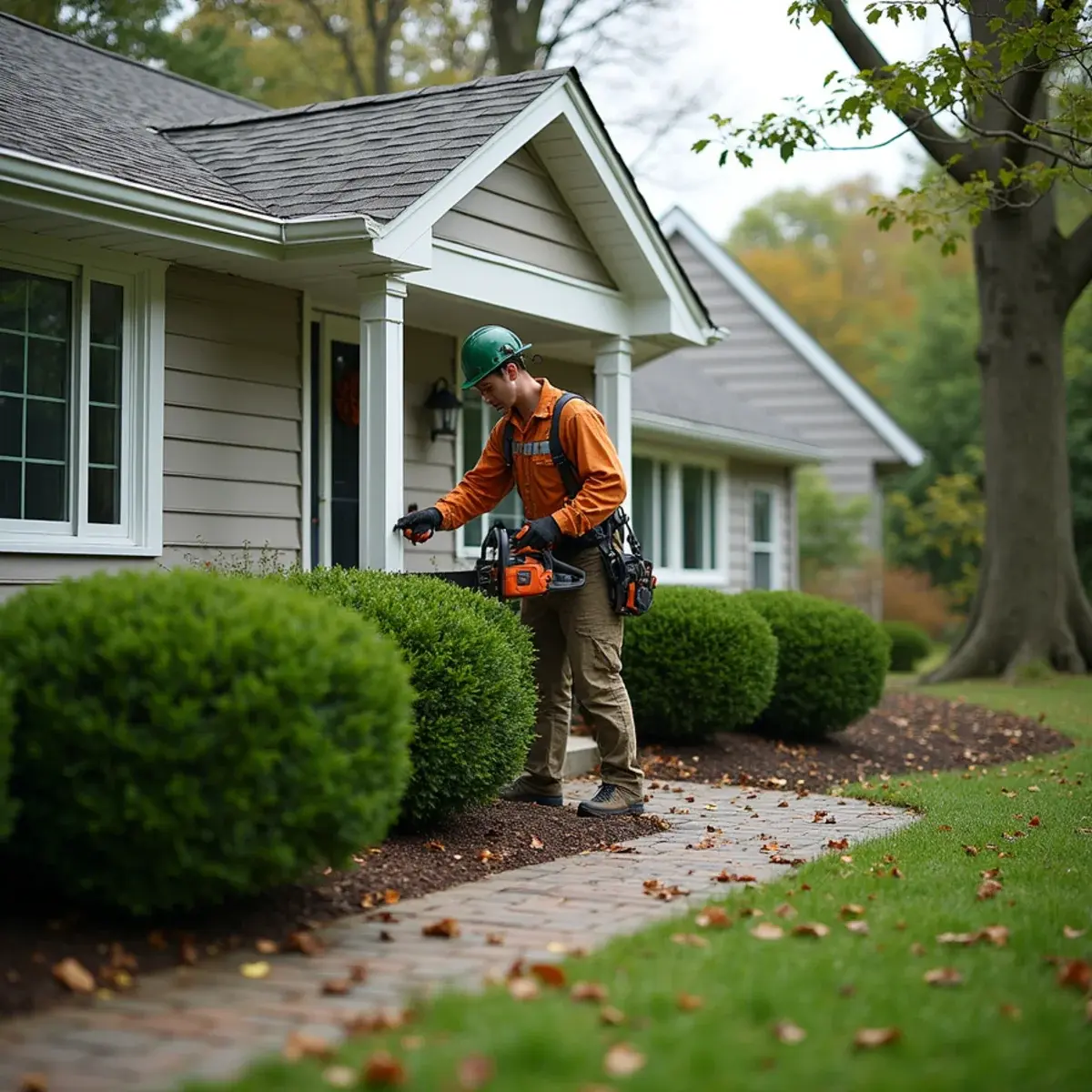
What this costs — and what changes the price
Shrub work is priced by size, count and debris volume — and it is dramatically cheaper when bundled with tree work on the same visit.
Number and size of plants
Twelve small foundation shrubs and three eight-foot arborvitae are very different amounts of work.
How overgrown they are
A maintenance trim on plants cut last year is quick. A first cut on ten years of neglect is a different job with far more debris.
Trimming versus removal
Removal adds root ball extraction or grinding and considerably more material to haul.
Access and obstacles
Beds tight against a foundation, behind fences or on slopes take longer to work and longer to clean.
Bundling with tree work
If our chipper is already in your driveway for a removal, the marginal cost of the hedge row drops substantially.
It is worth asking about at your tree estimate even if you were not planning on it. We can price both and you decide.