Winter Tree Care in Michigan: A Practical Checklist
Winter is not a dormant season for tree problems — it is when several of the worst ones happen. Here is what to watch and what to do.
What this guide covers7 sections
Michigan winters do specific things to trees, and most of them are preventable. Here is the practical list, roughly in the order the problems show up.
Salt: the biggest winter problem nobody thinks about
Road salt damages trees two ways. Spray thrown by traffic desiccates buds and foliage on the road-facing side. And salt carried into the soil by meltwater disrupts the root zone, interfering with water uptake and displacing nutrients.
The symptoms show up in spring: brown, dead foliage on one side of an evergreen, marginal leaf scorch on deciduous trees, buds that never open on the exposed side, and a general thinning of the canopy nearest the road. Arborvitae, boxwood, white pine and Norway spruce are all particularly sensitive.
What actually helps
- Use calcium magnesium acetate or plain sand on walkways and drives near planting beds instead of rock salt. It costs more and it does not kill your plants.
- Put up burlap screens on the road-facing side of vulnerable evergreens before the first plow. This is the single most effective step for street-side plantings.
- Flush the soil around exposed plants with water during a February thaw to leach salt out of the root zone.
- Do not pile salted snow onto planting beds when you shovel. That concentrates a whole winter of salt into one spot.
- When replacing plants that keep dying in a salt zone, choose tolerant species — juniper, ninebark, potentilla — rather than another arborvitae in the same doomed location.
Snow and ice load
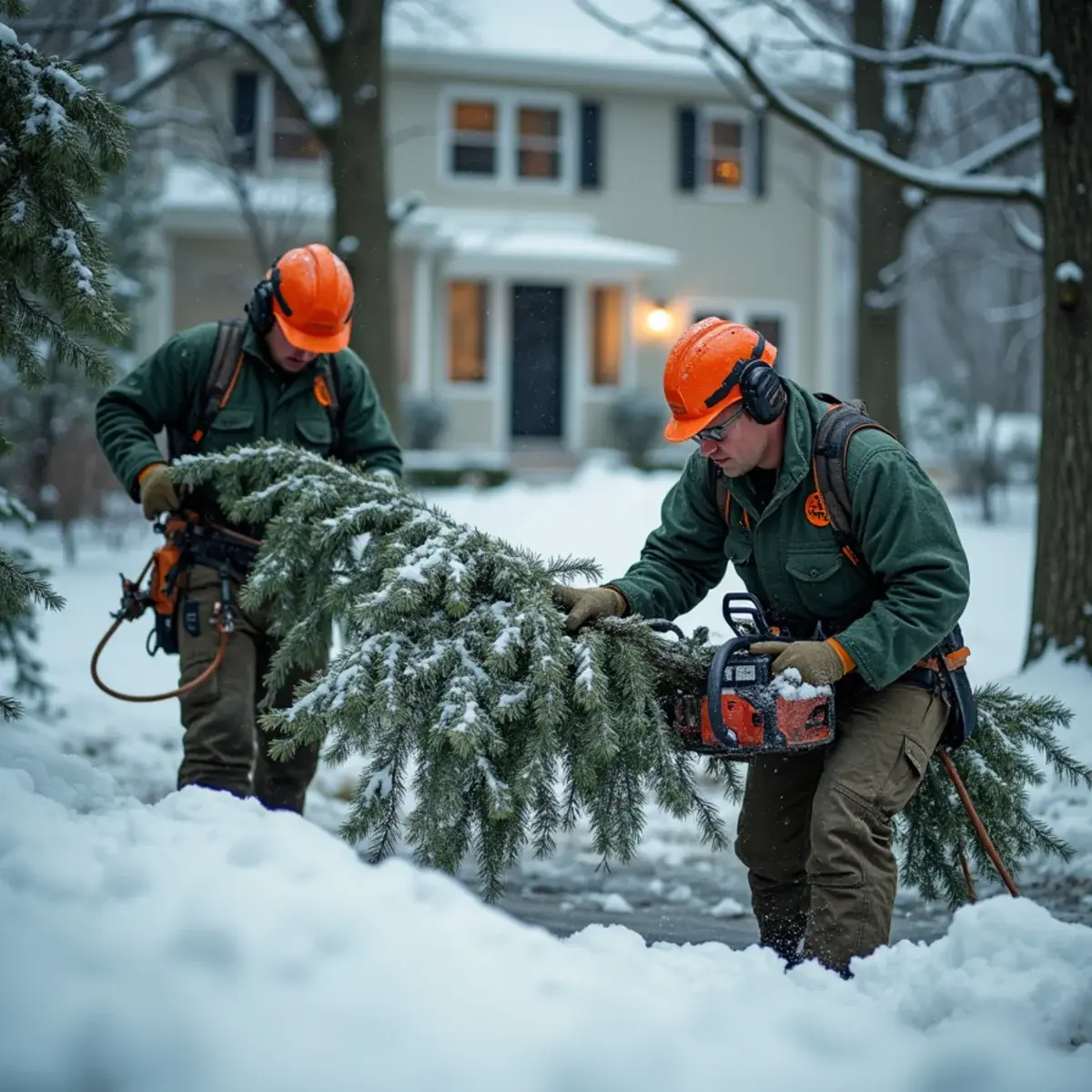
Heavy wet snow and ice add weight branches never evolved to carry. Multi-stemmed evergreens like arborvitae and upright junipers splay open under it and often do not recover their shape. Deciduous trees with weak unions split.
- Gently brush snow off small evergreens with an upward motion using a broom. Never shake a branch loaded with ice — frozen wood is brittle and shakes off in pieces.
- Leave ice alone entirely. Trying to remove it causes more damage than it prevents. Wait for the thaw.
- Tie multi-stem arborvitae loosely with soft twine before winter if they have splayed before. Remove it in spring.
- If a branch splits partially, leave it until a professional can make a proper cut. A torn, ripped wound invites decay straight into the trunk.
Rodent damage at the base
Voles and rabbits chew bark at the base of young trees under snow cover, where they are hidden from predators. A ring of chewed bark all the way around the trunk girdles the tree and kills it, and you often do not discover it until the snow melts in March.
The fix is simple: a hardware cloth or plastic trunk guard around the base of young trees, extending above expected snow depth, installed before the ground freezes. Keep mulch pulled back a few inches from the trunk — piled mulch is exactly the habitat voles want.
Sunscald on young thin-barked trees
Winter sun on a south or southwest-facing trunk warms the bark and the tissue underneath. Temperature drops after sunset and that active tissue freezes, killing it. The result is a long vertical dead strip that cracks open, usually on young maple, cherry, crabapple and honey locust.
Light-colored tree wrap or a white trunk guard applied in late fall and removed in spring prevents it. Leaving wrap on year-round causes its own problems, so take it off.
The winter pruning window
This is the good news of the season. Late winter is the best time of year for structural pruning on most Michigan trees, and it is the only safe window for oaks. The structure is fully visible with leaves off, decay organisms are dormant, frozen ground carries equipment without rutting your lawn, and schedules are less compressed than in storm season.
Full details are in our month-by-month pruning calendar, and our pruning service page covers how we approach it.
Winter is also the right time for big removals
If you have a removal that is not urgent, winter is frequently the best time to schedule it. Frozen ground supports equipment far better than saturated spring soil, which means less lawn damage. Deciduous trees are lighter and easier to assess without foliage. And you are not competing with everyone whose tree just came down in a July storm.
The spring walkaround
When the snow finally goes, do a lap. Look for chewed bark at the base, cracked bark strips on south-facing trunks, split or hanging limbs, brown foliage on the road side of evergreens, and any lean that changed over winter. Catching those in March means dealing with them on your schedule instead of in an emergency.