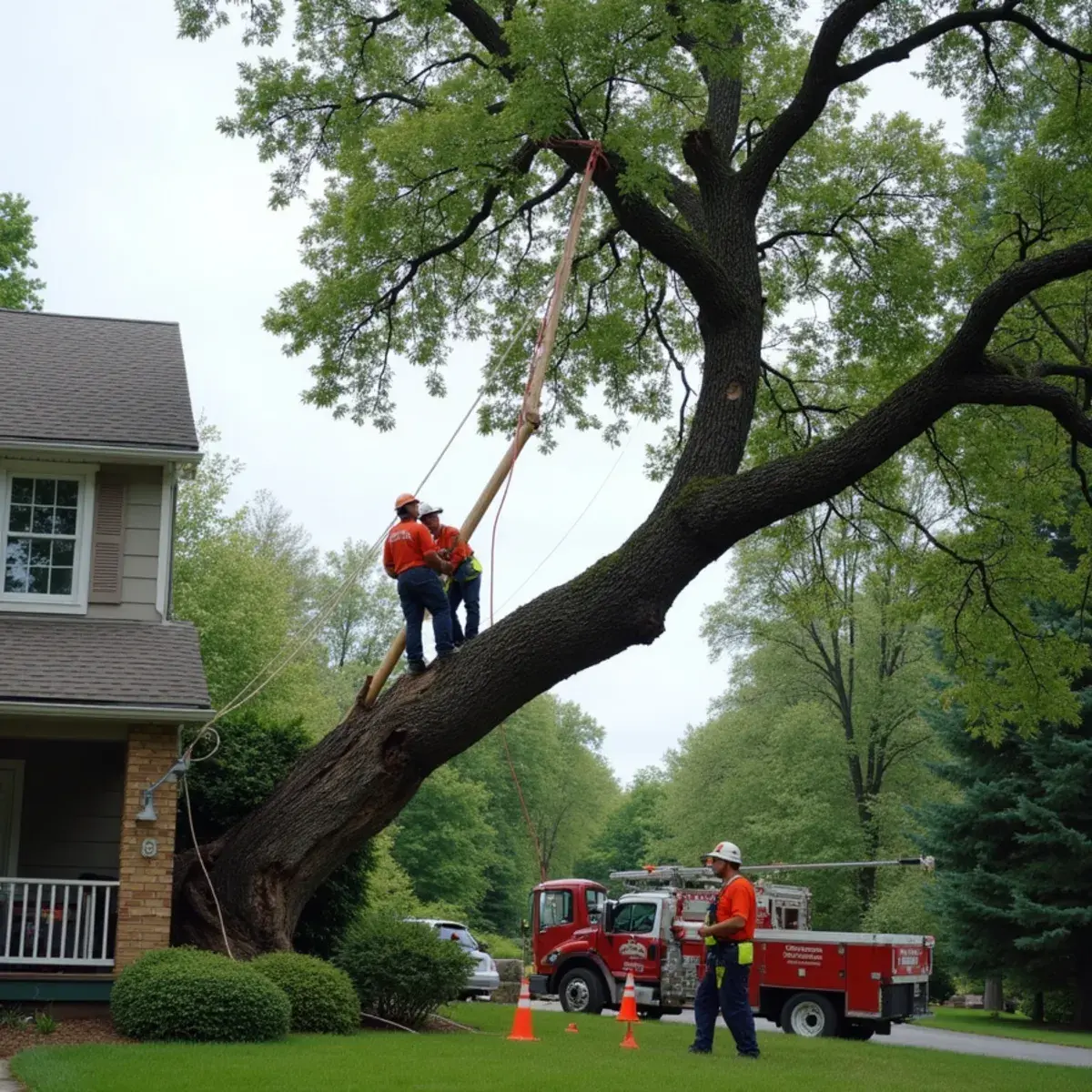
Hazardous tree removal is the work this company was built around. It is right there in how the owner describes the business, and it is what shows up over and over in our reviews: the dead 125-foot cottonwood leaning over a river bank, the tree wedged against a garage that two other companies had already declined, the lightning-split trunk hanging over a house with another storm forecast for that night.
A hazard tree is not simply a big tree. It is a tree where the normal method does not apply — where the wood is too decayed to climb, where there is no safe landing zone, where a wire runs through the canopy, or where the tree has already started to fail and is holding itself up out of habit.
These jobs are a matter of sequencing and equipment, not bravado. We plan the takedown before anything is cut, and we bring the lift or crane when the tree does not allow a climber.
How we judge whether a tree is genuinely hazardous
Risk is a combination of how likely the tree is to fail and what happens if it does. A dead tree in an open field is low risk. The same tree over a kid's bedroom is not.
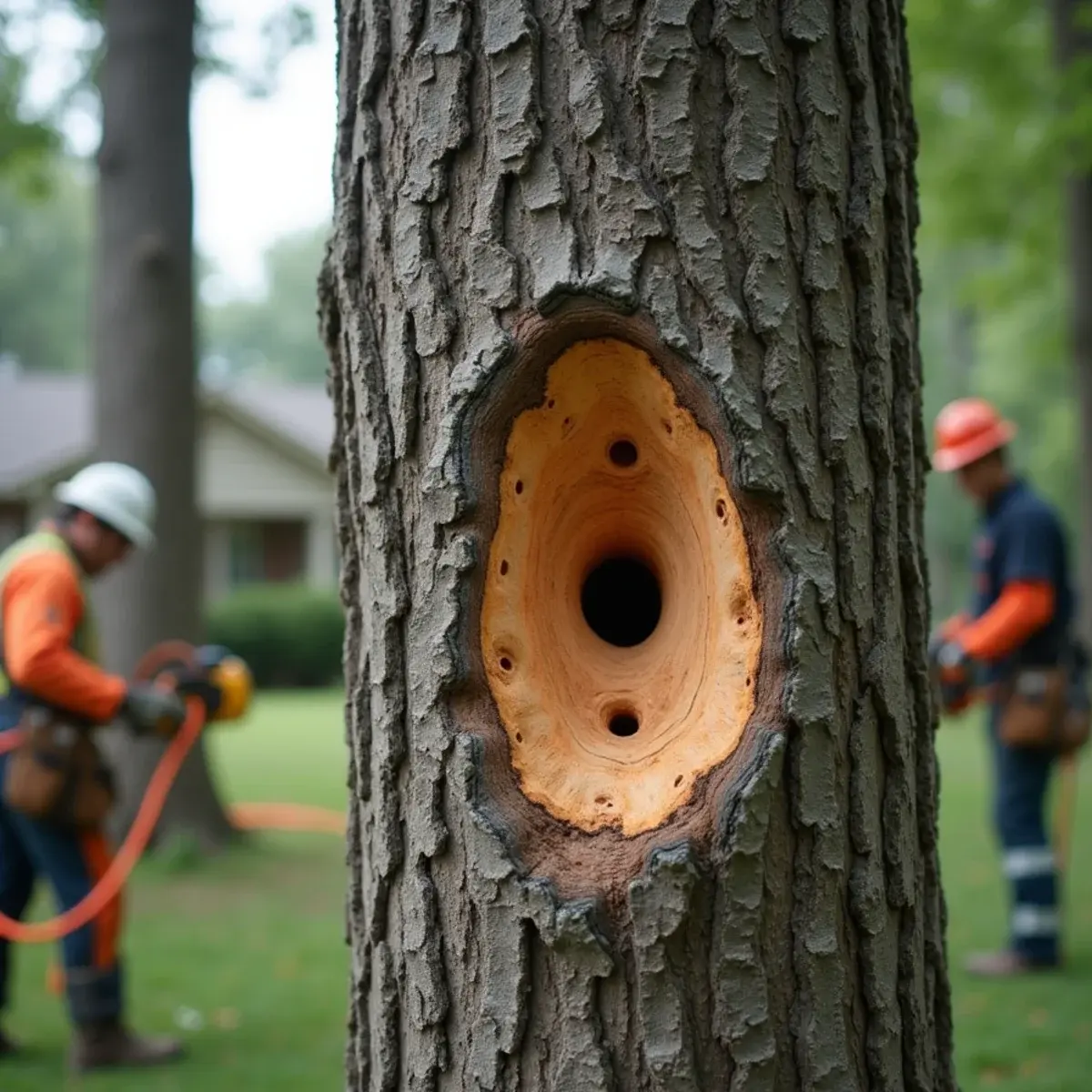
Structural defect in the trunk
Cavities, vertical seams, bulges and old topping wounds all reduce the load-bearing cross-section. We look at how much sound wood is left around the perimeter, not just the size of the hole.
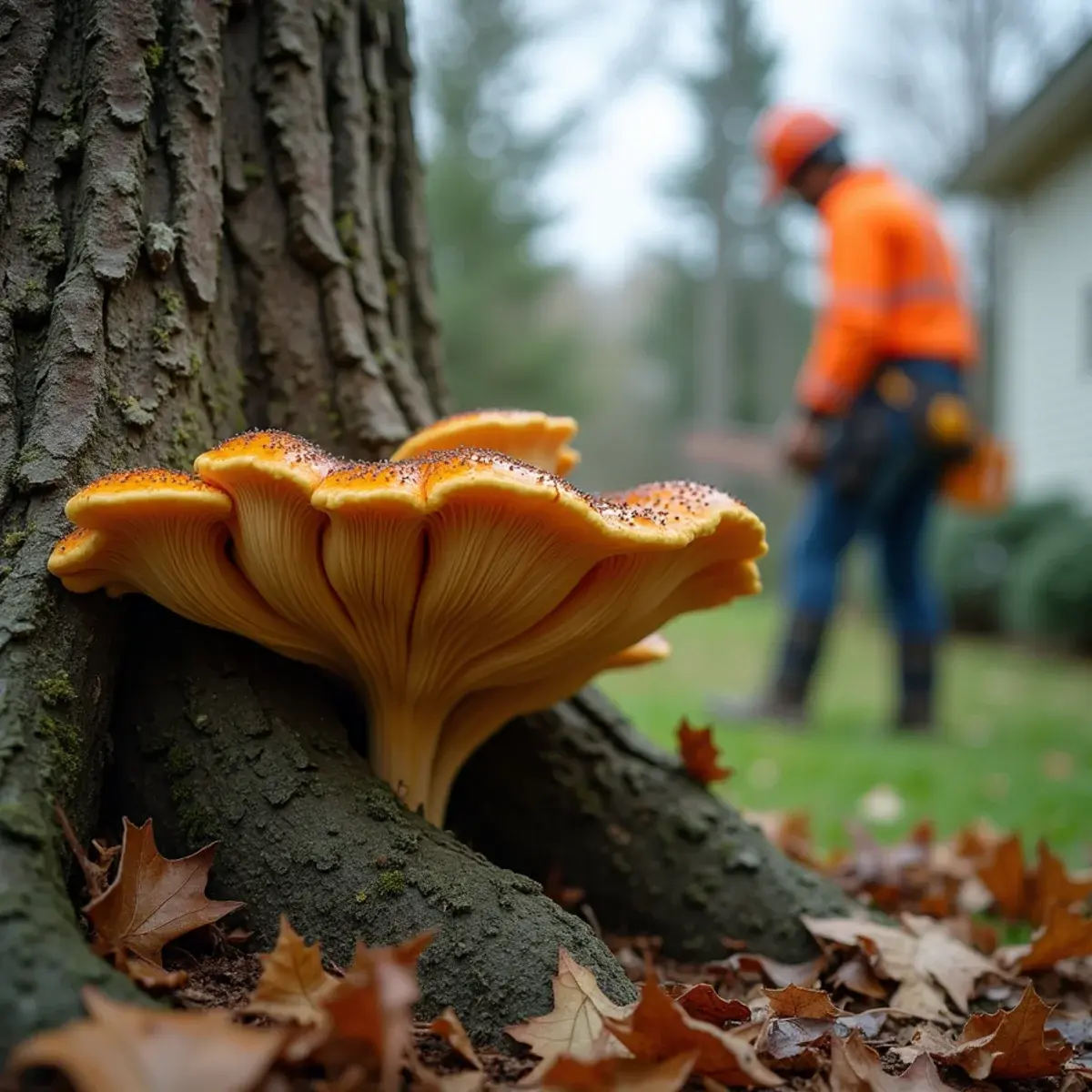
Decay fungi at the base
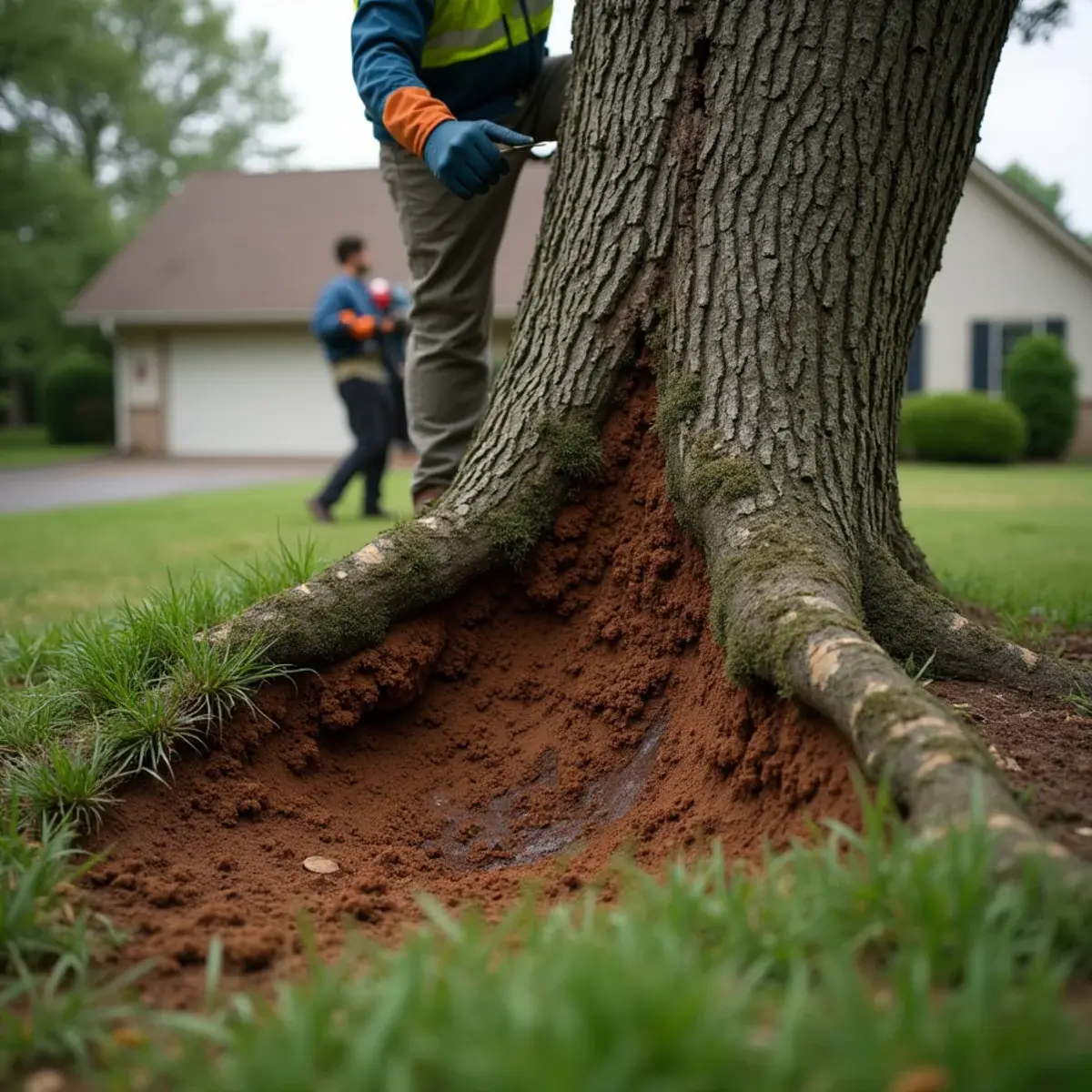
Conks and mushrooms at the root flare indicate root or butt rot, the most dangerous kind because the tree gives no warning before it goes over whole.
Root plate damage
Trenching, driveway work, grade changes and construction routinely sever anchoring roots. The tree can look fine for two or three years and then fail in a moderate wind.
Dead standing timber
Ash killed by emerald ash borer becomes extremely brittle within a couple of years. Dead ash cannot be safely climbed and is a job for a lift or crane, which is exactly why so many crews avoid them.
The target underneath
House, garage, driveway, playset, pool, gas meter, neighbor's roof, sidewalk with pedestrians. What is under the tree drives the urgency as much as the tree's condition does.
Previous failures in the same tree
A tree that has already dropped one large limb is telling you something about the rest of its canopy.
How we handle it, start to finish
- 1
Ground-level assessment
We inspect the root flare, sound the trunk, look at the canopy from several angles, and evaluate lean, soil condition and previous failures before deciding on a method.
- 2
Choose the method the tree allows
Climb, bucket or crane. Brittle or hollow wood rules out climbing. If we would not put our own crew in it, we bring the machine instead.
- 3
Secure the drop zone
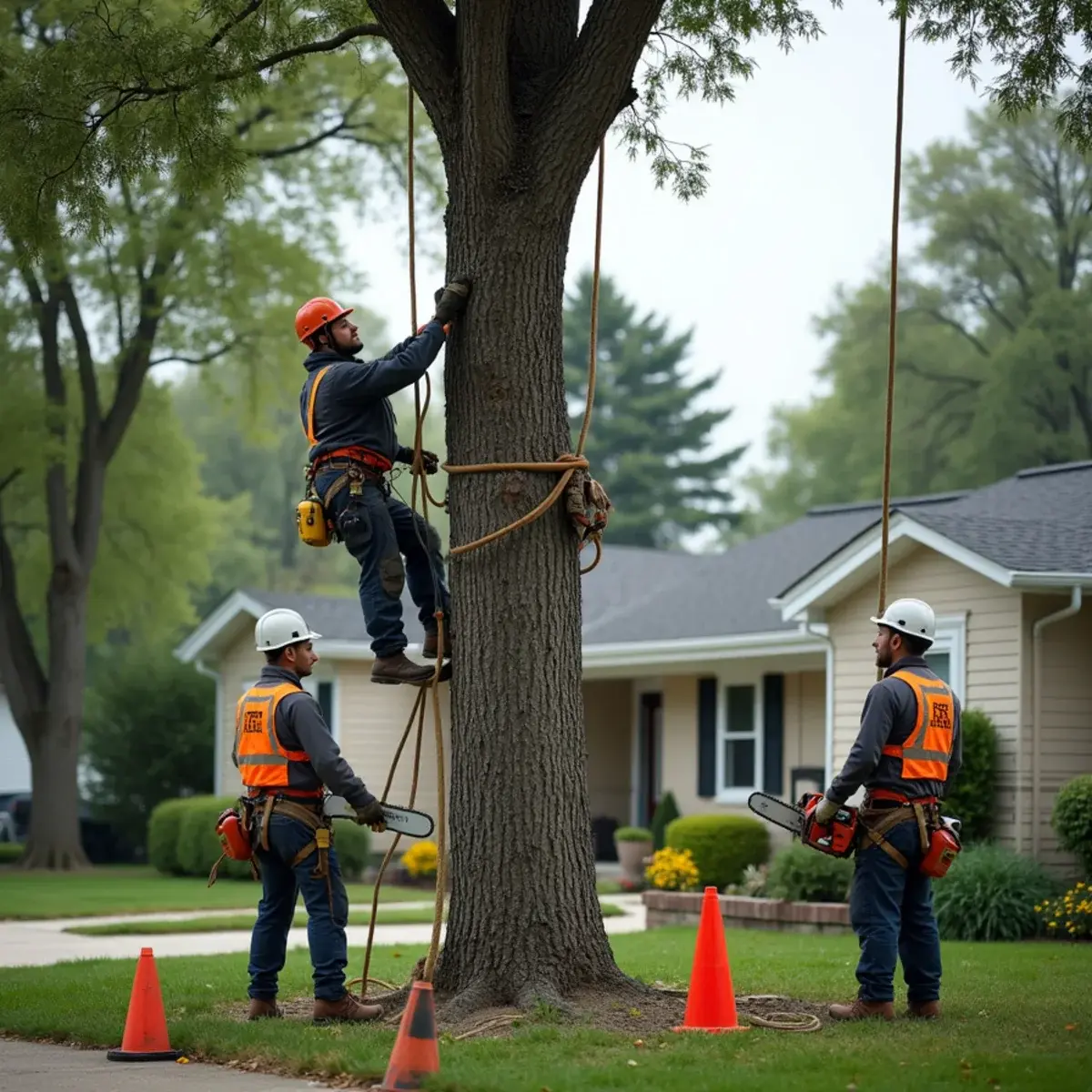
The area under and around the tree is cleared and controlled. On street-side jobs that can mean cones, spotters and short traffic holds.
- 4
Controlled dismantling
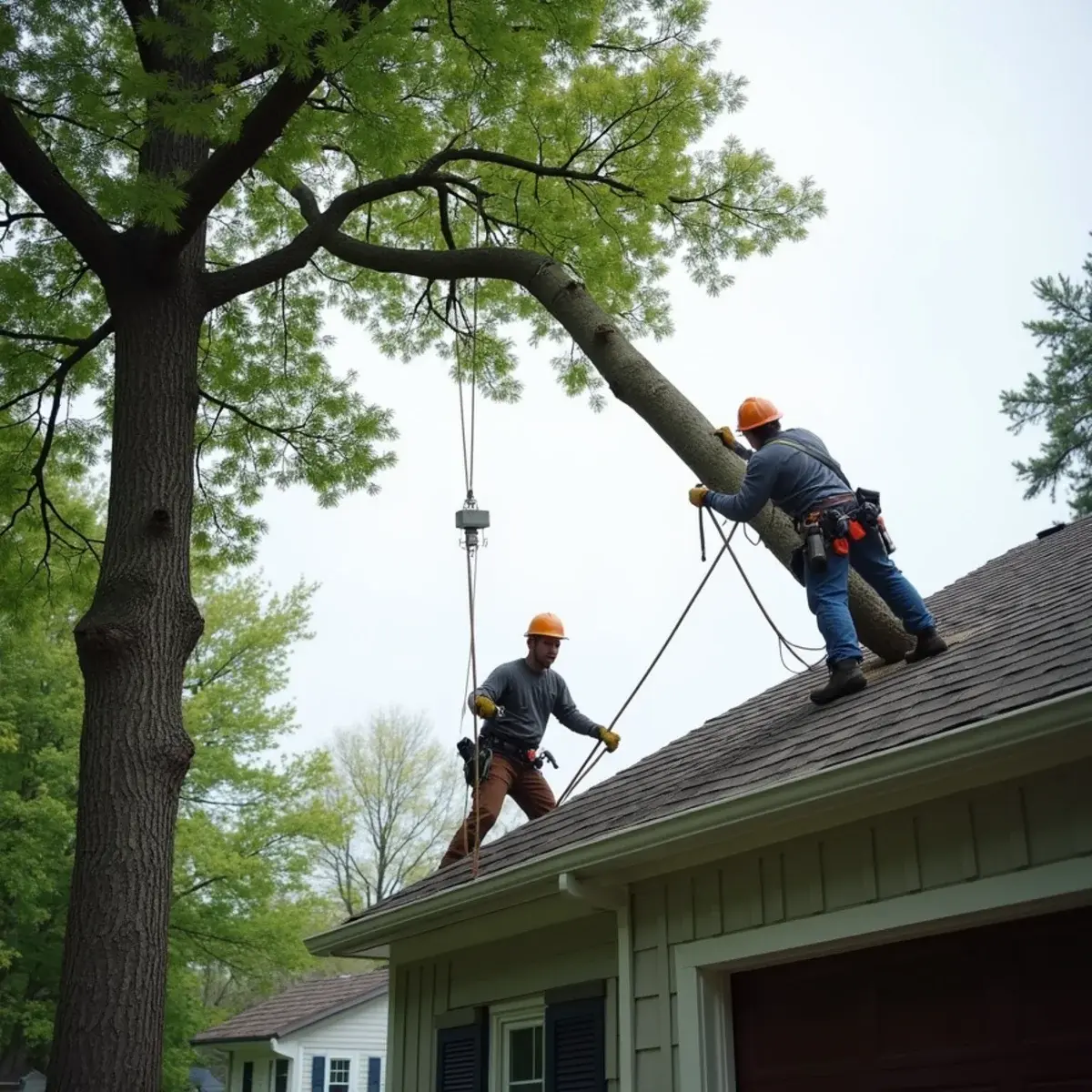
Pieces come off small and are lowered on rigging lines through blocks and a friction device. On compromised trees we never rely on the trunk to take shock loading.
- 5
Clear the site completely
Debris out, area raked and blown, and stump grinding scheduled if you want it. Then the property is safe again, permanently.
The trees we get called about most in southeast Michigan
- Dead ash — two decades after emerald ash borer arrived, standing dead ash are still everywhere. They shed limbs without warning and are unclimbable.
- Over-mature silver maple — fast-growing, weak-wooded, and typically planted too close to the house in the postwar building boom. Most have hollow centers by seventy.
- Cottonwood on wet ground — enormous, shallow-rooted, and common along the Detroit River, Grosse Ile and the Huron River corridor. Saturated soil plus a big canopy is a failure waiting for wind.
- Bradford pear — narrow branch unions that split down the middle in ice, usually taking half the tree with them.
- Storm-damaged oak and locust — trees that survived one storm with a torn union or hanging limb and are one gust from finishing the job.
Why other companies turn these jobs down
A hazard tree needs three things a small outfit often does not have: the equipment to reach it without climbing it, the rigging skill to take it apart under control, and the insurance to be there at all. Turning down a job you are not equipped for is the responsible call, and we respect crews that do it.
We took a job in Detroit that two other companies had already walked away from because the tree was tight against a garage. Our customer's words, not ours. The tree came out for a fair number and the garage is still standing. That is the entire pitch.
What to expect, from estimate to cleanup
A written method, not just a price
The scope says how the tree is coming down — climbed, from a lift, or by crane — because on a compromised tree the method is the job. It also covers what gets protected, where equipment sets up and who handles any utility coordination.
Urgency is priced honestly
Same-day mobilisation on an active hazard costs more than work we can schedule for next week. Sometimes that is the right trade and sometimes it is not — we will tell you which, including when a tree can safely wait until winter when scheduling is easier and the ground is firmer.
The property is safe permanently, not temporarily
Once the hazard is gone we clear the site completely and flag anything else on the property worth watching over the next year. Root-plate damage on neighbouring trees frequently shows up a season or two later, and it is cheaper to know now.
What this costs — and what changes the price
Hazard work costs more than a routine removal because it is slower, takes more gear and carries more risk. What it should not do is cost double for no reason.
How compromised the wood is
A tree that cannot be climbed needs a lift or crane, and that equipment cost is the biggest single driver of the price.
Rigging complexity
Every piece that has to be roped, redirected and lowered rather than dropped adds time. On a bad tree that is every single piece.
Utility conflicts
Working near energized lines means coordination, clearance and sometimes waiting on the utility. That is schedule cost.
Site access for equipment
If a crane can set up on the street with a clear swing, the job goes quickly. If everything has to be walked into a fenced backyard, it does not.
How urgent it is
Same-day mobilization on an active hazard costs more than a job we can schedule for next week. Sometimes that is the right trade.
We give you the honest version at the estimate: whether it truly needs to come out now, whether it can wait until winter when scheduling is easier, and what pruning would buy you if removal is not in the budget yet.
What customers say about our hazardous tree removal
Every quote below is from a published Google review left by someone who had this specific work done. We do not borrow proof from other services.
“Eddie and his crew came out last week and were amazing. They removed a large cottonwood and ground out the stump. I trusted them with my home and family. They have a lift that went into my small yard and I was amazed at the job they did. I would recommend them for any large hazardous tree to be removed. He gave me a copy of his insurance before he started the job.”
“I knew they could do the job from watching them take down huge cottonwood trees at a neighbor's. When Eddie gave me his quote I said yes on the spot. I had three 125-foot dead cottonwoods, one of them leaning out over the river, so it was a complicated process. I worried about those trees for three years but no more. I'm happy with their work, their equipment and their team.”
“I live in Detroit and it is hard to find any company to do a job in my area. I required a tree cut down that was up against my garage and I had requested quotes from two other companies that both passed on it because of where it was located. One of a Kind was the only one that gave me a reasonable quote and did just what they quoted to do the job. They turned out to be the best company for me.”