9 Signs a Tree Needs to Come Down (And 4 That Look Worse Than They Are)
Some trees that look terrifying are structurally fine. Some that look perfectly healthy are about to fall. Here is how to tell the difference from the ground.
What this guide covers4 sections
The most common question we get is not about price. It is "should I be worried about this tree?" It is a fair question, and the honest answer is that you can learn a lot from the ground if you know what to look at.
Here are the nine signs that genuinely matter, followed by four that alarm homeowners regularly and usually mean nothing.
Nine warning signs worth acting on
1. A new lean, with disturbed soil at the base
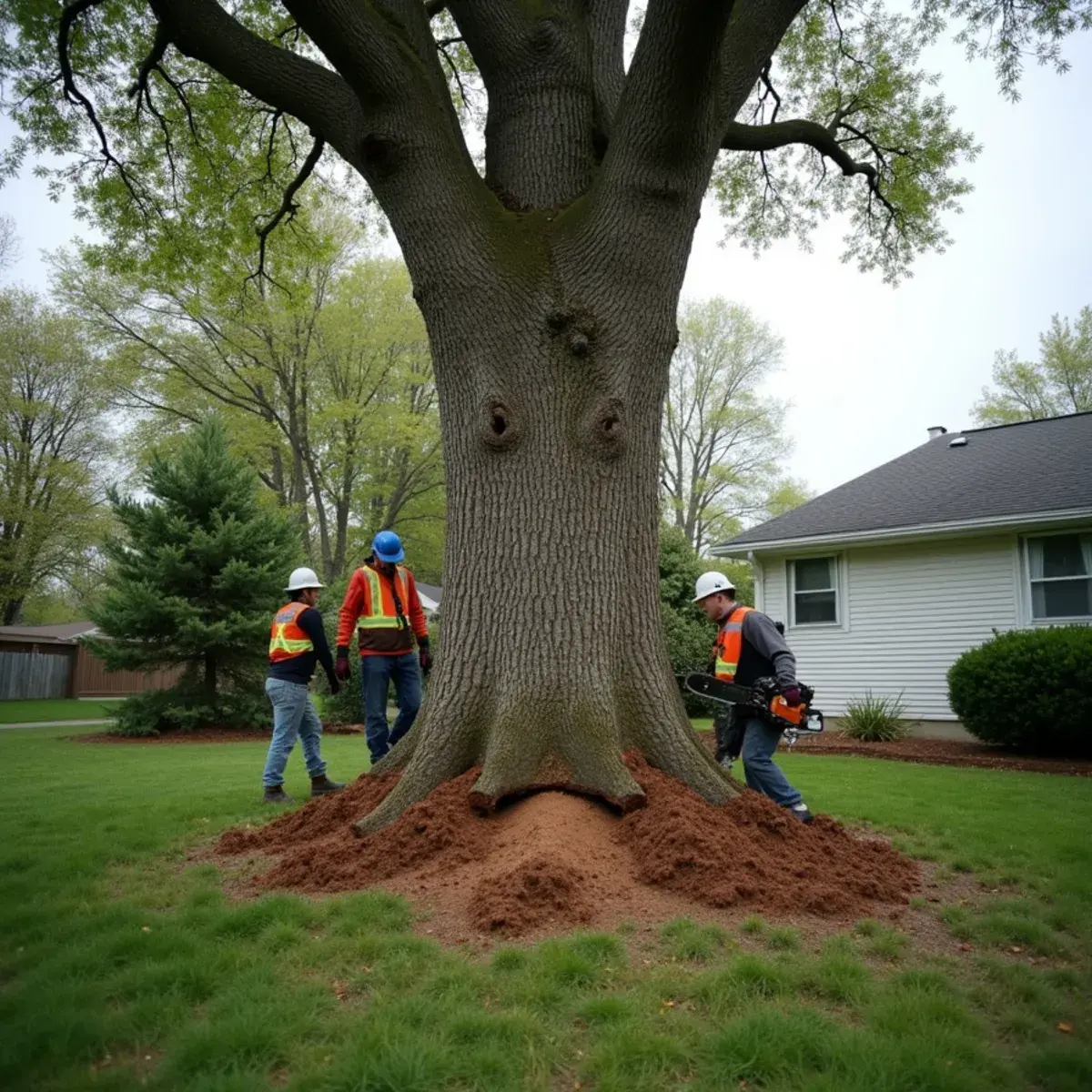
A tree that grew crooked toward light is often fine indefinitely. A tree that changed its angle is not. Look at the ground on the side opposite the lean — if the soil is cracked, mounded or heaved, the root plate is lifting. That is a failure already in progress. Compare the trunk against a fence post or a house corner to judge whether the lean is new.
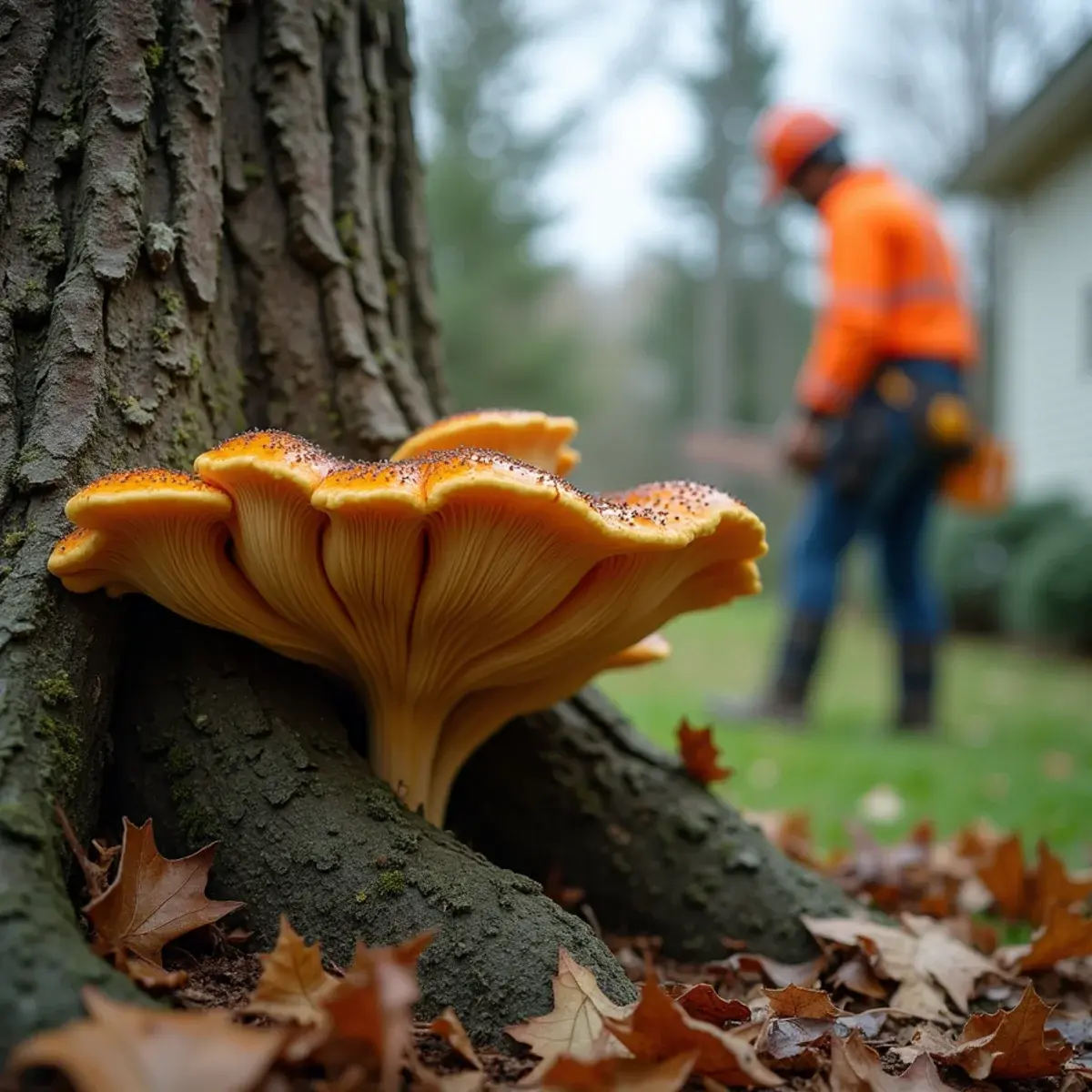
2. Mushrooms or shelf fungus at the base
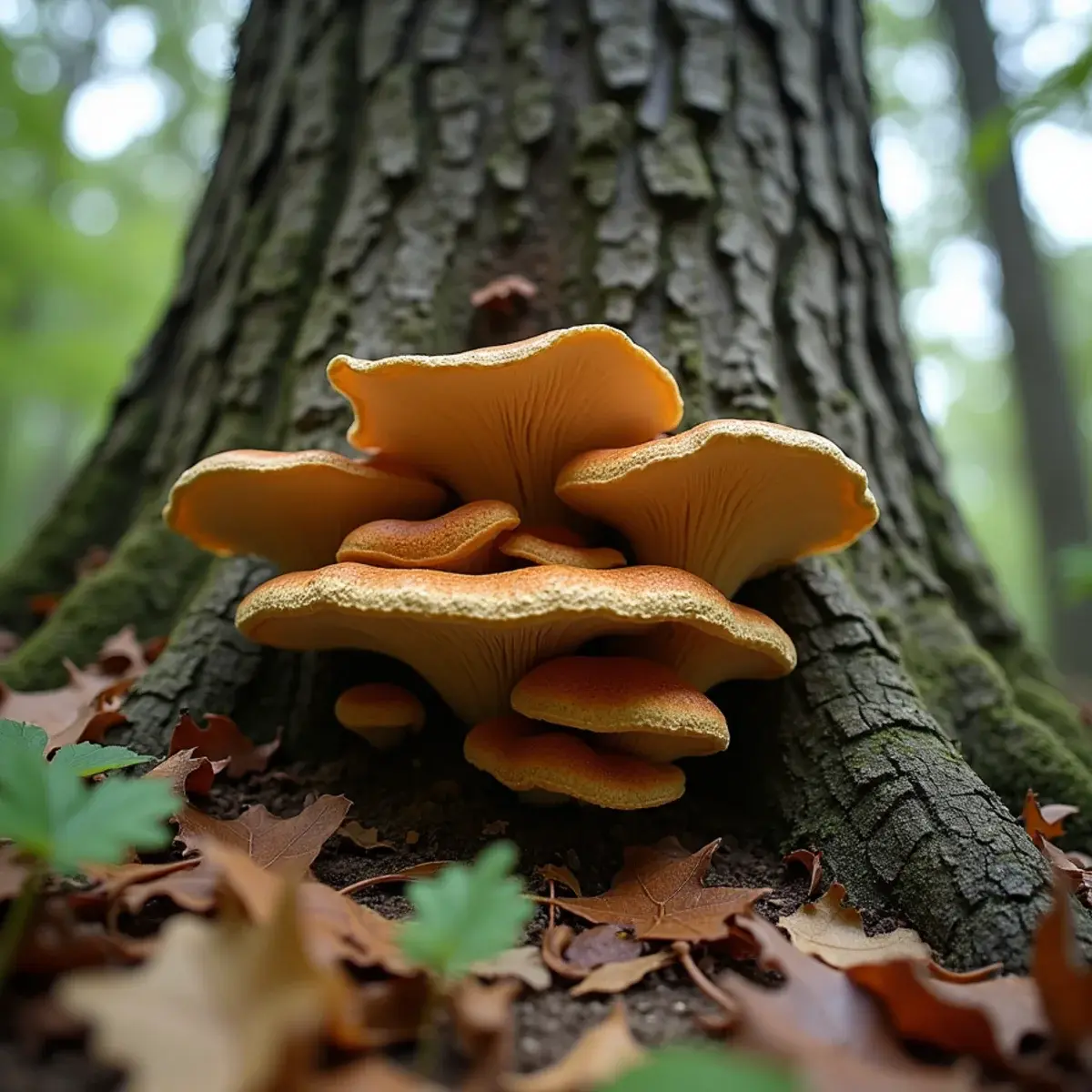
Conks and brackets growing from the root flare or lower trunk are the fruiting bodies of decay fungi. The visible mushroom is the last stage — by the time you can see it from the driveway, substantial internal decay is already there. Root and butt rot is the most dangerous kind because the tree gives no warning before it goes over whole.
3. More than a third of the canopy is dead
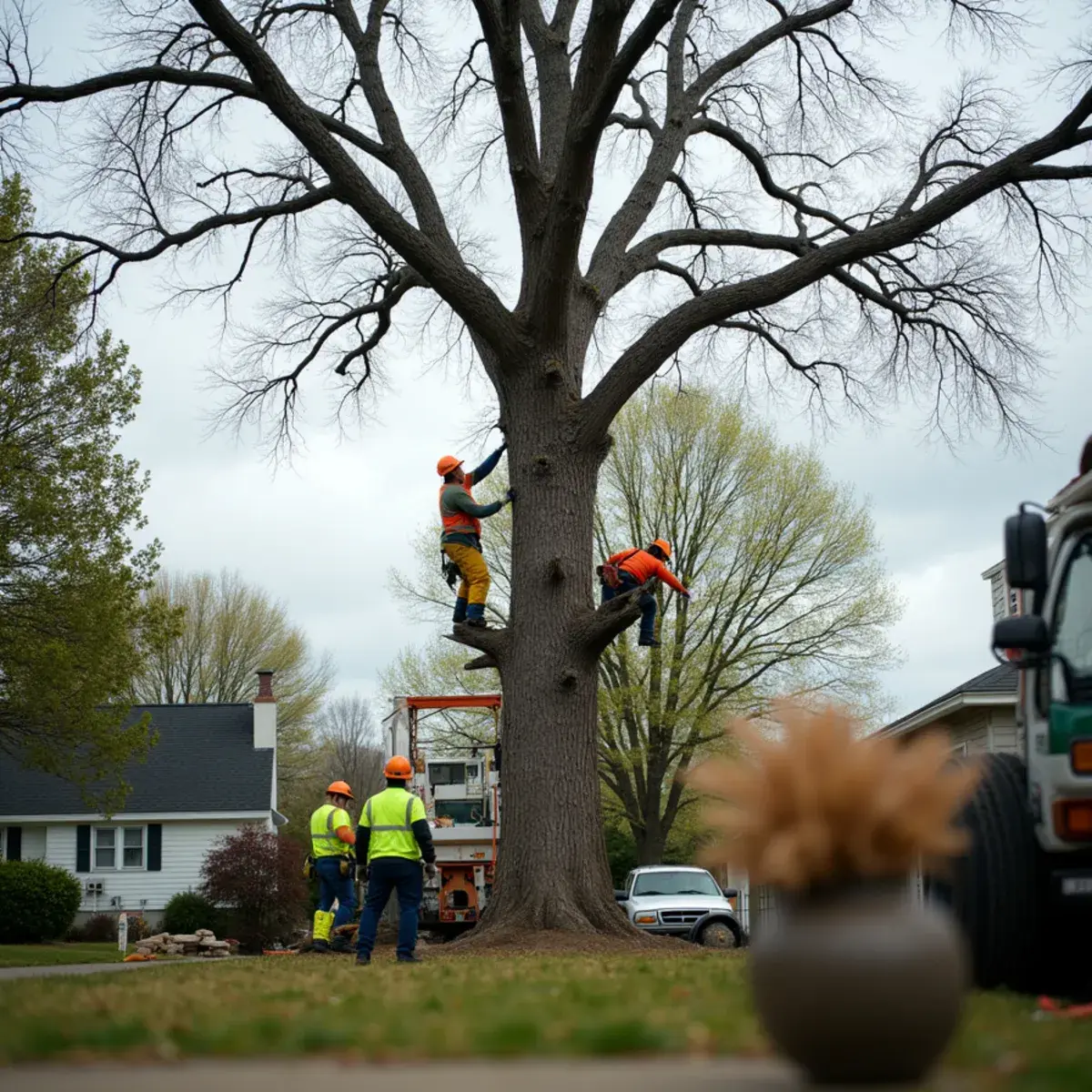
Bare limbs at the top with green only below is a classic decline pattern. Trees die from the top down. Once a mature hardwood loses its upper crown it rarely recovers, and all that dead wood above your roof gets more brittle every winter.
4. A vertical crack in the trunk or a major union
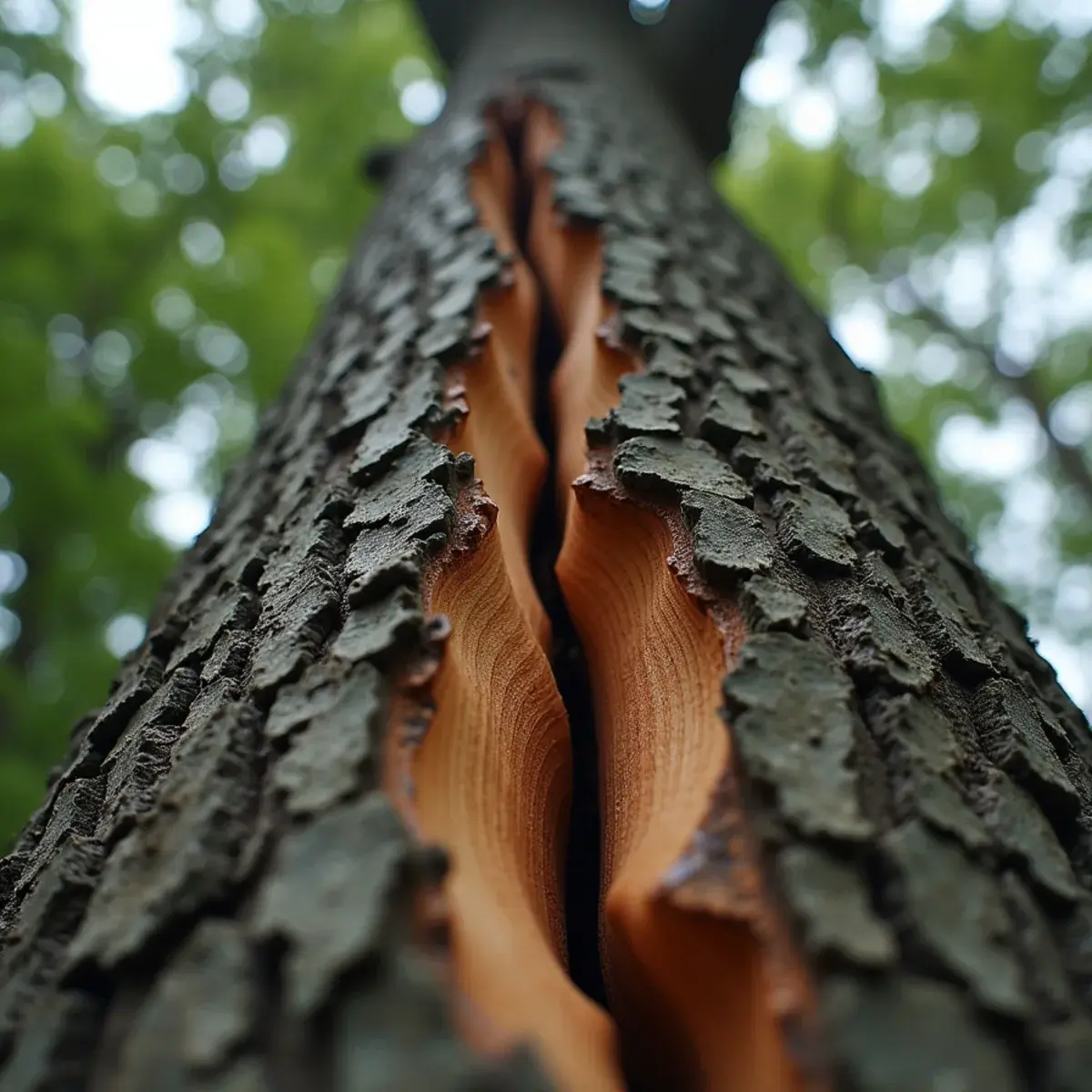
Seams running up and down the trunk mean the wood is separating. Where two stems meet in a tight V with bark pinched between them — called included bark — that union was never strong to begin with. It is the most common failure point on Michigan maples and Bradford pears, and it splits under ice load.
5. Your ash tree has D-shaped exit holes
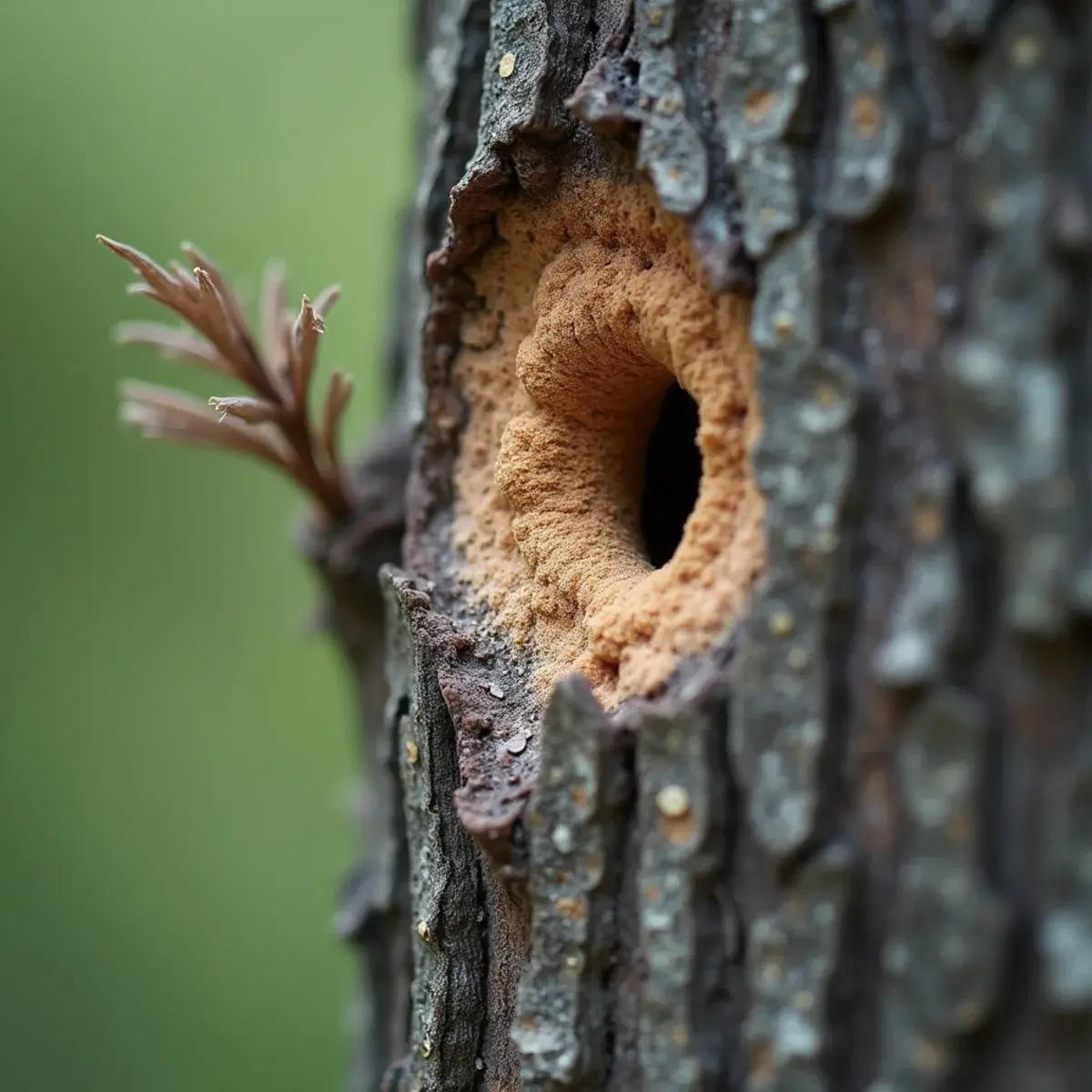
Small, distinctly D-shaped holes in the bark plus blond patches where woodpeckers have stripped it means emerald ash borer. Combined with canopy thinning from the top, the tree is finished. Read more in our guide to what to do about emerald ash borer in Michigan.
6. A cavity or hollow with little sound wood left
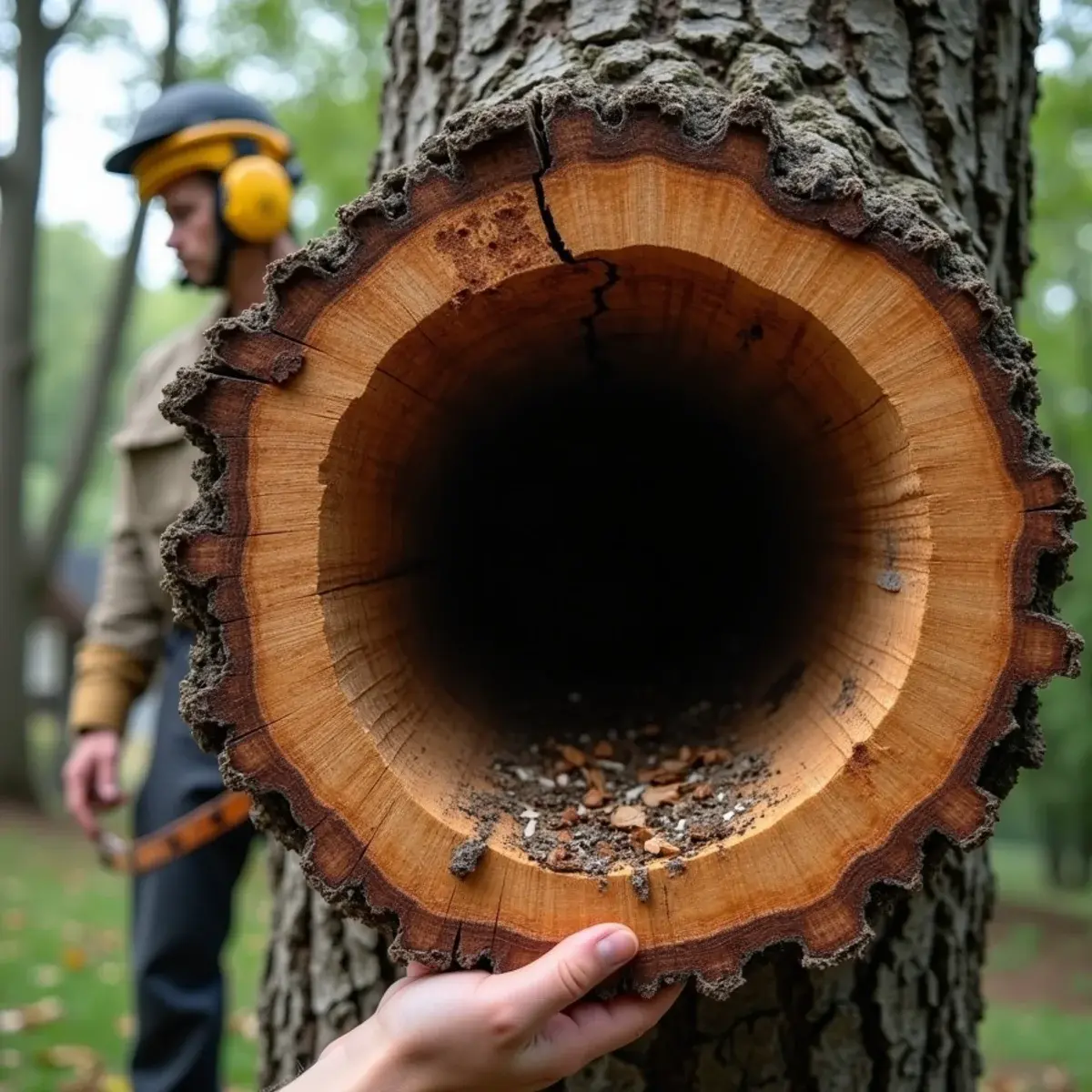
Trees can carry a surprising amount of hollow — it is the shell of sound wood around the perimeter that provides strength, like a pipe. The rough guideline is that when less than about a third of the radius remains as sound wood, risk rises sharply. Tapping the trunk and listening for a hollow ring gives you a first impression, though a proper assessment does better.
7. Roots were cut for construction or a driveway
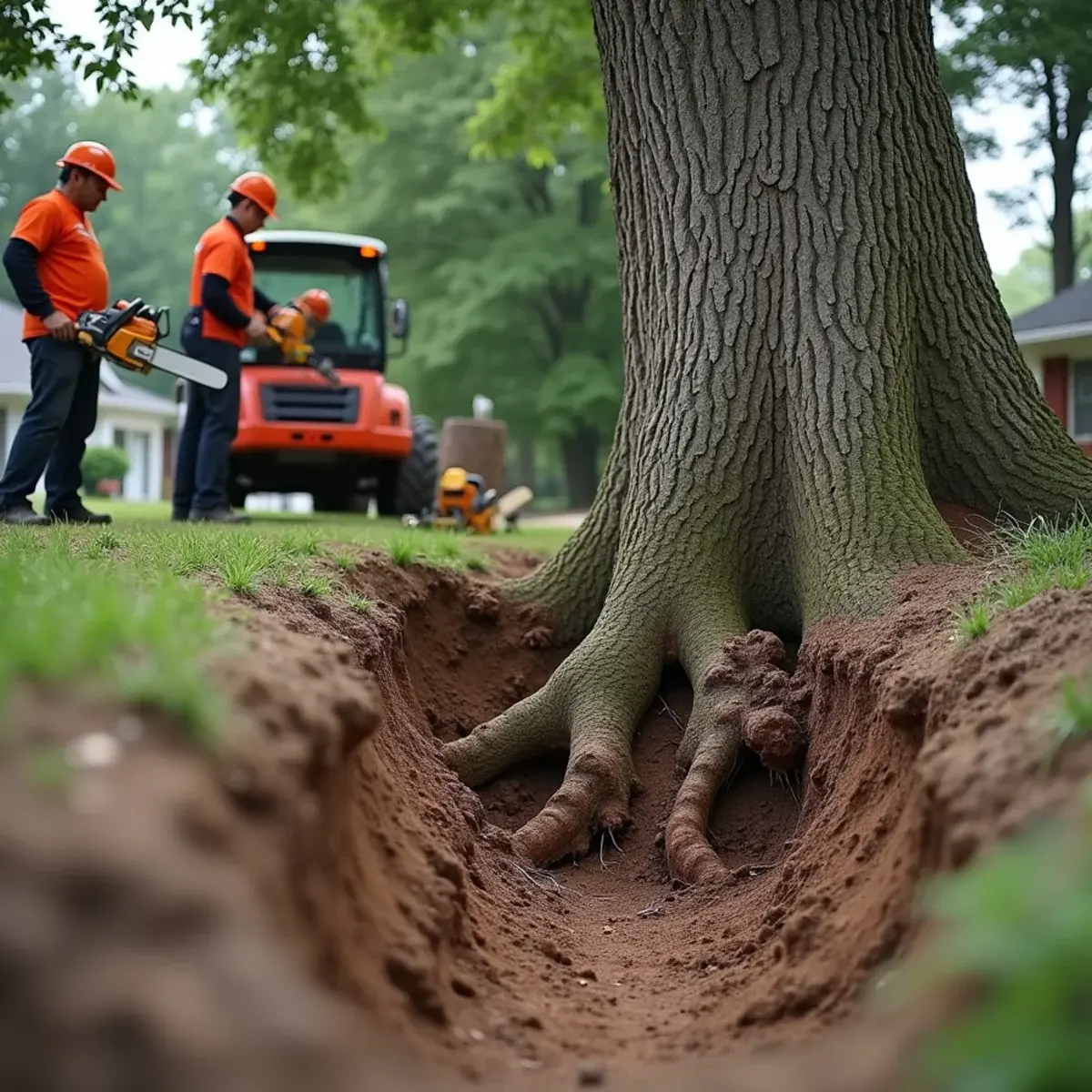
Trenching for utilities, new driveways, grade changes and foundation work all sever anchoring roots. The tree frequently looks completely fine for two or three years, then fails in a moderate wind. If anyone dug within the drip line of a large tree in the last few years, that tree deserves a look.
8. It has already dropped a large limb
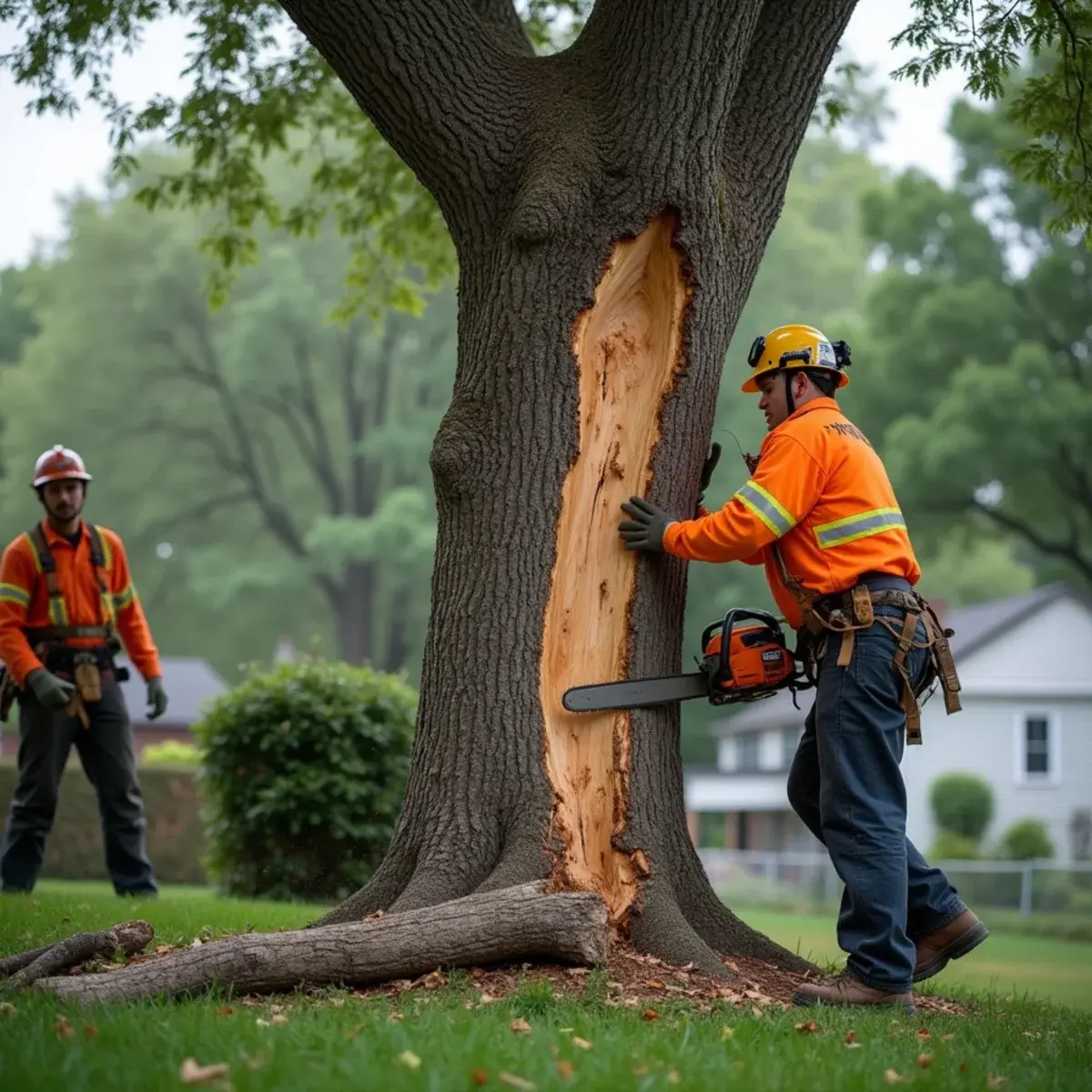
A tree that shed a major limb in the last storm is telling you something about the rest of its canopy. One failure often signals systemic decline rather than bad luck.
9. It was topped in the past
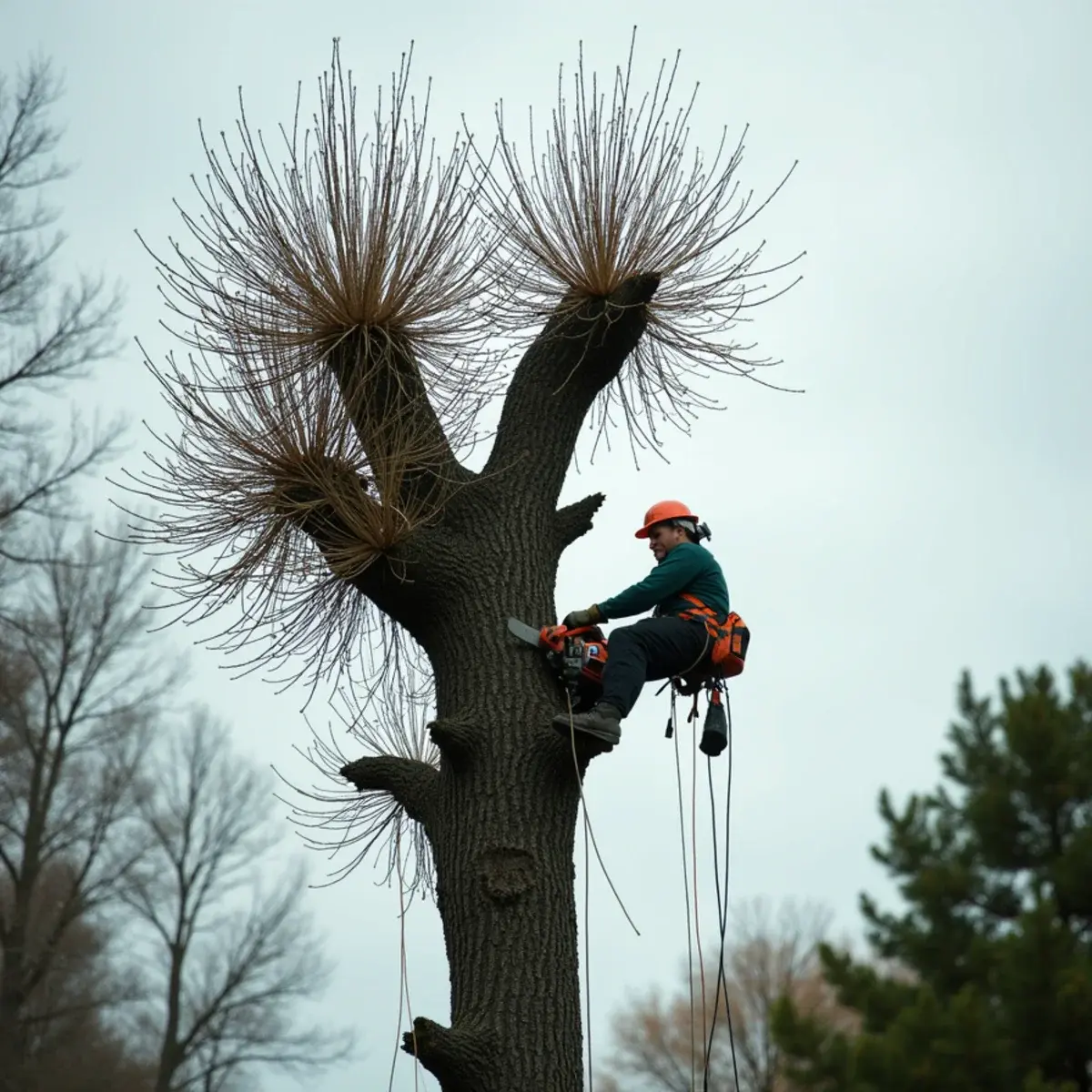
Topping — cutting mature limbs back to stubs — causes decay at every cut and forces weak, fast regrowth that is attached only to the outer wood. Those regrown limbs get heavier every year while the attachment stays weak. Topped trees are a recurring source of storm failures across older neighborhoods in Ferndale and Detroit.
Four things that look alarming and usually are not
- 1Peeling bark on a sycamore. Sycamores shed bark in large plates as a matter of course. It is how the species grows and it means nothing.
- 2A little deadwood in the outer canopy. Mature trees shed small branches naturally as the canopy shades itself out. Regular deadwooding handles it. Dieback in the major limbs is different and does matter.
- 3Surface roots across the lawn. Ugly, a nuisance to mow around, and generally not a structural problem. Do not solve it by piling soil over them — that suffocates the roots and can kill the tree.
- 4Heavy seed production in one year. Maples throwing an enormous crop of samaras or oaks dropping a heavy mast year is usually just weather-driven. It is only a concern alongside genuine decline symptoms.
The two-minute check you can do yourself
- 1Walk a full circle around the tree and look at the root flare. Is it visible and flaring, or does the trunk go into the ground like a post? Any mushrooms, cracks or heaved soil?
- 2Look up the trunk from several sides. Any vertical seams, cavities, bulges or old topping wounds?
- 3Look at the canopy. Roughly what percentage is bare in mid-summer? Is the dieback at the top or scattered through?
- 4Scratch a small twig with your thumbnail. Green underneath is live tissue; brown and dry means that branch is dead. Check a few around the tree.
- 5Note what is underneath — house, garage, driveway, play area, sidewalk.
When in doubt, get eyes on it
Our tree health and risk assessments are free. We will walk your property, tell you what we see, and give you a straight answer — including when the answer is that your tree is fine and you should keep your money.
If it does need to come out, our hazardous tree removal crew handles the ones other companies decline.