Clearing Land in Michigan: What to Do Before the Excavator Arrives
The order you do things in determines whether clearing a lot is straightforward or expensive. Here is the sequence.
What this guide covers6 sections
Whether you are putting up a pole barn, adding a garage, or building a house on a wooded parcel, the clearing is the first physical step and the one most likely to create problems later if it is done in the wrong order.
Before you cut anything
Confirm your property lines
Not the fence, not what the previous owner said, not the tax map. If the parcel has not been surveyed recently and you are clearing near a boundary, get it surveyed. Removing trees off your neighbor's side can carry treble damages in Michigan, and mature tree values run into thousands of dollars each. It is the single most expensive mistake available on a clearing job.
Check for wetlands
Michigan regulates wetlands under state law administered by EGLE, and wetlands are not always obvious. Ground that holds water in spring, supports cattails, sedges or willows, or shows water-stained tree bases may be regulated even if it looks like an ordinary field in August.
Clearing or filling a regulated wetland without a permit brings fines and restoration orders. If there is any doubt, a wetland determination before you start is far cheaper than the alternative. This applies particularly to parcels in Brownstown Township, Huron Township and the low ground toward Lake Erie.
Check local ordinances
Many Michigan municipalities have tree preservation or woodland ordinances requiring permits for clearing above a certain area, for removing trees above a certain diameter, or for maintaining a percentage of canopy. Some require replacement plantings or a payment into a tree fund. Requirements vary enormously between neighboring communities.
Check program enrollment
If the land is enrolled in a conservation program, a commercial forest designation, or has agricultural tax treatment, clearing can affect that status and trigger recapture. Worth confirming before rather than after.
Decide what stays
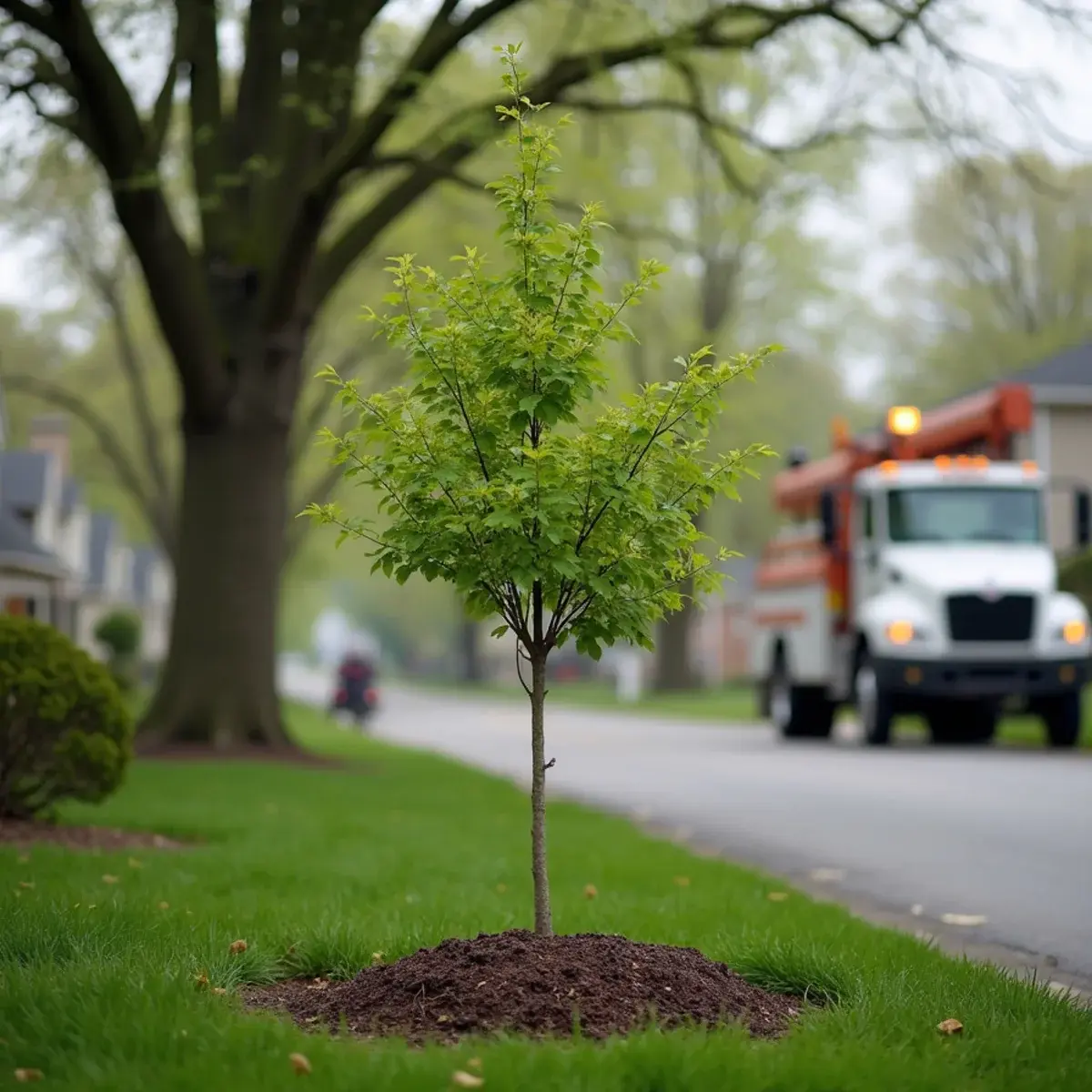
Full clearing is rarely what people actually want. A parcel with mature oaks left standing is worth substantially more than a bare lot, and those trees cannot be replaced in any timeframe that matters.
Walk the property and flag keepers before anything is cut. Then protect them properly — and protection means more than not cutting them down.
Real tree protection during construction
- Fence the critical root zone, roughly one foot of radius per inch of trunk diameter. Fence it, do not just mark it.
- No equipment traffic, material storage or spoil piles inside that zone. Soil compaction kills more construction-site trees than saws do, and the damage is invisible until the tree declines three years later.
- No grade changes over the roots. Adding even a few inches of fill suffocates roots. Cutting grade severs them.
- Route utility trenches outside the root zone, or bore under it. A trench through the roots on one side of a tree removes a large share of its anchoring.
- No washing out concrete or equipment near trees. The pH shift is severe.
Trees that survive construction and die two or three years later almost always died from root damage or compaction during the build. It is worth writing the protection requirements into your contractor agreement.
Sequence the work
- 1Survey and permits sorted, wetland questions answered, MISS DIG called.
- 2Keeper trees flagged and protection fencing installed.
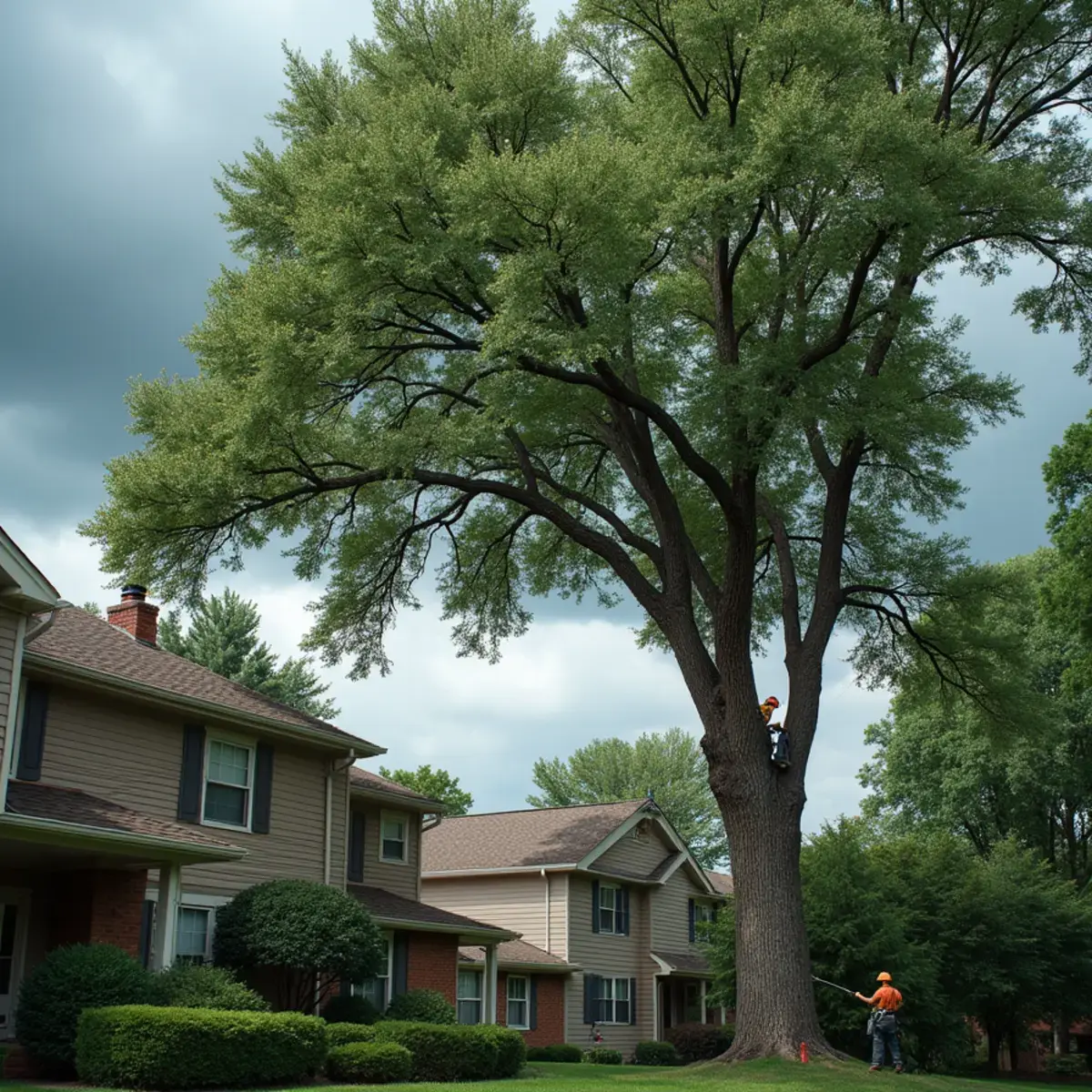
- 3Large trees removed first, while there is still room to maneuver and rig them.
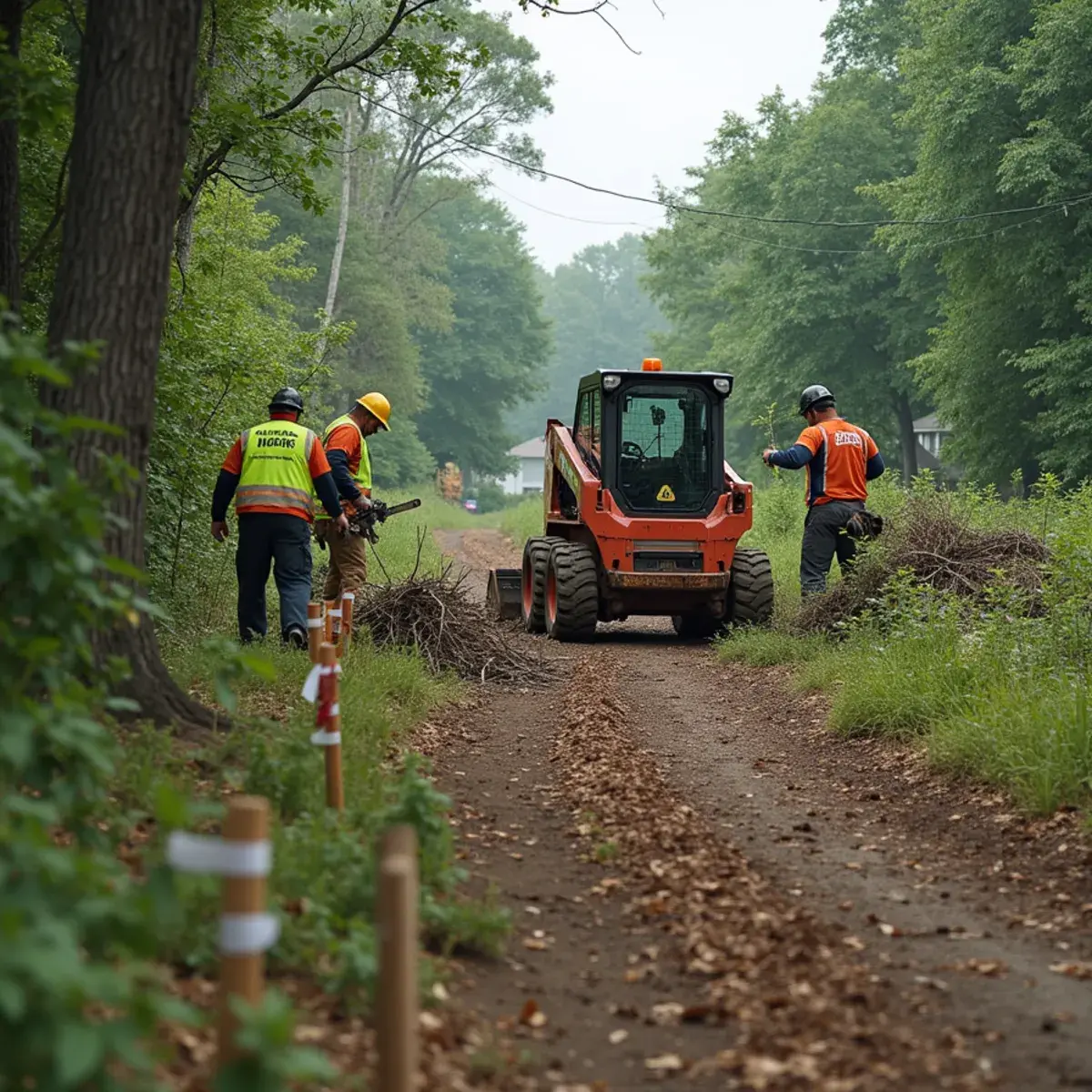
- 4Brush and understory cleared — hand cutting and chipping for smaller areas, forestry mowing for larger ones.
- 5Stumps handled according to the end use. This is the decision that matters most.
- 6Debris hauled and the site rough graded.
- 7Excavation and building can begin.
Stumps: grind or excavate?
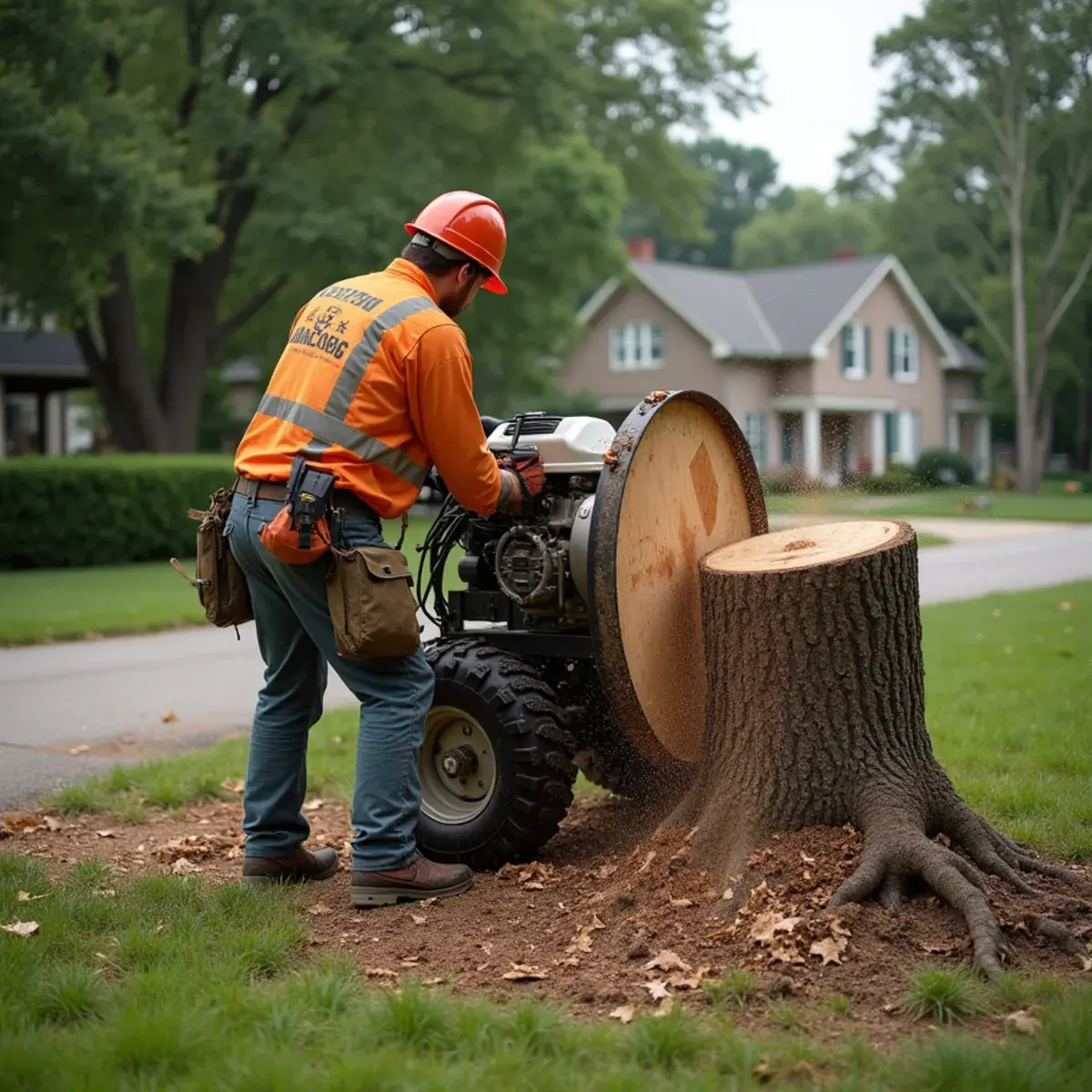
For lawn, landscaping or natural area, grinding six to twelve inches below grade is fine and far less disruptive.
For anything you are building on, the root systems have to come out entirely. Decaying wood under a slab or a footing creates voids as it breaks down, and that means settling — differential settling, which cracks concrete. Full excavation costs more and it is not optional under a structure. Our stump grinding page covers the difference in more detail.
Plan for the material
A cleared acre produces a startling amount of woody debris, and disposal is frequently the largest line item on a clearing job. Options include chipping on site and using the chips for erosion control or trails, hauling everything off, or selling merchantable timber if the parcel has enough quality hardwood to interest a logger.
Open burning is regulated in Michigan and prohibited outright in many municipalities. Check before assuming it is an option.
Keeping it clear
Cleared ground in southeast Michigan does not stay cleared. Buckthorn, honeysuckle, autumn olive and tree-of-heaven will re-establish within a couple of seasons, and all of them resprout more aggressively from a cut stump than they grew originally.
Treating the stumps at the time of cutting is what actually stops them. After that, keeping the area mowed, seeded or planted prevents new seedlings from taking hold. Our lot clearing and brush removal page covers how we approach it.
If a structure has to come down as part of the project, we handle that too — see demolition services. One contractor for the trees, the brush, the stumps and the structure means one schedule and one cleanup.