Stump Grinding vs. Stump Removal: Which One Do You Actually Need?
Ninety percent of homeowners want grinding. The other ten percent are building something. Here is how to tell which you are.
What this guide covers7 sections
People use the terms interchangeably and they are genuinely different jobs with different costs and different results. Choosing wrong means either paying for excavation you did not need or grinding a stump you were about to build over.
Stump grinding: what it is
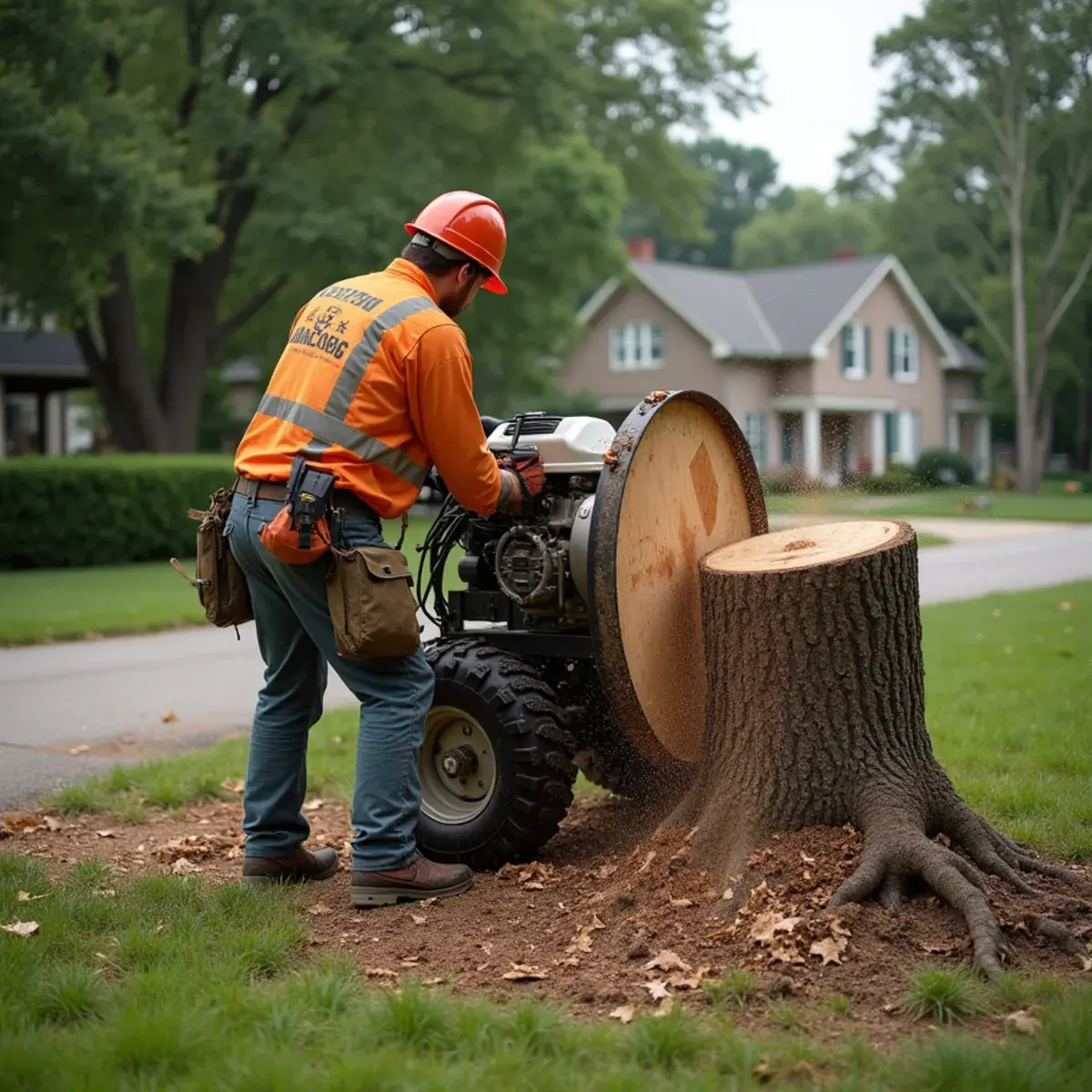
A machine with a rotating cutting wheel sweeps side to side across the stump, chewing it into chips. It goes six to twelve inches below grade as standard, taking out the stump and the major surface roots. The deeper roots stay in the ground and decay naturally over the following years.
The hole is filled with the resulting chips or backfilled with topsoil. Within a week you can seed or sod over it. The surrounding lawn is barely disturbed.
What grinding is right for
- Lawn restoration — seeding or laying sod over the spot.
- Removing a mowing hazard and a tripping hazard.
- Stopping suckering on species like silver maple, elm, poplar and locust.
- Getting rid of the carpenter ant and termite habitat a decaying stump provides.
- Any situation where you are not building a structure over the exact spot.
Full stump removal: what it is
Excavation. A machine digs out the entire stump and root ball and lifts it out whole. It leaves a genuine crater that has to be backfilled, and it tears up a wide area of surrounding lawn in the process.
It costs considerably more, it is far more disruptive, and it is the right answer in a narrow set of situations.
What excavation is right for
- Building a foundation, slab or footing over the spot. Decaying wood under a slab causes settling.
- Running a utility trench, drain line or irrigation main through the location.
- Regrading the whole yard, where the disruption does not matter.
- Installing a pool or a large hardscape feature.
- Certain root diseases where leaving infected root material creates ongoing risk to nearby plantings.
What drives grinding cost
Grinding is usually priced by diameter measured at the widest point of the stump at ground level. That means including the root flare, which is frequently much wider than the trunk above it and is what the machine actually has to remove. Measure across the flare, not the trunk, if you want a useful estimate over the phone.
- Diameter at grade — the primary factor.
- Number of stumps. Several on one visit costs far less per stump than separate trips.
- Access. A grinder needs a path. A backyard behind a 36-inch gate needs a narrow-access machine.
- Depth. Standard depth handles sod and seed. Replanting or footings need more passes.
- Buried rock, fill and old concrete. Urban soil is full of surprises and they dull teeth fast.
- Chip haul-off and topsoil backfill, if you want them.
What to do with the chips
A large stump produces far more chip volume than people expect — a big maple can fill a pickup bed. You have three options and they cost differently.
- 1Backfill the hole with them. Free, simple, and the ground will settle over the next few months as the fines break down. Fine for a natural area.
- 2Leave a pile for you to use as mulch. Also free. Fresh chips work well on paths and around established shrubs — just do not pile them against trunks.
- 3Haul them off and backfill with clean topsoil. Costs more and is the right call if you are re-sodding or replanting.
Planting a new tree in the same spot
You can, with two conditions. Grind deep — twelve inches or more — and have the chips removed rather than backfilled. Decomposing wood chips tie up nitrogen in the soil as they break down, and a new seedling planted into that mix will struggle. Bring in clean topsoil instead.
If the old tree died of a root disease like Verticillium wilt or Armillaria, either choose a resistant species or shift the new tree several feet off the original spot. And if the previous tree outgrew its space, use the opportunity to plant something appropriately sized rather than repeating the mistake.
What about chemical stump removers?
They are largely potassium nitrate, and they accelerate decay somewhat by feeding the fungi already breaking the wood down. What they do not do is remove a stump in any timeframe you care about. A large hardwood stump in Michigan soil takes 15 to 25 years to decay naturally, and these products might shave a few years off that. They are not a substitute for grinding.
Before anything grinds
Utilities have to be accounted for. Irrigation lines, invisible fence, gas, cable and electric all get run through yards at shallow depth, and a grinder does not care what it hits. Any competent company handles this before starting — ours does, and on anything questionable we get MISS DIG involved.
More detail on our process is on the stump grinding service page. If you are having a tree removed anyway, adding the stump to the same visit is meaningfully cheaper than a return trip — see our tree removal page for how we quote it.